Medical
BEST HORMONE CLINIC NEAR ME
The hormone clinic industry has exploded. That means more options for you, but also more clinics cutting corners. Here's how to tell the difference between a clinic that actually optimizes your health and one that just fills prescriptions.
Medically reviewed by Missy Zammichieli, DNP, APRN, FNP-BC · Updated March 2, 2026
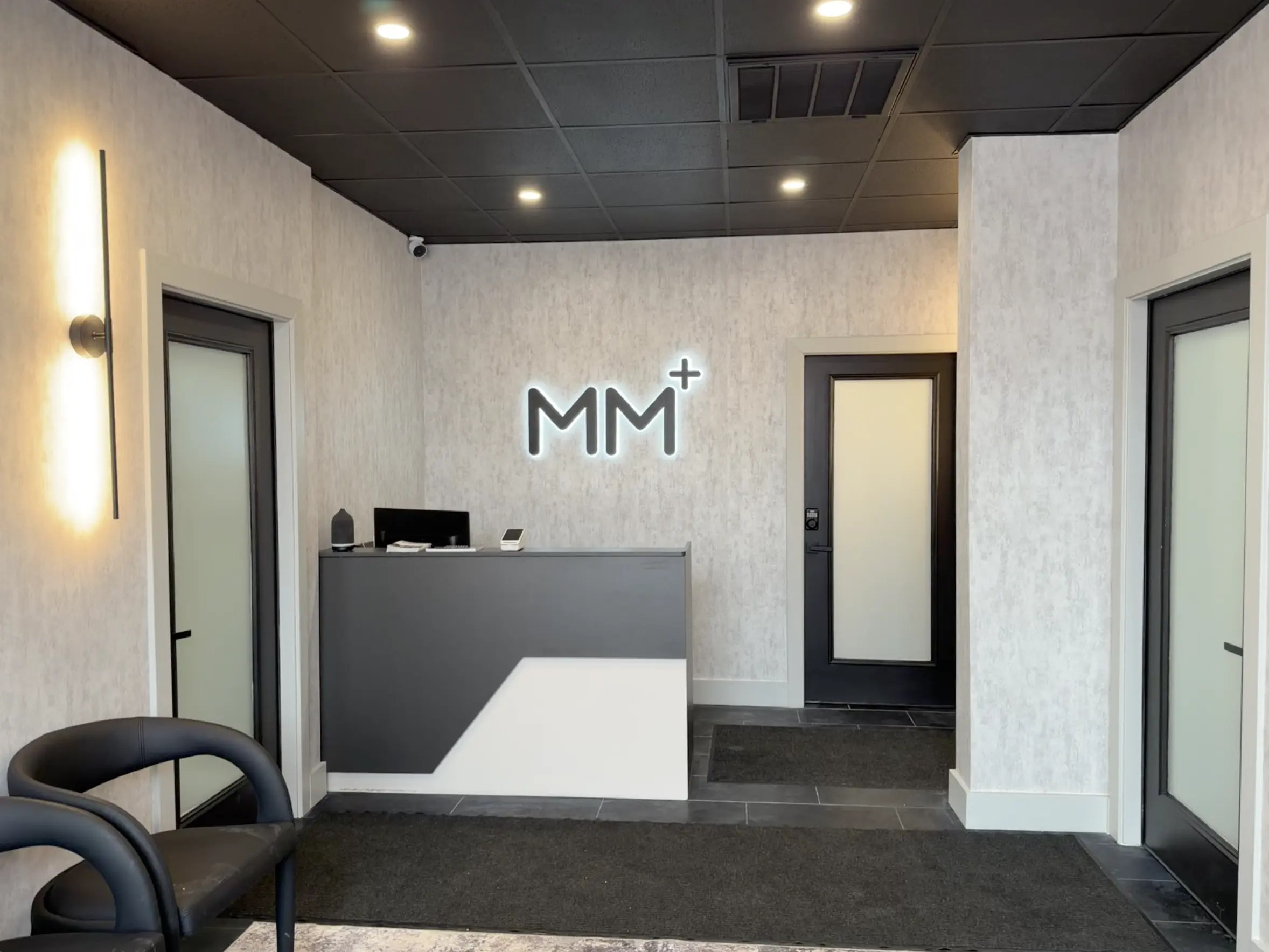
What Separates Good Hormone Clinics From Bad Ones
- 1. Comprehensive baseline labs before any prescription (60+ markers, not just total T)
- 2. Regular follow-up bloodwork, not just refills
- 3. Individualized protocols based on your labs, symptoms, and goals
- 4. Body composition tracking (DEXA) to measure real outcomes
- 5. Multiple treatment options, not a one-size-fits-all approach
- 6. Direct provider access, not a call center
THE HORMONE CLINIC LANDSCAPE IN 2026
The industry has changed dramatically in the last five years. Understanding the landscape helps you make a better decision.
Search "hormone clinic near me" or "TRT clinic near me" and you'll get dozens of results. Five years ago, your options were limited to endocrinologists with six-month wait lists or anti-aging clinics with questionable practices. Now there's a clinic on every corner and a telehealth app for every hormone.
The explosion in telehealth hormone clinics has done one genuinely good thing: it's made hormone therapy accessible to men and women who need it. For decades, people with real symptoms were told their levels were "normal" and sent home. That's changing. But accessibility without quality control creates its own problems.
The word "optimization" gets thrown around constantly now. But for most of these clinics, optimization just means prescribing testosterone. They run a basic lab panel, confirm your levels aren't ideal, write a prescription, and bill you monthly. That's not optimization. That's a medication dispensary with good branding.
Real optimization means understanding your full hormonal picture, tracking objective outcomes, adjusting protocols based on data, and treating the whole system rather than just one number. The difference between a prescribe-and-forget clinic and a monitoring-heavy clinic is the difference between guessing and knowing.
The Core Problem
Prescribing testosterone is easy. Managing it well is hard. The clinics that charge the least are almost always the ones skipping the monitoring that makes hormone therapy safe and effective. The prescription is maybe 10% of good hormone care. The other 90% is everything that comes before and after it.
RED FLAGS TO WATCH FOR
Any one of these should give you pause. Multiple red flags should send you elsewhere.
No Baseline Bloodwork Before Prescribing
If a clinic is willing to prescribe hormones based on a questionnaire alone, walk away. You need comprehensive baseline labs to establish where you're starting, rule out contraindications, and create a protocol that's actually tailored to your physiology. A clinic that skips this step is prioritizing speed and revenue over your safety.
Cookie-Cutter Protocols
Everyone gets 200mg of testosterone cypionate per week. Every woman gets the same pellet dose. If the clinic doesn't adjust dosing based on your individual labs, body weight, symptoms, and response, they're running a factory, not a medical practice. Your neighbor's optimal protocol is probably not yours.
No Follow-Up Monitoring
Prescribing hormones and never checking labs again is negligent. Follow-up bloodwork is how you confirm the treatment is working, catch side effects early (elevated hematocrit, estrogen imbalance, lipid changes), and fine-tune your protocol. If a clinic just sends refills without follow-up labs, find a different clinic.
Promising Specific Results
"Turn back the clock 20 years." "Guaranteed results." "Feel like you're 25 again." These are marketing lines, not medicine. A responsible clinic will explain what's realistic, discuss timelines honestly, and set expectations based on your individual situation. Hormone therapy can be transformative, but no one can promise you specific outcomes.
Only Offering One Treatment Option
If the only tool they have is a hammer, everything looks like a nail. TRT isn't the right answer for everyone. Younger men concerned about fertility might benefit from enclomiphene. Some cases respond to lifestyle optimization alone. A good clinic evaluates you as an individual and offers the treatment that fits your situation.
No Body Composition Tracking
If a clinic can't objectively measure whether treatment is changing your body composition, they're guessing at outcomes. The scale doesn't tell you if you gained muscle and lost fat (a common outcome of proper hormone optimization). Without DEXA or equivalent tracking, you have no objective data on what's actually happening.
Prices That Seem Too Good to Be True
If a clinic charges significantly less than competitors, ask yourself what they're cutting. Usually it's monitoring. The testosterone itself is cheap. What costs money is the comprehensive bloodwork, the DEXA scans, the provider time for protocol adjustments, and the follow-up care. A $99/month "TRT program" almost certainly isn't running $500 worth of labs at regular intervals.
GREEN FLAGS: WHAT GOOD CLINICS DO
These are the markers of a clinic that takes hormone care seriously. Look for as many of these as possible.
Comprehensive Baseline Panel
A proper baseline isn't just total testosterone. It's 60+ markers including free testosterone, SHBG, estradiol, LH, FSH, thyroid panel, complete metabolic panel, CBC, lipids, insulin, A1C, vitamin D, B12, iron studies, and more.
Why it matters: Symptoms of low testosterone overlap with thyroid issues, metabolic dysfunction, and micronutrient deficiencies. Without a comprehensive panel, you might get the wrong treatment entirely.
Regular Follow-Up Labs
Good clinics retest at predictable intervals, typically 6-8 weeks after starting treatment and quarterly thereafter. They're checking that your levels are where they should be, your hematocrit isn't climbing dangerously, estrogen is balanced, and your metabolic markers are improving.
Why it matters: Hormone therapy is not set-it-and-forget-it. Your body changes. Your needs change. Protocols need adjustment.
DEXA Body Composition Monitoring
DEXA scans measure lean mass, fat mass, visceral fat, and bone density with precision. This is the gold standard for tracking whether hormone therapy is actually changing your body in the ways that matter.
Why it matters: Your weight on a scale might not change while you're simultaneously gaining 8 pounds of muscle and losing 8 pounds of fat. Without DEXA, you'd think nothing is happening. With it, you can see exactly what's working.
Multiple Treatment Options
The best clinics offer a range: TRT (injectable, topical, pellet), enclomiphene, HCG, lifestyle optimization protocols, peptide therapy, and GLP-1 medications when appropriate. They match the treatment to the patient, not the other way around.
Why it matters: A 28-year-old who wants to preserve fertility and a 52-year-old with metabolic syndrome need very different approaches. One-size-fits-all is a red flag.
Transparent About Costs
You should know exactly what you're paying for before you start. No hidden fees, no surprise lab costs, no bait-and-switch pricing. A good clinic breaks down what's included: labs, medications, DEXA, provider visits.
Why it matters: Opaque pricing usually means they're either upselling you later or charging for things you don't need.
Provider Continuity and Access
You should see the same provider consistently and be able to reach them with questions between visits. If your only point of contact is a call center or a different provider every time, the quality of your care will suffer.
Why it matters: Your provider should know your history, your goals, and your response patterns. That requires continuity.
Treats the Whole Picture
The best clinics don't just treat testosterone. They evaluate and address thyroid function, metabolic health, micronutrient status, sleep quality, body composition, and cardiovascular markers. Hormones don't exist in isolation. Fixing testosterone while ignoring insulin resistance or hypothyroidism is a half-measure.
Why it matters: Your symptoms might not even be caused by testosterone. Or they might be caused by testosterone plus three other things. A clinic that only looks at one hormone will miss the rest.
IN-PERSON VS TELEHEALTH: WHEN EACH MAKES SENSE
Telehealth Advantages
- Convenience: appointments from home or office
- Lower overhead means potentially lower cost
- Easier to maintain consistent follow-ups
- Access to providers regardless of location
- No travel time or waiting rooms
- Works well for routine check-ins and refills
In-Person Advantages
- Physical exam catches things a screen cannot
- On-site blood draws (no third-party lab visits)
- DEXA body composition scans in-house
- Hands-on injection training for self-administration
- Real relationship with your provider
- Full range of in-office procedures and diagnostics
Why Hybrid Is Ideal
The best model combines both. Initial evaluation, physical exam, baseline labs, and DEXA scan happen in person. Your provider gets hands on you, reviews your history, and builds a protocol with real data. Follow-ups can alternate between in-person visits (for labs and DEXA) and telehealth check-ins (for symptom reviews and protocol adjustments). You get the thoroughness of in-person care with the convenience of telehealth for the visits that don't require your physical presence.
QUESTIONS TO ASK BEFORE CHOOSING A CLINIC
Print this list. Ask these questions on your initial call or consultation. The answers will tell you everything you need to know about the quality of the clinic.
About Diagnostics
- "What bloodwork do you run before prescribing?"
- "How many markers are included in your baseline panel?"
- "Do you test thyroid, metabolic, and micronutrient markers?"
- "Do you offer DEXA body composition scans?"
About Monitoring
- "How often do you recheck labs after starting treatment?"
- "What markers do you monitor on follow-up labs?"
- "How do you adjust protocols based on results?"
- "How do you track body composition changes over time?"
About Treatment Options
- "What treatment options do you offer besides TRT?"
- "How do you determine which treatment is right for me?"
- "What if I want to preserve fertility?"
- "Do you address lifestyle factors or just prescribe?"
About Access and Cost
- "Will I see the same provider each visit?"
- "How do I reach my provider with questions between visits?"
- "What's included in the monthly cost? Any hidden fees?"
- "Are labs, medications, and DEXA included or extra?"
The Litmus Test
A good clinic will welcome these questions. They'll answer clearly and specifically. If a clinic gets vague, defensive, or pushes you to "just get started," that tells you everything. The best clinics want informed patients because informed patients get better outcomes and stay longer.
THE MOONSHOT MEDICAL MODEL
We built Moonshot Medical around the model we'd want as patients. Every principle on the "green flags" list above is baked into how we operate. Here's the short version:
Comprehensive Testing
60+ marker baseline panels before any treatment decision. We test what most clinics skip: thyroid, metabolic markers, micronutrients, inflammatory markers.
Data-Driven Protocols
Your protocol is built from your data, not a template. Dosing, frequency, and ancillary medications are individualized and adjusted based on follow-up labs.
DEXA Body Composition
In-house DEXA scanning tracks lean mass, fat mass, visceral fat, and bone density over time. Objective proof of what's working.
Multiple Treatment Paths
TRT, enclomiphene, HCG, peptides, GLP-1, lifestyle optimization. We match the treatment to you, not the other way around.
Provider Continuity
You see the same provider every visit. They know your history, your goals, and your response patterns. No call centers, no rotating staff.
Whole-System Approach
Hormones, metabolic health, thyroid, micronutrients, body composition, cardiovascular markers. We treat the system, not a single number.
SERVING PARK RIDGE AND CHICAGO'S NORTHWEST SUBURBS
Moonshot Medical is located in Park Ridge, Illinois, minutes from O'Hare and easily accessible from communities across Chicago's northwest side and suburbs.
Nearby Communities We Serve
If you're searching for a hormone clinic near you in any of these areas, we're likely your closest option for comprehensive, in-person hormone care with DEXA and on-site labs:
- Park Ridge, IL
- Niles, IL
- Des Plaines, IL
- Edison Park (Chicago)
- Norwood Park (Chicago)
- Skokie, IL
- Morton Grove, IL
- Glenview, IL
Why In-Person Matters Here
You can get a telehealth TRT prescription from anywhere. What you can't get remotely is a physical exam, on-site blood draws, DEXA body composition scans, hands-on injection training, or a face-to-face relationship with a provider who knows you.
For hormone optimization done right, being able to walk into a clinic and have your labs drawn, your body composition scanned, and your protocol reviewed in person makes a measurable difference in outcomes. That's why we're here, not behind a screen.
COMMON QUESTIONS
How do I find the best hormone clinic near me?
Look for comprehensive baseline bloodwork (60+ markers), regular follow-up labs, DEXA body composition tracking, multiple treatment options, provider continuity, and transparent pricing. Avoid clinics that prescribe without labs, use the same protocol for everyone, or make results sound guaranteed. The quality of a clinic is determined by what happens after the prescription, not before it.
What is the difference between a hormone clinic and a TRT clinic?
A TRT clinic focuses narrowly on testosterone replacement. A comprehensive hormone clinic evaluates the full picture: testosterone, thyroid, metabolic markers, micronutrients, body composition, and cardiovascular health. The best clinics treat the system, not just one hormone, because your symptoms might involve more than testosterone alone.
How much does a hormone clinic cost?
It varies. Telehealth-only clinics may charge $100-200/month but often skip comprehensive labs and monitoring. In-person clinics with full bloodwork, DEXA scans, and provider access typically range from $200-500/month. Be skeptical of very low prices. The medication itself is inexpensive; the cost of quality care comes from the testing, monitoring, and provider time that keeps you safe and optimized.
Is telehealth or in-person better for hormone therapy?
Both have a place. Telehealth is convenient for follow-ups and routine check-ins. In-person is necessary for physical exams, on-site blood draws, DEXA scans, and injection training. The ideal model is hybrid: in-person for evaluations and diagnostics, telehealth for check-ins that don't require your physical presence. If you have to choose one, in-person gives you access to diagnostic tools that telehealth simply cannot replicate.
What questions should I ask a hormone clinic before starting treatment?
Key questions: What bloodwork do you run before prescribing? How often are follow-up labs done? Do you offer DEXA body composition tracking? What treatment options do you offer besides TRT? Will I see the same provider each visit? What's included in the cost? How do you monitor for side effects? A confident, specific answer to each of these is a good sign. Vagueness or pushback is not.
What are the red flags of a bad hormone clinic?
The biggest red flags: prescribing without baseline bloodwork, cookie-cutter protocols (same dose for everyone), no follow-up lab monitoring, promising specific results or "turning back the clock," only offering one treatment option, no body composition tracking, and prices that seem too good to be true. Any clinic that prioritizes getting you on a prescription quickly over understanding your health thoroughly should raise concerns.
References
- 1. Bhasin S, et al. "Testosterone Therapy in Men With Hypogonadism: An Endocrine Society Clinical Practice Guideline." J Clin Endocrinol Metab. 2018;103(5):1715-1744.
- 2. Mulhall JP, et al. "Evaluation and Management of Testosterone Deficiency: AUA Guideline." J Urol. 2018;200(2):423-432.
- 3. Snyder PJ, et al. "Effects of Testosterone Treatment in Older Men." N Engl J Med. 2016;374(7):611-624.
- 4. Corona G, et al. "Testosterone supplementation and body composition: results from a meta-analysis of observational studies." J Endocrinol Invest. 2016;39(9):967-981.
- 5. Travison TG, et al. "A Population-Level Decline in Serum Testosterone Levels in American Men." J Clin Endocrinol Metab. 2007;92(1):196-202.
- 6. Grossmann M. "Hypogonadism and male obesity: Focus on unresolved questions." Clin Endocrinol. 2018;89(1):11-21.
- 7. Huo S, et al. "Treatment of Men for 'Low Testosterone': A Systematic Review." PLoS One. 2016;11(9):e0162480.
- 8. Yeap BB, et al. "Endocrine Society of Australia position statement on male hypogonadism." Med J Aust. 2016;205(4):173-178.
SEE WHAT COMPREHENSIVE OPTIMIZATION ACTUALLY LOOKS LIKE
60+ marker baseline labs. DEXA body composition. Individualized protocols. Provider continuity. This is hormone care done right.