Chicago, IL
DEXA Body Composition Scans in Chicago
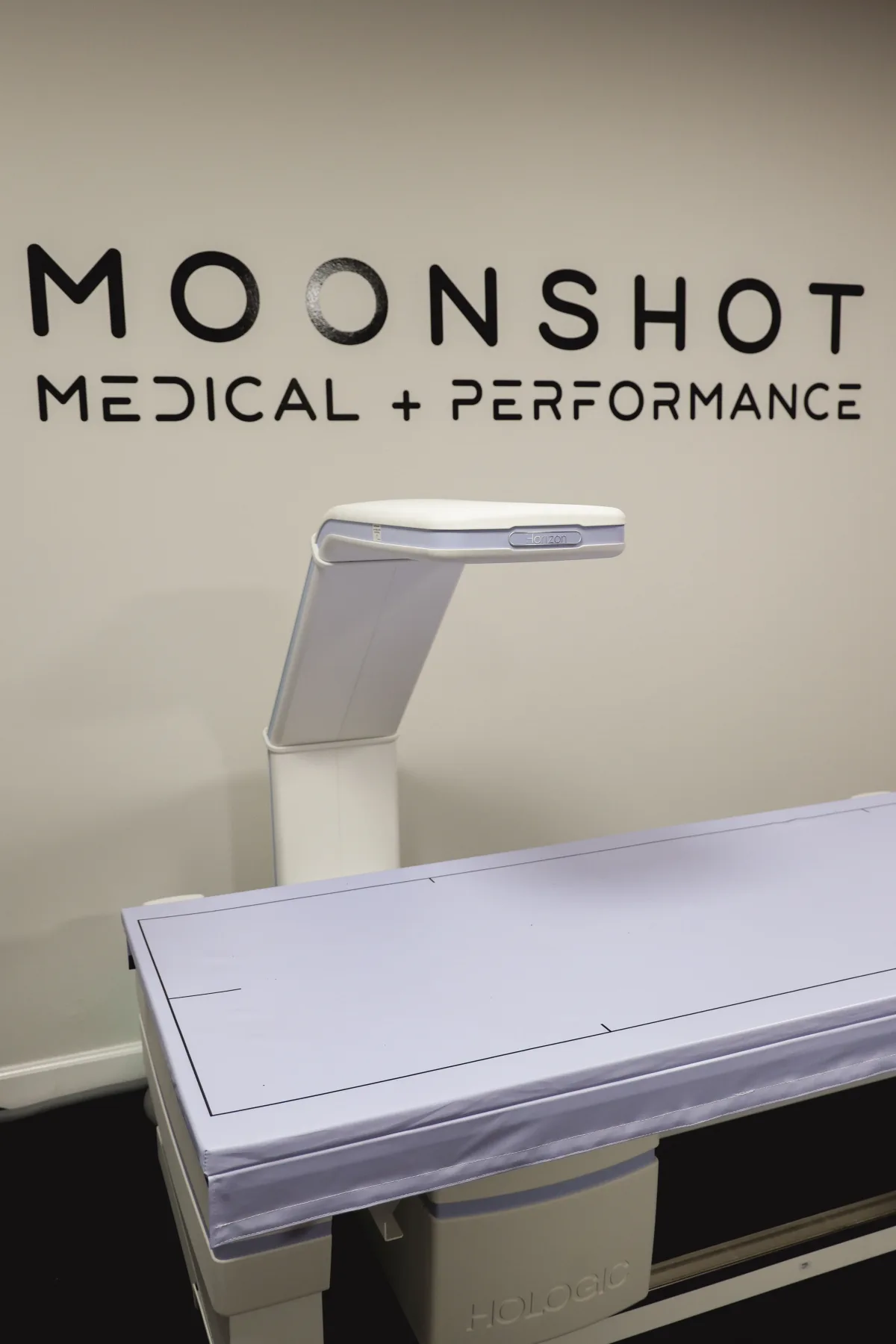
Medical-grade Hologic scanner. Body fat, lean muscle, visceral fat, bone density — all in 7 minutes.
542 Busse Hwy, Park Ridge, IL — 20 min from downtown Chicago
WHAT A DEXA SCAN ACTUALLY MEASURES
DEXA (dual-energy X-ray absorptiometry) passes two low-dose X-ray beams through your body at different energy levels. Because fat, lean tissue, and bone each absorb X-ray energy differently, the scanner can distinguish and quantify all three tissues with precision that no other consumer method matches.
Total Body Fat Percentage
Your overall body fat measured directly by X-ray attenuation—not estimated by an algorithm. DEXA captures all fat tissue, including intramuscular fat and visceral fat that bioimpedance devices miss entirely. This is the most accurate body fat reading available outside of a cadaver study or four-compartment model in a research lab.
Regional Lean Muscle Mass
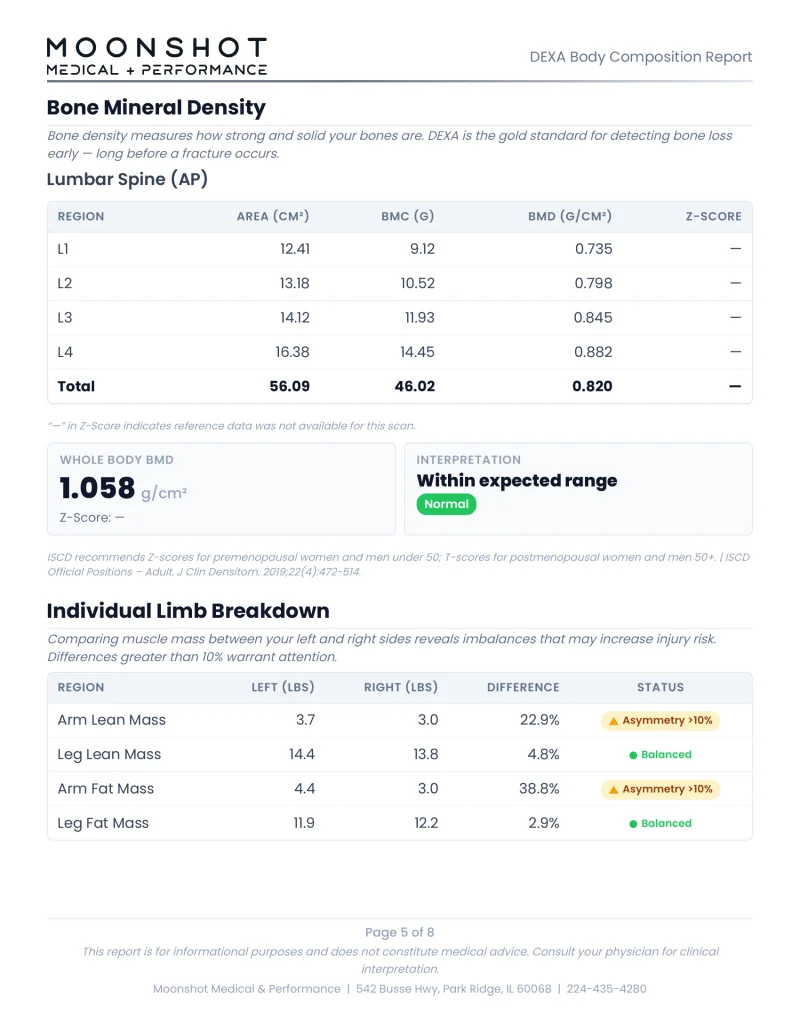
Lean tissue mass broken down by region: left arm, right arm, left leg, right leg, and trunk. This reveals muscle imbalances between sides, tracks whether your training program is actually building muscle, and identifies early signs of sarcopenia (age-related muscle loss). No other accessible test provides regional muscle data this precise.
Bone Mineral Density
DEXA is the clinical standard for bone density measurement. Your results include T-scores that compare your bone density to a healthy 30-year-old, enabling early detection of osteopenia or osteoporosis. This is particularly important for women post-menopause, men over 50, and anyone on medications that affect bone metabolism.
Visceral Adipose Tissue (VAT)
The fat stored around your organs in the abdominal cavity. You cannot see it or pinch it. Visceral fat is metabolically active—it produces inflammatory compounds that increase your risk of type 2 diabetes, cardiovascular disease, and metabolic syndrome. DEXA is one of the only methods outside of a CT scan or MRI that can accurately quantify visceral fat. Two people with the same body fat percentage can have vastly different health risk profiles based on their visceral fat levels.
Fat Distribution & Android/Gynoid Ratio
DEXA maps exactly where your body stores fat. The android region (belly/trunk) vs. gynoid region (hips/thighs) ratio has significant health implications. An A/G ratio above 1.0 means you carry more fat centrally—a higher-risk distribution pattern strongly correlated with metabolic disease, regardless of your total body fat percentage. This data is clinically actionable in ways that a body fat percentage alone is not. Learn more about reading your DEXA results.
WHY DEXA IS THE GOLD STANDARD
There are several ways to estimate body composition. Only one directly measures it. Here is how they compare.
DEXA vs. InBody & Smart Scales
InBody machines and smart scales use bioelectrical impedance analysis (BIA), which sends an electrical current through your body and estimates composition based on resistance. Hydration level, recent meals, exercise, and even skin temperature can swing results by 3-5%. That error margin is larger than the body composition changes most people make in a month. DEXA measures tissue directly with less than 1% scan-to-scan error. See the full comparison.
DEXA vs. Bod Pod
Bod Pod uses air displacement plethysmography to estimate body density, then converts that to a fat percentage using a population-based equation. It does not differentiate between visceral and subcutaneous fat, does not measure bone density, and does not provide regional muscle data. DEXA gives you all of those measurements in a single 7-minute scan.
DEXA vs. Skinfold Calipers
Caliper measurements depend entirely on the skill of the person performing them. They sample a few sites on your body and extrapolate total body fat from those pinch points. Calipers only measure subcutaneous fat—they cannot assess visceral fat, bone density, or lean mass distribution. Accuracy varies 3-8% depending on the technician.
DEXA vs. Bathroom Scales
A scale gives you one number: total weight. That number tells you nothing about what changed. You can lose 10 lbs of muscle and gain 10 lbs of fat and the scale says nothing changed. You can gain 5 lbs of muscle and lose 5 lbs of fat and the scale says nothing changed. Weight alone is useless for tracking real body composition progress.
WHO NEEDS A DEXA SCAN
Anyone who is serious about understanding their body composition—not guessing at it. These are the most common use cases we see from Chicago-area patients.
People Losing Weight (Especially on GLP-1 Medications)
If you are on semaglutide, tirzepatide, or any caloric deficit, the scale will go down. But the scale does not tell you what you are losing. Research shows that 30-40% of the weight lost on GLP-1 medications without resistance training is lean muscle mass—not fat. That distinction matters enormously for your metabolic health, functional capacity, and long-term outcomes. DEXA is the only way to confirm that you are losing fat and preserving muscle. We see this as a critical monitoring tool for every weight loss patient.
Athletes and Serious Fitness Enthusiasts
Whether you are doing CrossFit, powerlifting, endurance sports, or bodybuilding, DEXA provides objective data on whether your training and nutrition program is working. See exactly how much muscle you have added, where it has been added, and whether you have any left-right imbalances that could lead to injury. Stop guessing and start measuring.
Hormone Optimization Patients
Testosterone replacement therapy should build muscle and reduce body fat. But how do you know it is working if you are only checking lab values? DEXA confirms whether your hormone protocol is translating into real body composition changes—or whether your dose, training, or nutrition needs adjustment. The same applies to thyroid optimization and peptide protocols.
Adults Concerned About Bone Health
DEXA is the clinical standard for diagnosing osteopenia and osteoporosis. Bone density declines with age, accelerating after menopause in women and after age 50 in men. Catching low bone density early gives you time to intervene with weight-bearing exercise, nutrition, and potentially hormone optimization before a fracture occurs. If you have a family history of osteoporosis or are on medications that affect bone metabolism (corticosteroids, aromatase inhibitors), a baseline DEXA scan is medically prudent.
Anyone Who Wants a Real Baseline
Most people have never had an accurate measurement of their body composition. They have a rough sense from a scale or a gym InBody machine, but those numbers carry significant error. A single DEXA scan gives you a clinically accurate baseline—your actual body fat percentage, your actual lean mass, your actual bone density. From that point forward, every decision you make about training, nutrition, and medical interventions is informed by real data instead of estimates.
DEXA FOR GLP-1 AND WEIGHT LOSS TRACKING
The Muscle Preservation Problem
GLP-1 medications like semaglutide (Ozempic/Wegovy) and tirzepatide (Mounjaro/Zepbound) are remarkably effective at producing weight loss. But weight loss and fat loss are not the same thing. Published data shows that without concurrent resistance training, 30-40% of the weight lost on GLP-1 therapy can be lean muscle mass. A patient who loses 50 lbs but 20 lbs of that is muscle has not improved their metabolic health as much as the scale suggests. They may have actually worsened their body composition ratio.
How Moonshot Monitors GLP-1 Patients
At Moonshot, we use DEXA to track every weight loss patient's body composition throughout their program. A baseline scan before starting medication, then follow-up scans every 3-4 months. If we see muscle mass declining, we adjust the protocol—training program, protein targets, potentially adding peptides or other interventions to support lean mass preservation. The goal is not just weight loss. The goal is fat loss with muscle preservation.
What the Data Looks Like
On a follow-up DEXA scan, you will see exactly how many pounds of fat you lost and how many pounds of lean mass you gained, lost, or maintained. You will see if your visceral fat (the dangerous organ fat) decreased. You will see regional changes—whether you are losing fat from your trunk, your limbs, or both. This level of granularity is impossible to get from a scale, a tape measure, or a mirror. Read more about using DEXA for weight loss tracking.
WHAT TO EXPECT AT YOUR DEXA SCAN
No Special Preparation Required
Wear comfortable athletic clothing without metal (no zippers, buttons, or underwire bras). Remove jewelry. For the most consistent scan-to-scan comparisons, try to scan at a similar time of day and hydration state each time. If you are bundling your DEXA with a blood panel, you will be fasting anyway.
The Scan Takes About 7 Minutes
You lie still on a padded table while the DEXA scanner arm passes over your body. It is completely painless and non-invasive. The radiation exposure is about 1-4 microsieverts—roughly equivalent to a few hours of natural background radiation or eating a couple of bananas. Far less than a standard chest X-ray. Total appointment time is about 15-20 minutes.
Results Are Available Same Day
Your scan is processed immediately. You walk out with your results and a clear understanding of what they mean. If you are an existing patient, your results are compared side-by-side with previous scans so you can see exactly what changed between visits.
HOW MOONSHOT'S DEXA REPORT IS DIFFERENT
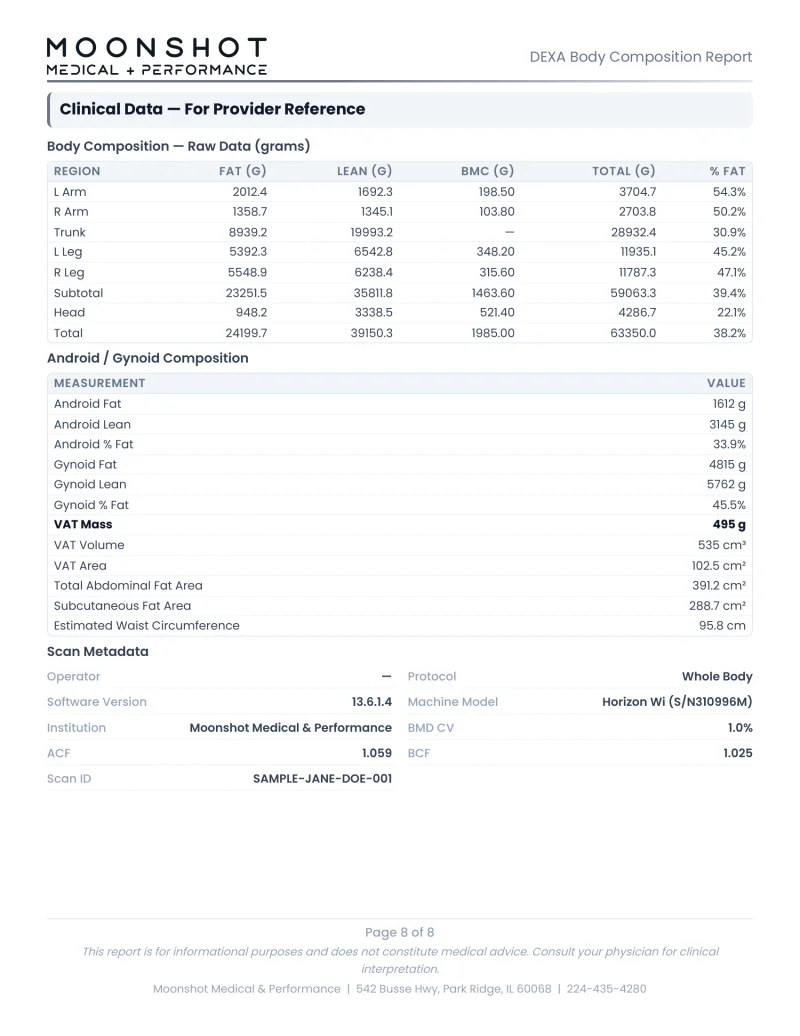
Most DEXA facilities hand you a printout with numbers and send you home. The raw scanner output is useful if you are a radiologist. For everyone else, it is a page of data without context.
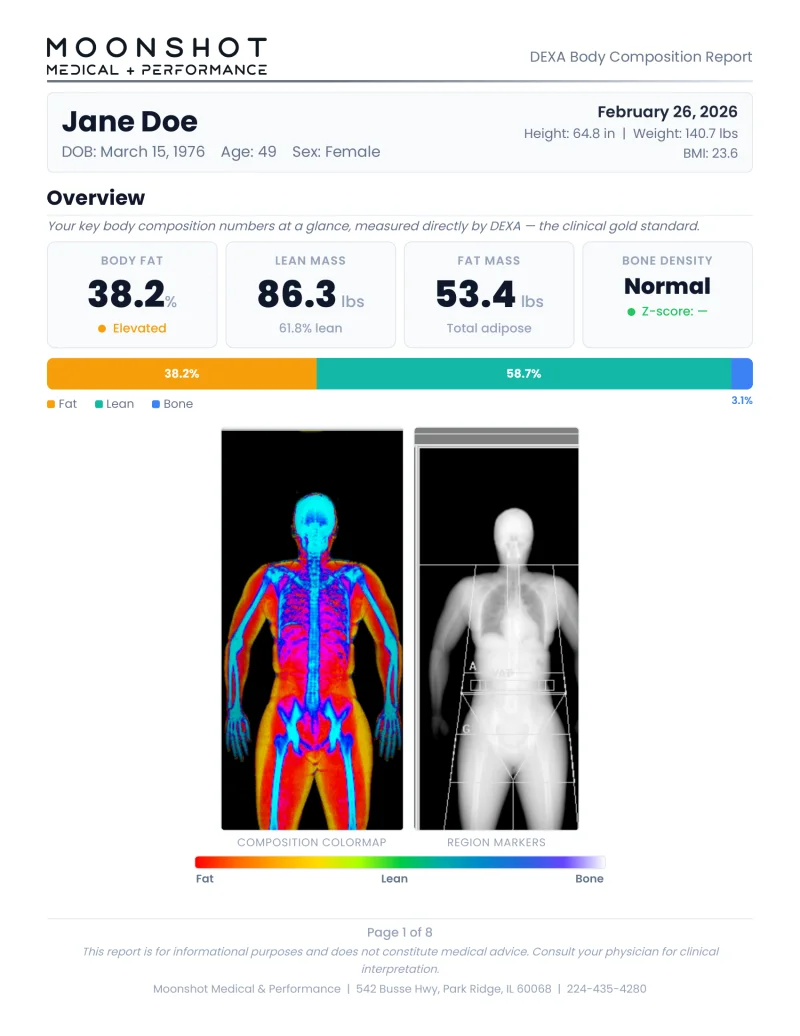
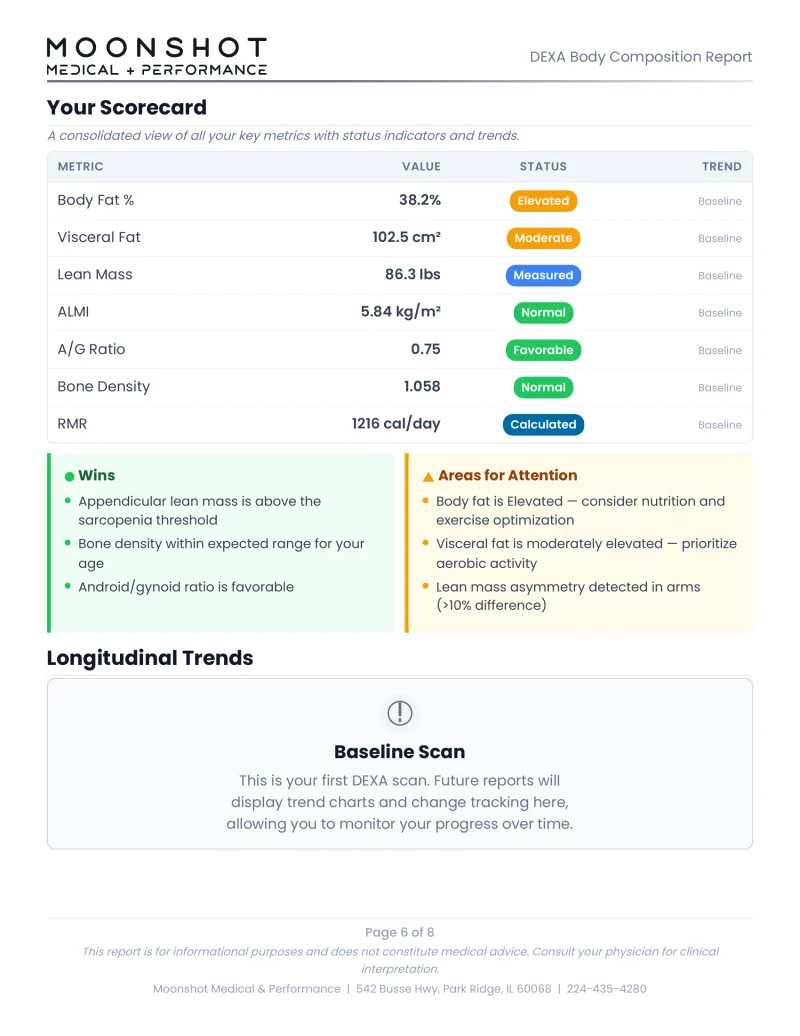
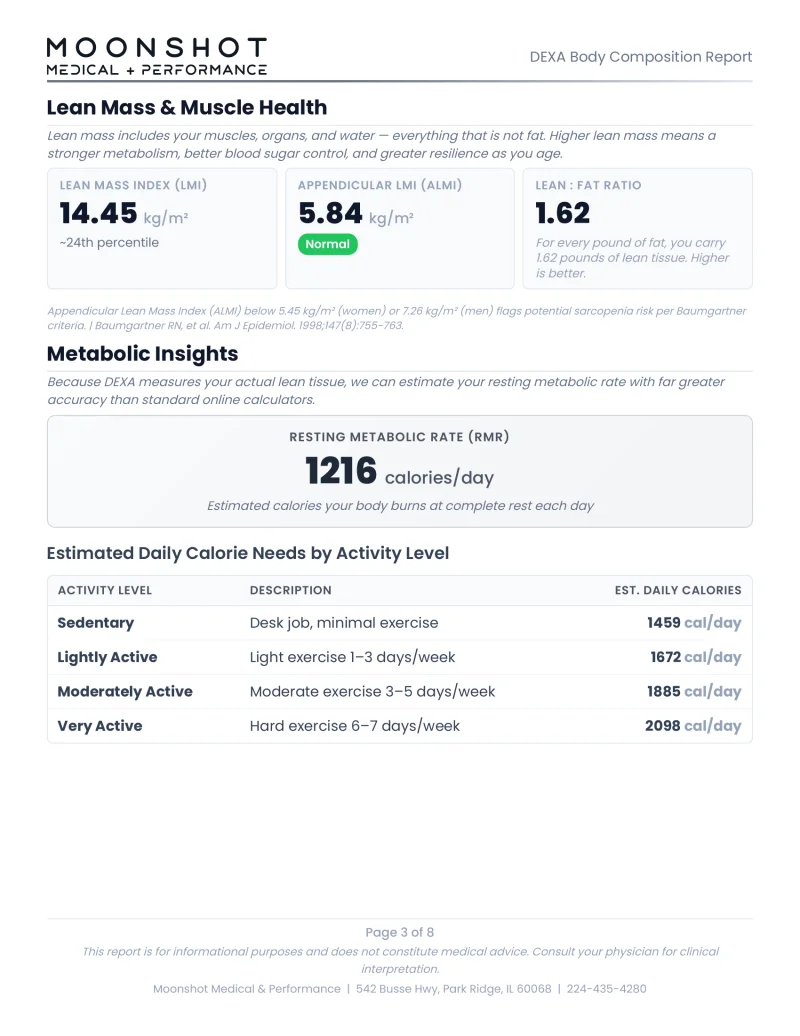
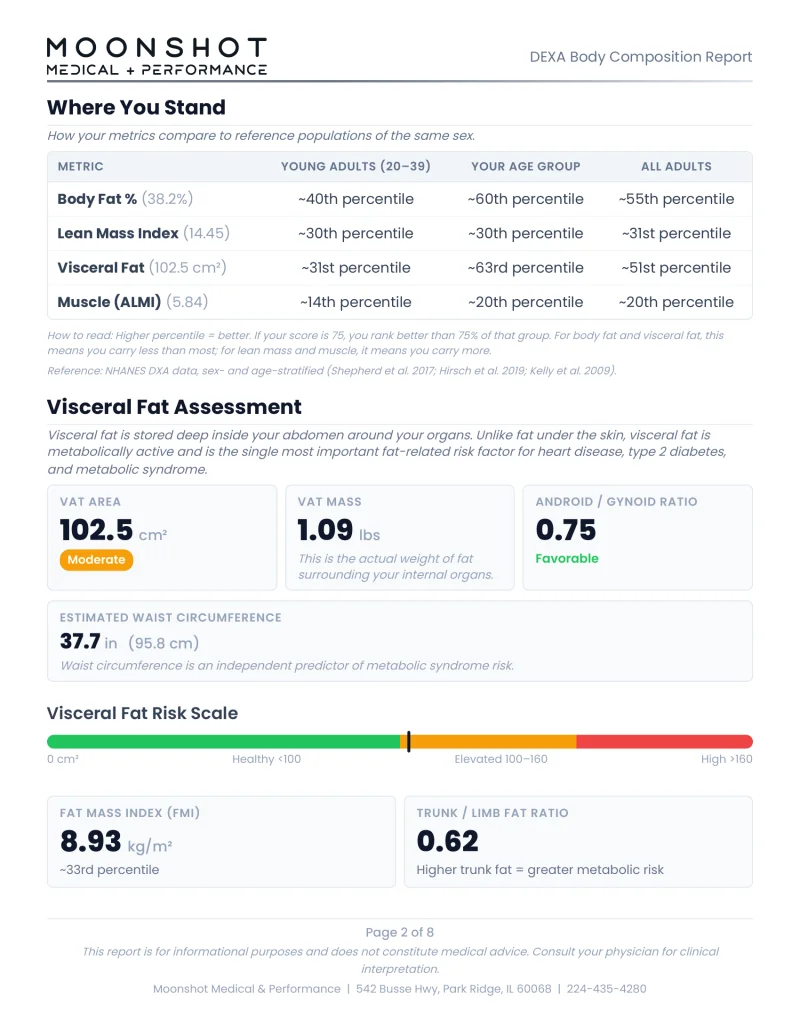
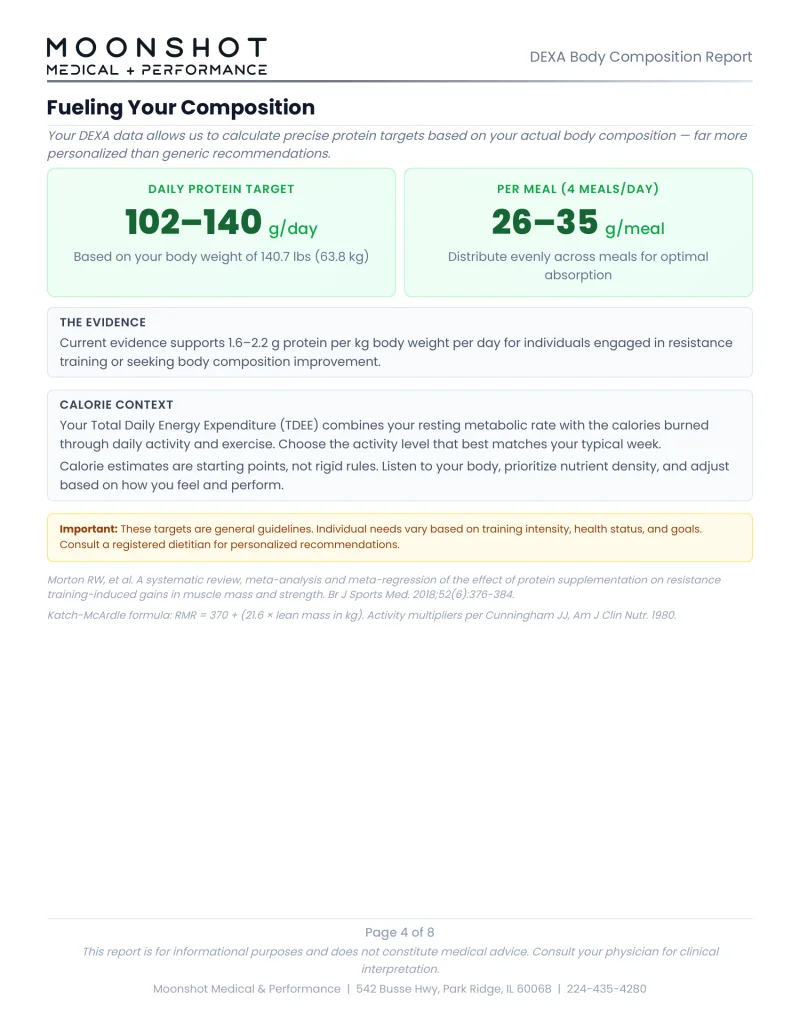
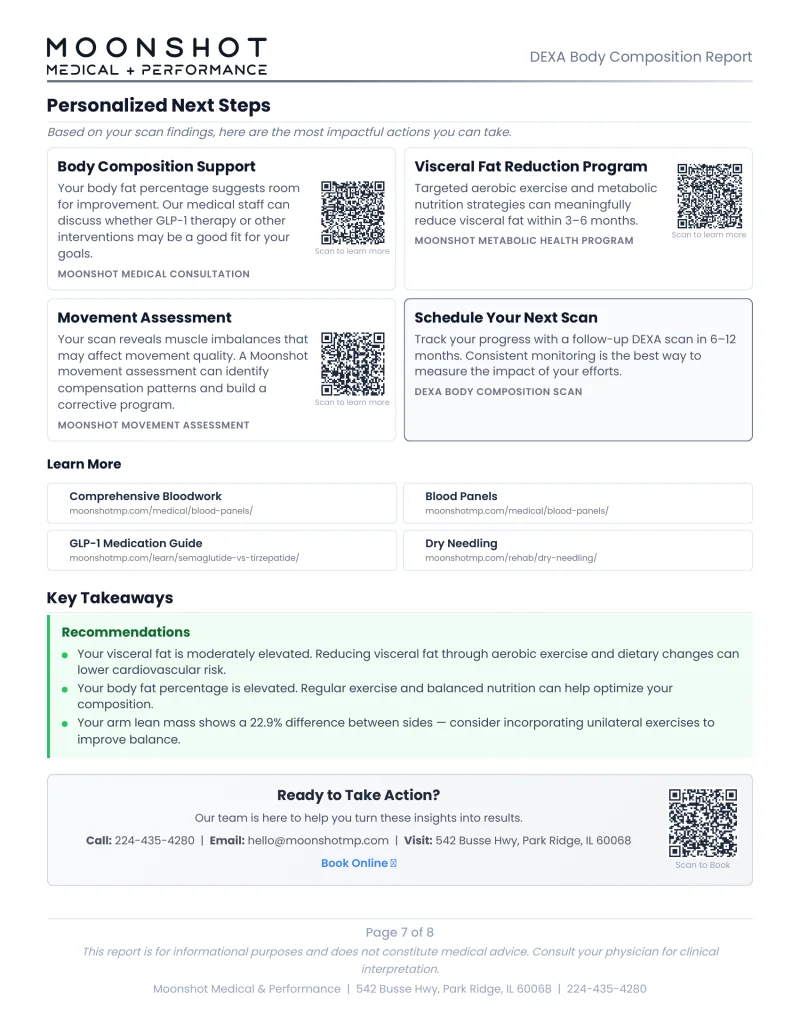
At Moonshot, every DEXA scan includes a comprehensive report—up to 12 pages—with clinical interpretation from our nurse practitioner team. We do not just tell you your body fat percentage. We explain what your numbers mean relative to your age, sex, and goals. We flag risk areas. We give you specific, actionable recommendations.
See a sample report walkthrough to understand the difference between raw scanner output and a clinically interpreted DEXA report.
Clinical Interpretation
Your numbers placed in context—not just what they are, but what they mean for your health and what to do about them.
Risk Stratification
Visceral fat levels, bone density T-scores, and body fat distribution assessed against clinical risk thresholds.
Personalized Recommendations
Specific guidance on training, nutrition, and medical interventions based on your results—not generic advice.
Scan-to-Scan Comparison
Follow-up scans include side-by-side comparisons showing exactly what changed in fat, muscle, and bone.
Sample report pages
TRANSPARENT PRICING
DEXA Scan
$150
Standalone body composition scan with full clinical report
No referral needed. No insurance required. HSA/FSA accepted. Packages available for repeat scanning.
Hormone optimization members get 2 DEXA scans per year included in their program.
WHY CHICAGO PATIENTS COME TO PARK RIDGE FOR DEXA
20 Minutes from Downtown
Moonshot Medical is located at 542 Busse Hwy in Park Ridge—a straight shot from downtown Chicago via I-90. From Lincoln Park, Lakeview, or the north side, you are looking at a 20-25 minute drive. From River North or the Loop, about 25-30 minutes. Closer than most hospital systems where you would need a referral, a longer wait, and a higher price.
Clinical-Grade Hologic Scanner
Moonshot uses a Hologic DEXA scanner—the same brand used in peer-reviewed body composition research and clinical trials. Not all DEXA scanners are equal. Hologic is the standard that published reference ranges are calibrated to. When your results are compared to population norms, the data is directly applicable—no conversion factor needed.
Same-Day Results with NP Interpretation
You do not wait days for results or a separate follow-up appointment. Your scan is processed immediately, and your results are reviewed with you the same day by a board-certified nurse practitioner who can explain what the data means for your health. If action is needed—whether that is a change in training, nutrition, or medical intervention—you leave with a plan.
No Referral, No Insurance Hassle
Hospital-based DEXA scans in Chicago typically require a physician referral, may involve insurance pre-authorization, and often cost $200-$400 out of pocket. At Moonshot, you book directly online at $150 with no referral needed. HSA and FSA funds accepted. You are in control of your own health data.
THE INTEGRATED MODEL: DEXA + BLOOD WORK + HORMONES + TRAINING
Most clinics offer one thing. Moonshot connects the dots between body composition, blood biomarkers, hormone optimization, and training under one roof. Here is why that matters.
DEXA + Blood Work = Complete Picture
Your body composition tells half the story. Your blood work tells the other half. High body fat with normal blood markers is a different clinical picture than high body fat with elevated insulin, HbA1c, and inflammatory markers. When we see both data sets together, we can stratify your actual metabolic risk and prioritize interventions that will make the most impact.
DEXA + Hormones = Accountability
If you are on TRT or thyroid optimization, DEXA provides the objective measurement of whether your protocol is producing real-world results. Lab values tell us your testosterone or T3/T4 are in range. DEXA tells us whether those levels are translating into the body composition changes they should be driving. If they are not, we adjust the protocol.
DEXA + CrossFit = Measurable Progress
Moonshot CrossFit operates in the same facility. Patients who train with us get periodic DEXA scans to objectively measure whether their training program is building muscle, reducing fat, and improving their body composition over time. No other gym in the Chicago area offers this kind of integrated, data-driven approach to fitness and health.
COMMON QUESTIONS
Where can I get a DEXA scan near Chicago?
Moonshot Medical and Performance at 542 Busse Hwy, Park Ridge, IL 60068 has a clinical-grade Hologic DEXA scanner on-site. It is a 20-minute drive from downtown Chicago—no referral needed. Scans are $150 standalone or $405 bundled with a comprehensive 60+ biomarker blood panel.
How much does a DEXA scan cost in the Chicago area?
At Moonshot Medical in Park Ridge (20 minutes from Chicago), a DEXA scan costs $150. The Performance Baseline Bundle (DEXA + comprehensive blood panel) is $405. No insurance required. HSA/FSA accepted. Hospital-based DEXA scans in downtown Chicago typically cost $200-$400 and often require a physician referral.
What does a DEXA scan measure that a scale cannot?
DEXA measures total body fat percentage, lean muscle mass by region (each arm, each leg, trunk), visceral adipose tissue (organ fat), bone mineral density, and fat distribution patterns. A scale gives you one number—total weight. DEXA tells you exactly what that weight is made of and where it is distributed. Learn how to read your DEXA results.
Is DEXA more accurate than InBody or smart scales?
Yes. DEXA uses dual-energy X-ray absorptiometry to directly measure fat, lean tissue, and bone with less than 1% error between scans. InBody and smart scales use bioelectrical impedance, which estimates body composition based on how electricity travels through your body. Hydration, meals, and exercise can swing BIA results by 3-5%. DEXA is the clinical gold standard. See DEXA vs InBody comparison.
How long does a DEXA scan appointment take?
The scan itself takes about 7 minutes—you lie still on a padded table while the scanner passes over you. It is completely painless and non-invasive. Total appointment time including setup, the scan, and a brief review of your results is about 15-20 minutes. The radiation exposure is about 1-4 microsieverts, roughly equivalent to a few hours of natural background radiation.
Why do Chicago patients come to Park Ridge for DEXA scans?
Moonshot Medical is a 20-minute drive from downtown Chicago via I-90. The clinic uses a clinical-grade Hologic scanner (the same brand used in research studies), provides same-day results with NP interpretation, and offers a 12-page report with actionable recommendations—not just raw numbers. At $150 with no referral required, it is also more accessible and affordable than most hospital-based options in the city.
References
- 1. Shepherd JA, et al. "Body composition by DXA." Bone. 2017;104:101-105.
- 2. Kaul S, et al. "Dual-energy X-ray absorptiometry for quantification of visceral fat." Obesity. 2012;20(6):1313-1318.
- 3. Rothney MP, et al. "Precision of GE Lunar iDXA for the Measurement of Total and Regional Body Composition." J Clin Densitom. 2012;15(4):399-404.
- 4. Heymsfield SB, et al. "Weight loss composition is one-fourth fat-free mass: a critical review and critique of this widely cited rule." Obes Rev. 2014;15(4):310-321.
- 5. Wilding JPH, et al. "Once-Weekly Semaglutide in Adults with Overweight or Obesity." N Engl J Med. 2021;384(11):989-1002.
SEE WHAT YOU'RE MADE OF
Medical-grade body composition scan. 7 minutes. No referral. 20 minutes from Chicago.
$150 | Same-day results | Clinical interpretation included
Book DEXA Scan — $150