Local Guide — Park Ridge, IL
DRY NEEDLING IN PARK RIDGE
Trigger point dry needling for fast pain relief. 1-2 sessions often effective. BCBS PPO accepted, transparent cash pricing, no referral needed.
Medically reviewed by Dr. Michael Gontarek, DC, MSc, DACBN · Updated March 2, 2026
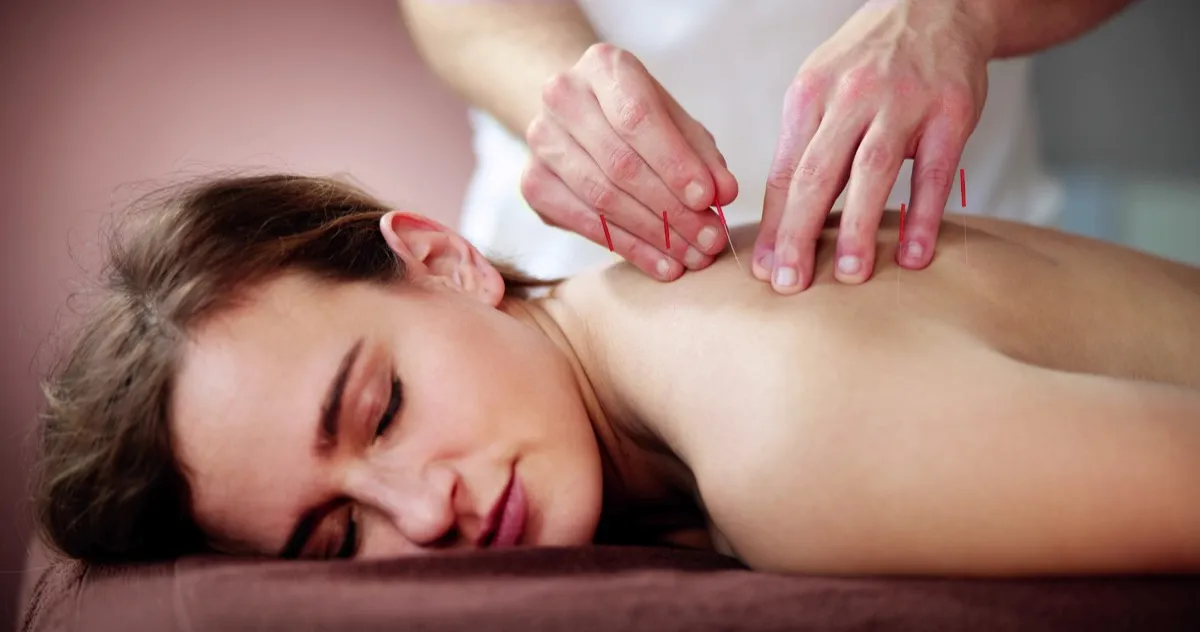
WHAT DRY NEEDLING IS AND HOW IT WORKS
A thin filament needle, a dysfunctional trigger point, and a twitch response that resets the tissue. No medication injected. That's it.
How It Works
A thin, solid monofilament needle is inserted directly into a myofascial trigger point — a hyperirritable spot within a taut band of skeletal muscle. The needle is "dry" because nothing is injected. No medication, no saline, no anesthetic. The needle itself is the treatment.
When the needle hits the trigger point, it elicits a local twitch response — a brief, involuntary contraction that releases the sustained shortening in the muscle. This resets the neuromuscular environment, restores blood flow, normalizes the chemical milieu of the tissue, and reduces pain.
The result: Reduced pain, restored range of motion, and improved muscle function — often within a single session. Read our full dry needling guide.
Not Acupuncture
This is the most common question. Dry needling and acupuncture both use thin filiform needles — but that's where the similarity ends.
Dry needling is based on modern Western neuroscience and musculoskeletal anatomy. The needle goes into the dysfunctional tissue because the tissue is dysfunctional — identified through palpation and clinical assessment.
Acupuncture is based on Traditional Chinese Medicine meridian theory and energy flow. Different framework, different point selection, different clinical goals.
CONDITIONS WE TREAT WITH DRY NEEDLING
If your pain involves a myofascial trigger point — a taut band in the muscle that won't release — dry needling can address it directly at the tissue level.
Neck Pain
Upper trapezius, levator scapulae, and scalene trigger points are among the most responsive to dry needling. Desk work, posture, and stress make these common.
Tension Headaches
Trigger points in the upper trapezius, suboccipitals, and temporalis are well-documented sources of referred headache pain. Dry needling can reduce frequency and intensity.
Shoulder Pain
Infraspinatus, supraspinatus, and subscapularis trigger points can mimic or worsen rotator cuff issues. Dry needling targets the myofascial component directly.
Back Pain
Quadratus lumborum, multifidus, and gluteus medius trigger points are common contributors to low back pain that stretching and foam rolling can't reach.
Hip & Knee Pain
Piriformis, TFL, and vastus lateralis trigger points contribute to hip pain and lateral knee pain often attributed to IT band syndrome.
Plantar Fasciitis
Trigger points in the calf musculature and intrinsic foot muscles contribute to chronic heel pain. Effective in cases resistant to conventional treatment.
Tennis & Golfer's Elbow
Trigger points in the forearm extensors and flexors perpetuate these conditions. Dry needling addresses the muscular driver, not just the symptomatic tendon.
TMJ & Jaw Pain
Masseter and temporalis trigger points are major contributors to jaw clenching, TMJ dysfunction, and associated facial pain.
Post-Surgical Tightness
Scar tissue and adhesions from surgery create trigger points and restrict movement. Dry needling helps remodel tissue and restore mobility.
WHAT TO EXPECT DURING TREATMENT
Assessment & Trigger Point Identification
Dr. Gontarek identifies the involved muscles based on your symptoms, movement patterns, and pain distribution. Using palpation, he locates the taut bands and trigger points driving your pain. This step is critical — the clinician's skill in finding the right tissue determines the outcome.
Needle Insertion & Twitch Response
The needle is extremely thin (0.16-0.30 mm) — much thinner than a hypodermic needle used for injections. Most patients barely feel the insertion. What you will feel is the local twitch response: a brief, involuntary muscle contraction that confirms the needle has hit the trigger point. It lasts a fraction of a second and feels like a deep cramp or flick. That twitch is both diagnostic and therapeutic — it means the taut band is releasing.
Immediate Results
Many patients notice improved range of motion and reduced pain immediately after the needles are removed. You may feel a sense of heaviness or relaxation in the treated area — the muscle has released a contraction it may have been holding for weeks or months.
Post-Treatment (24-48 Hours)
Post-treatment soreness is normal — it feels like the deep ache after a hard workout, not sharp pain. This resolves within 24 to 48 hours. Stay hydrated, move gently, and apply heat if sore. Avoid intense exercise targeting the treated muscles for 24 hours. Most patients see meaningful improvement within 1-2 sessions. You'll know within 2-3 sessions whether dry needling is the right approach for your condition.
INSURANCE & ACCESS
In-Network
BCBS PPO
Accepted for dry needling
Cash Pay
Transparent
Clear pricing, no hidden fees
Out-of-Network
Superbills
Provided for reimbursement
No referral needed. No contracts. HSA/FSA accepted. Book directly online.
LOCATION & HOURS
Moonshot Medical and Performance
542 Busse Hwy
Park Ridge, IL 60068
Provider
Dr. Michael Gontarek, DC, MSc, DACBN
Hours
- Tue-Wed: 8:00 AM - 1:00 PM, 3:00 PM - 6:00 PM
- Thu: 8:00 AM - 1:00 PM
- Fri: 8:00 AM - 1:00 PM, 3:00 PM - 5:00 PM
5-star Google rating • 70+ reviews • No referral needed
Serving the Northwest Suburbs
Patients come to Moonshot for dry needling from across the northwest Chicago suburbs:
- Park Ridge, Des Plaines, Niles
- Edison Park, Norwood Park, Rosemont
- Morton Grove, Glenview, Skokie
- Mount Prospect, Arlington Heights
Conveniently located near I-90 and the Dee Road Metra station.
COMMON QUESTIONS
Where can I get dry needling in Park Ridge?
Moonshot Medical and Performance at 542 Busse Hwy, Park Ridge, IL 60068. Dr. Michael Gontarek, DC, MSc, DACBN provides trigger point dry needling as part of an integrated rehab and recovery approach. No referral needed — book directly online.
Is dry needling the same as acupuncture?
No. They use similar needles, but the framework is entirely different. Dry needling is based on modern neuroscience and musculoskeletal anatomy — the needle targets identifiable trigger points to elicit a twitch response and release the taut band. Acupuncture is based on Traditional Chinese Medicine meridian theory. Different training, different point selection, different clinical goals. Read our full comparison.
How quickly does dry needling work?
Many patients notice improved range of motion and reduced pain immediately after a session. For lasting results, 1-2 sessions are often effective for acute issues. You'll know within 2-3 sessions whether dry needling is the right approach for your specific condition. Chronic issues may require more sessions.
Does dry needling hurt?
The needle insertion itself is barely noticeable — the needles are extremely thin (0.16-0.30 mm), much thinner than a hypodermic needle. What you'll feel is the local twitch response: a brief, involuntary muscle contraction that feels like a deep cramp or flick inside the muscle. It lasts a fraction of a second. Post-treatment soreness similar to a hard workout is normal for 24-48 hours.
Does insurance cover dry needling at Moonshot?
We accept BCBS PPO insurance for dry needling. For other carriers, we offer transparent cash pricing and provide superbills for out-of-network reimbursement. HSA/FSA funds can be used. No referral is needed to schedule.
Can dry needling be combined with chiropractic or other treatments?
Yes — and it often works best that way. At Moonshot, dry needling is part of an integrated approach that may include chiropractic adjustments, manual therapy, corrective exercise, and trigger point injections. The needling resets the dysfunctional tissue; the complementary treatments reinforce proper movement and address underlying biomechanical issues.
References
- 1. Gattie E, Cleland JA, Snodgrass S. "The effectiveness of trigger point dry needling for musculoskeletal conditions by physical therapists: a systematic review and meta-analysis." J Orthop Sports Phys Ther. 2017;47(3):133-149.
- 2. Shah JP, et al. "Biochemicals associated with pain and inflammation are elevated in sites near to and remote from active myofascial trigger points." Arch Phys Med Rehabil. 2008;89(1):16-23.
- 3. Hong CZ. "Lidocaine injection versus dry needling to myofascial trigger point: the importance of the local twitch response." Am J Phys Med Rehabil. 1994;73(4):256-263.
- 4. Cotchett MP, Munteanu SE, Landorf KB. "Effectiveness of trigger point dry needling for plantar heel pain: a randomized controlled trial." Phys Ther. 2014;94(8):1083-1094.
READY TO GET RID OF THE PAIN?
Trigger point dry needling with Dr. Gontarek. Fast results, BCBS PPO accepted, no referral needed. Park Ridge.
Book Appointment