Rehab & Recovery
Shockwave Therapy: How It Works & What It Treats
A non-invasive acoustic wave treatment that triggers your body's own healing response. Backed by decades of research for chronic tendon injuries that won't resolve on their own.
Medically reviewed by Dr. Michael Gontarek, DC, MSc, DACBN · Updated March 2, 2026
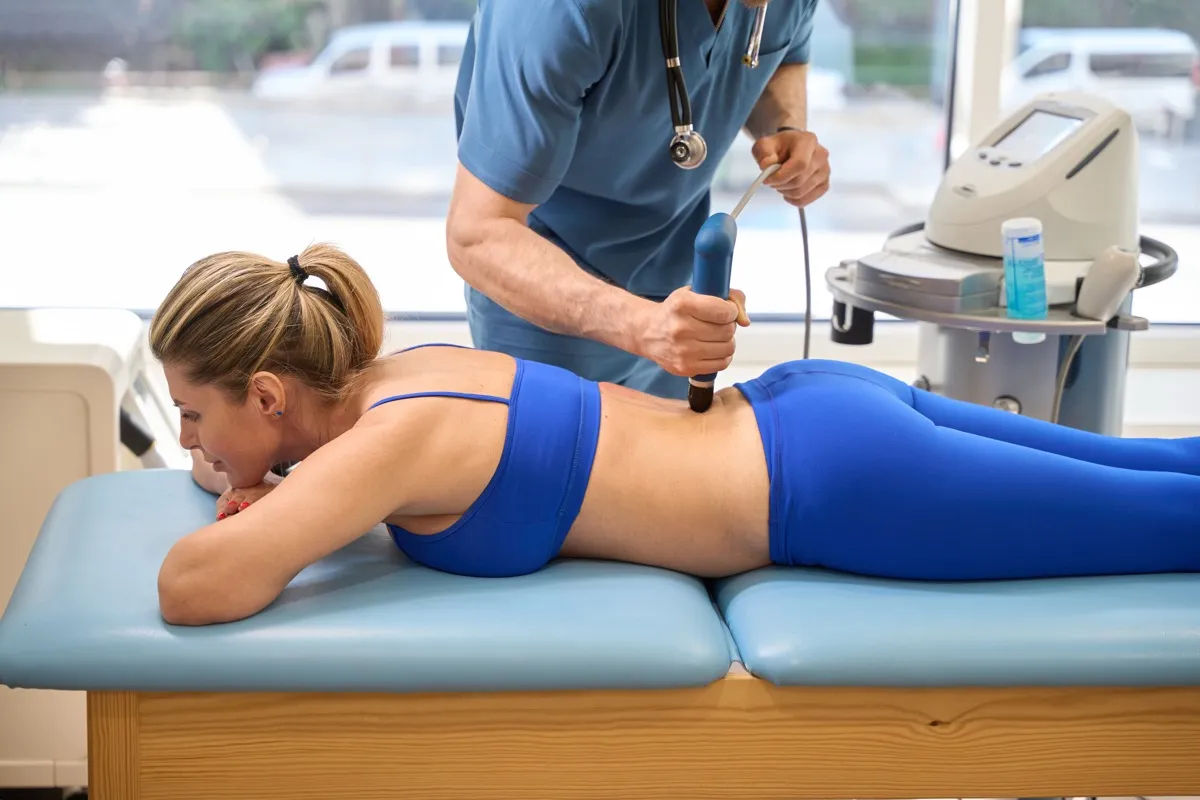
WHAT IS SHOCKWAVE THERAPY?
Extracorporeal shockwave therapy (ESWT) is a non-invasive treatment that delivers acoustic pressure waves through the skin into injured tissue. "Extracorporeal" simply means "outside the body"--the energy is generated externally and transmitted into the tissue without breaking the skin.
The technology was originally developed in the 1980s for lithotripsy--breaking up kidney stones without surgery. Urologists noticed something unexpected: patients who received shockwave treatment showed accelerated bone healing near the treatment site. This observation launched decades of research into shockwave therapy for musculoskeletal conditions, and the results have been remarkably consistent.
Today, shockwave therapy is one of the most evidence-backed non-invasive treatments available for chronic tendon injuries, plantar fasciitis, calcific tendinopathy, and a growing list of musculoskeletal conditions.
Focused Shockwave (fESWT)
Produces a single, high-energy acoustic wave that converges at a specific depth in the tissue. The energy is concentrated at a precise focal point, making it ideal for deep structures and specific lesions like calcific deposits. Generated electromagnetically, electrohydraulically, or piezoelectrically. Higher peak pressure, deeper penetration (up to 12 cm), and more targeted--but also more intense, sometimes requiring local anesthesia.
Radial Pressure Wave (rPWT / rESWT)
Generated by a pneumatically driven projectile that strikes an applicator tip. The pressure wave radiates outward from the contact point, dispersing energy across a broader area. Lower peak pressure, shallower penetration (up to 3-4 cm), and covers a wider treatment zone. Better tolerated without anesthesia and effective for superficial tendons, trigger points, and larger areas of pathology. This is the most commonly used form in clinical practice.
Key distinction: Both types deliver mechanical energy to tissue and trigger biological healing responses. Focused shockwave is more precise and penetrates deeper. Radial shockwave covers a broader area and is more comfortable. Many clinics use radial shockwave as the primary modality, with focused shockwave reserved for deeper or more targeted applications.
HOW SHOCKWAVE THERAPY WORKS
Chronic tendon injuries don't heal on their own because they get stuck. The initial inflammatory phase that's supposed to kick off repair either never fully activates or stalls out. Blood supply to tendons is already limited, and chronic overuse creates a degenerative cycle--the tissue breaks down faster than it rebuilds. This is why rest alone rarely fixes a chronic tendinopathy. You're not dealing with acute inflammation anymore; you're dealing with failed healing.
Shockwave therapy works by deliberately restarting that stalled healing process. The acoustic waves create controlled mechanical stress at the cellular level--a process called mechanotransduction--which triggers a cascade of biological responses.
Neovascularization (New Blood Vessel Formation)
Shockwave upregulates vascular endothelial growth factor (VEGF) and endothelial nitric oxide synthase (eNOS), which stimulate the formation of new blood vessels in the treated area. This is critical--chronic tendinopathies are characterized by poor blood supply, and you can't heal tissue you can't deliver nutrients to. Published studies show significant increases in blood flow to treated tendons within weeks.
Growth Factor Release
The mechanical stress triggers release of multiple growth factors: VEGF for blood vessel formation, bone morphogenetic proteins (BMPs) for tissue regeneration, transforming growth factor beta-1 (TGF-B1) for collagen production, and insulin-like growth factor (IGF-1) for cell proliferation. These are the same signals your body uses in acute healing--shockwave re-activates them in tissue that's stopped responding.
Collagen Synthesis Stimulation
Shockwave therapy stimulates fibroblast activity and promotes the production of type I collagen--the structural protein that gives tendons their strength. In chronic tendinopathy, the normal collagen architecture becomes disorganized. Shockwave triggers a remodeling process where disordered collagen is gradually replaced with properly aligned fibers, restoring tensile strength to the tendon.
Calcific Deposit Breakdown
In calcific tendinopathy (especially the rotator cuff), calcium deposits accumulate within the tendon and cause significant pain and restricted motion. Shockwave therapy mechanically fragments these deposits while simultaneously triggering macrophage activity to reabsorb the calcium. This is one of the strongest indications for shockwave--studies show over 80% calcium resorption rates.
Substance P Depletion (Pain Reduction)
Substance P is a neurotransmitter that mediates pain signaling. Shockwave therapy causes an initial release of substance P followed by depletion--effectively reducing pain signal transmission in the treated area. This is why many patients experience pain relief that develops progressively over weeks. The analgesic effect compounds as healing progresses.
Stem Cell Activation and Migration
Research has shown that shockwave therapy activates mesenchymal stem cells and promotes their migration to the treatment site. These cells can differentiate into tenocytes (tendon cells), osteoblasts (bone cells), and other cell types needed for tissue repair. This mechanism is particularly relevant for non-union fractures and tendon-bone junction injuries.
Osteoblast and Fibroblast Stimulation
The mechanical energy directly stimulates osteoblasts (bone-building cells) and fibroblasts (connective tissue cells) to increase their metabolic activity. This is the mechanotransduction pathway at work: cells convert mechanical signals into biochemical responses, upregulating repair processes that had stalled in the chronic injury state.
WHAT A TREATMENT SESSION LOOKS LIKE
Shockwave therapy is an in-clinic procedure that requires no preparation, no anesthesia (for radial shockwave), and no downtime. Here's what to expect step by step.
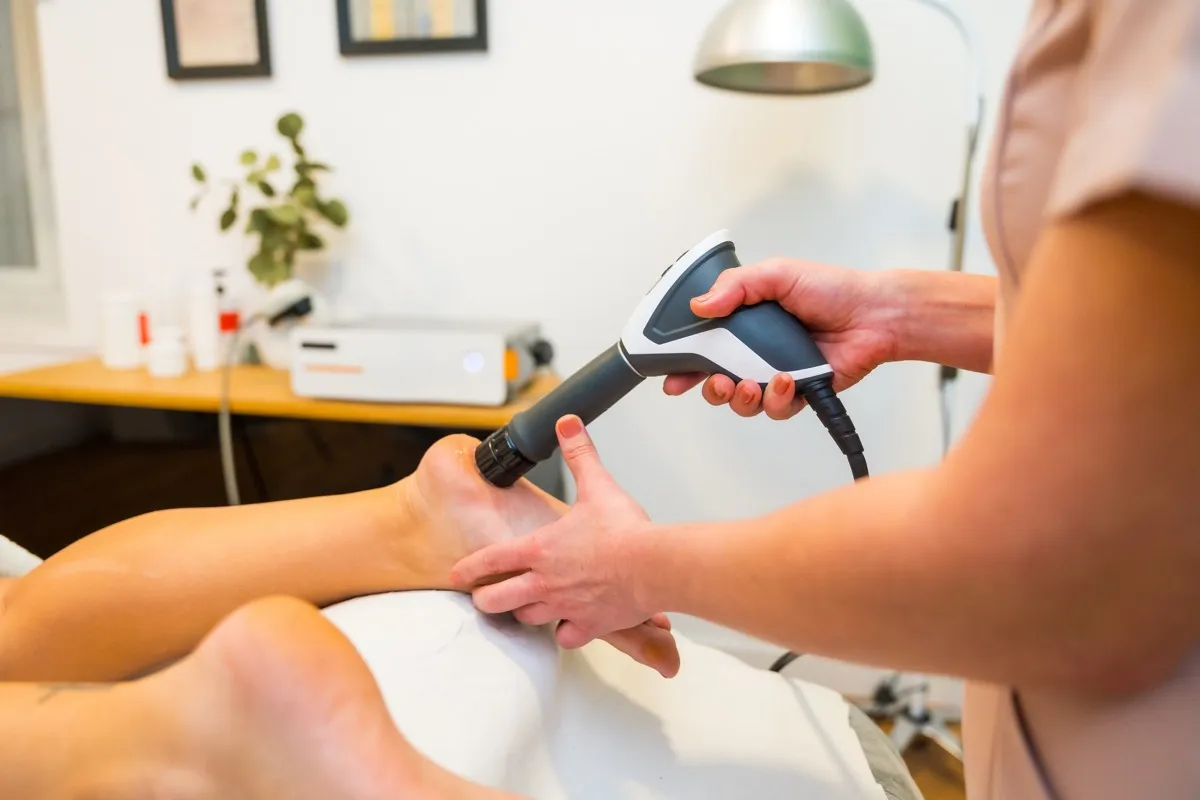
Assessment and Positioning
Your provider locates the exact area of pathology through palpation and your pain response. The treatment area is identified and you're positioned comfortably. The affected tendon or structure is placed under slight tension when possible--this improves wave transmission and treatment effectiveness.
Coupling Gel Applied
A water-based coupling gel (similar to ultrasound gel) is applied to the skin over the treatment area. This eliminates air between the applicator and your skin, allowing efficient transmission of acoustic waves into the tissue. Without it, the waves would reflect off the skin surface.
Treatment Delivery
The handheld applicator is positioned over the treatment area and activated. You'll feel a rapid tapping or pulsing sensation. Typical settings: energy flux density of 0.01-0.30 mJ/mm2 (adjusted based on condition and tolerance), frequency of 5-15 Hz, and 1,500-4,000 impulses per treatment area. The applicator is moved slowly across the area, spending extra time on the most painful points. Total treatment time per area is 5-15 minutes.
Intensity Adjustment
Your provider starts at a lower energy setting and gradually increases based on your feedback. The treatment should be uncomfortable but tolerable--most patients rate it a 4-6 out of 10 on a pain scale. The point of maximum tenderness (the "sweet spot") often correlates with the epicenter of pathology. Your feedback guides the treatment.
Post-Treatment
The gel is wiped off and you're done. No bandaging, no restrictions on driving, no recovery period. You walk out and return to your day. Mild soreness in the treated area is normal for 1-2 days. You can return for your next session in approximately one week.
Treatment protocol: Most conditions respond to 3-6 sessions spaced 1 week apart. The one-week interval is important--it gives the tissue time to initiate the healing response triggered by each session before the next round of stimulation. More sessions aren't always better; the protocol is designed around the biology of tissue repair.
WHAT CONDITIONS IT TREATS
Shockwave therapy is most effective for chronic tendon injuries and conditions that haven't responded to rest, physical therapy, or injections. Here are the primary indications.
Plantar Fasciitis
Strongest EvidenceThe single most studied indication for shockwave therapy. Chronic plantar fasciitis--especially cases that have failed 6+ months of conservative treatment--responds exceptionally well. Systematic reviews show 65-80% of patients achieve significant pain reduction and functional improvement. The 2020 Cochrane-level evidence supports ESWT as a first-line non-invasive treatment for recalcitrant plantar fasciitis before considering surgery.
Calcific Shoulder Tendinopathy
Strongest EvidenceCalcium deposits in the rotator cuff tendons cause significant pain and limited range of motion. This is arguably where shockwave therapy shines brightest. Multiple high-quality RCTs and meta-analyses demonstrate over 80% calcium resorption rates with focused shockwave. Pain relief and functional improvement persist at 6- and 12-month follow-ups. The NICE (National Institute for Health and Care Excellence) and multiple international guidelines recommend ESWT for this condition.
Achilles Tendinopathy
Strong EvidenceBoth insertional and mid-portion Achilles tendinopathy respond to shockwave therapy. Meta-analyses show 60-75% improvement rates for pain and function. Shockwave is particularly valuable for insertional Achilles tendinopathy, where eccentric loading exercises (the gold standard for mid-portion disease) are often less effective. Evidence supports ESWT as a treatment option when physical therapy alone hasn't resolved symptoms.
Lateral Epicondylitis (Tennis Elbow)
Strong EvidenceChronic tennis elbow that hasn't responded to bracing, therapy, or injections is a strong candidate for shockwave. Studies show 60-75% improvement rates. Importantly, shockwave avoids the tendon-weakening effects of repeated cortisone injections, which are increasingly being questioned for this condition. Multiple RCTs support ESWT as superior to placebo and comparable to surgery for chronic cases.
Medial Epicondylitis (Golfer's Elbow)
Strong EvidenceSimilar to tennis elbow but on the inner aspect of the elbow. Less studied than lateral epicondylitis but the mechanism is the same--chronic tendinopathy of the common flexor origin. Available studies show comparable response rates to lateral epicondylitis treatment. A reasonable option when conservative treatment has failed.
Rotator Cuff Tendinopathy (Non-Calcific)
Strong EvidenceChronic rotator cuff tendinopathy without calcium deposits also responds to shockwave therapy, though the evidence is slightly less robust than for the calcific variant. Studies show improvement in pain and function, particularly for supraspinatus tendinopathy. Often used in combination with a structured rehabilitation program for best results.
Patellar Tendinopathy (Jumper's Knee)
Strong EvidenceA notoriously difficult condition to treat, especially in athletes who can't fully rest. Shockwave therapy has shown 50-65% improvement rates for chronic patellar tendinopathy. While response rates are somewhat lower than for plantar fasciitis or calcific shoulder disease, shockwave remains one of the better non-surgical options for this stubborn condition, particularly when eccentric loading alone hasn't worked.
Greater Trochanteric Pain Syndrome
Strong EvidencePreviously called "trochanteric bursitis," this condition involves tendinopathy of the gluteal tendons at the hip. It's common in runners and active adults. Shockwave therapy has shown significant improvements in pain and function, with RCTs demonstrating superiority over corticosteroid injection at 12-month follow-up. The LEAP trial (2018) established shockwave as a viable treatment option for this condition.
Myofascial Trigger Points
Moderate EvidenceRadial shockwave can be effective for myofascial trigger points--those painful knots in muscle that refer pain to other areas. The mechanical energy disrupts the dysfunctional motor endplate activity that maintains the trigger point, reduces local ischemia, and stimulates blood flow. Studies show improvements in pain and range of motion, particularly in the upper trapezius and other chronic trigger point areas.
Medial Tibial Stress Syndrome (Shin Splints)
Moderate EvidenceChronic shin splints that haven't resolved with rest and load management can respond to shockwave therapy. The treatment targets the periosteal and muscular pathology along the medial tibial border. Emerging evidence shows promising results, particularly for athletes and military personnel dealing with recurrent symptoms. Often combined with gait retraining and gradual return-to-running programs.
THE EVIDENCE BASE
Shockwave therapy is not a fringe treatment. It has one of the strongest evidence bases of any non-invasive musculoskeletal intervention, supported by hundreds of published studies, dozens of randomized controlled trials (RCTs), and multiple systematic reviews and meta-analyses.
Plantar Fasciitis
A 2017 meta-analysis in the British Medical Bulletin analyzing 11 RCTs found ESWT significantly reduced pain in chronic plantar fasciitis compared to placebo, with success rates of 65-80%. A 2019 meta-analysis in the Journal of Orthopaedic Surgery and Research confirmed these findings and noted sustained improvements at 12-month follow-up.
Calcific Shoulder Tendinopathy
High-energy focused ESWT for calcific rotator cuff tendinopathy has produced some of the most impressive results in the literature. The landmark RCT by Gerdesmeyer et al. (2003) demonstrated over 80% calcium resorption and significant pain improvement at 6-month follow-up. Subsequent meta-analyses have consistently confirmed these findings.
Tennis Elbow
A 2020 systematic review in the American Journal of Sports Medicine found ESWT produced clinically meaningful improvements in chronic lateral epicondylitis that persisted at long-term follow-up. Notably, ESWT showed advantages over corticosteroid injection at time points beyond 3 months, as steroid effects tend to diminish while shockwave benefits compound.
Achilles Tendinopathy
Multiple systematic reviews support ESWT for chronic Achilles tendinopathy, with a 2015 meta-analysis in the British Journal of Sports Medicine showing significant improvements in VISA-A scores (the validated outcome measure for Achilles tendinopathy). Results were particularly strong for insertional Achilles tendinopathy, where other conservative options are limited.
Context: International guidelines from NICE (UK), ISMST (International Society for Medical Shockwave Treatment), and multiple national orthopedic and sports medicine societies include ESWT in their recommendations for chronic tendinopathies. The treatment has been used clinically for over 20 years with an established safety profile. This isn't experimental--it's an evidence-based treatment that has earned its place in musculoskeletal care.
WHAT TO EXPECT DURING AND AFTER TREATMENT
During Treatment
Sensation: You'll feel a rapid, repetitive tapping or pulsing at the treatment site. It's not sharp--more like a deep pressure or knocking. Most patients describe it as uncomfortable but tolerable.
Intensity: Your provider adjusts the energy level based on your feedback. The goal is to work at a level that is therapeutic but manageable. If it's too intense, say so--the setting gets dialed down immediately.
Duration: 5-15 minutes per treatment area. Most sessions are done in under 10 minutes. If multiple areas are treated in the same visit, the total time increases accordingly.
Anesthesia: Radial shockwave does not require anesthesia. Focused shockwave at higher energy levels may use a topical numbing cream for comfort, though some protocols avoid it since pain feedback guides treatment accuracy.
After Treatment
Immediate: No downtime. You can walk out, drive, and return to normal activities immediately. Most people go back to work the same day without restriction.
Soreness: Mild soreness or aching in the treated area for 1-2 days is normal and expected. This is part of the therapeutic inflammatory response. Light redness or warmth at the treatment site may occur.
Avoid NSAIDs: Do not take ibuprofen, naproxen, or other anti-inflammatory medications for 2-3 days after treatment. These drugs blunt the inflammatory healing response that shockwave is specifically designed to trigger. Acetaminophen (Tylenol) is fine if you need pain relief.
Timeline: Don't expect instant results. The healing process shockwave initiates takes time. Most patients begin noticing improvement after the second or third session, with continued gains over 6-12 weeks as tissue remodels. Full benefit is typically realized 3-4 months after completing the treatment series.
SHOCKWAVE VS OTHER TREATMENTS
Understanding how shockwave compares to other common treatments helps clarify where it fits in a treatment plan. These aren't always either-or decisions--sometimes they're complementary.
Shockwave vs Cortisone Injections
This is the most important comparison. Cortisone (corticosteroid) injections suppress inflammation and provide short-term pain relief--often within days. But they do not heal tissue. In fact, repeated cortisone injections have been shown to weaken tendons, accelerate degeneration, and increase the risk of tendon rupture. Studies on lateral epicondylitis show that cortisone provides initial relief but leads to worse outcomes at 6 and 12 months compared to no injection at all.
Shockwave works in the opposite direction: it promotes healing by stimulating the body's regenerative response. It may not provide immediate pain relief like cortisone, but the improvements are sustained because the underlying tissue pathology is being addressed. For chronic tendinopathies, the evidence increasingly favors shockwave over repeated cortisone injections.
Shockwave vs Surgery
Surgery for chronic tendon conditions (debridement, release, or repair) is invasive, requires anesthesia, involves recovery time, and carries surgical risks including infection, nerve damage, and incomplete resolution. For conditions like plantar fasciitis, surgical success rates are comparable to shockwave therapy--but surgery comes with significantly more risk and downtime.
This is why most orthopedic guidelines now recommend trying shockwave therapy before considering surgery for chronic tendinopathies. If shockwave doesn't provide adequate relief after a full course of treatment, surgery remains an option. But many patients who would have gone to surgery 15 years ago are now successfully treated with shockwave instead.
Shockwave vs PRP (Platelet-Rich Plasma)
Both shockwave and PRP aim to stimulate the body's healing response--they just do it differently. PRP involves drawing blood, concentrating the platelets (which contain growth factors), and injecting them into the injured tissue. Shockwave delivers mechanical energy that triggers the same biological cascades without an injection.
These treatments can be complementary. Some protocols use shockwave to prepare tissue and increase blood flow before a PRP injection, potentially enhancing the PRP's effectiveness. For patients who want to avoid injection-based treatments, shockwave offers a completely non-invasive alternative with a comparable evidence base. Another option worth considering is BPC-157 peptide therapy, which supports tendon and tissue healing through a different mechanism and can be used alongside shockwave for stubborn injuries.
Shockwave vs Physical Therapy Alone
Physical therapy--particularly eccentric loading programs--is the foundation of tendinopathy treatment and should almost always be part of the plan. Shockwave is not a replacement for rehabilitation; it's an accelerator. When combined with a structured rehab program, shockwave can help overcome the plateau that many chronic tendon patients hit with physical therapy alone. The best outcomes in the research typically come from ESWT combined with targeted exercise, not either modality in isolation.
COMMON QUESTIONS
Is shockwave therapy painful?
Most patients describe it as a strong tapping or pressure sensation. There is some discomfort, especially over the most tender areas, but the intensity is adjusted to your tolerance during treatment. Radial shockwave is generally well tolerated without anesthesia. Focused shockwave at higher energy levels may require topical numbing. Most people rate the discomfort as manageable--a 4 to 6 out of 10--and sessions only last 5 to 15 minutes.
How many sessions do I need?
Most protocols involve 3 to 6 sessions, spaced about 1 week apart. Some conditions respond in as few as 3 sessions, while more chronic or severe injuries may require the full 6. Your provider will assess your response after each session and adjust the plan accordingly. Many patients notice meaningful improvement by the third or fourth session.
What's the success rate?
Success rates vary by condition. For plantar fasciitis: 65-80% significant improvement. For calcific shoulder tendinopathy: over 80% for calcium resorption and pain relief. For tennis elbow and Achilles tendinopathy: 60-75% improvement rates. These are among the highest success rates for any non-invasive musculoskeletal treatment. Response depends on the specific condition, chronicity, and adherence to the full treatment protocol.
Does insurance cover shockwave therapy?
Most insurance plans in the United States do not cover shockwave therapy, as many insurers still consider it investigational despite strong clinical evidence. Some plans may cover it for specific FDA-cleared indications like plantar fasciitis. Check with your insurance provider for your specific plan. At Moonshot, we offer transparent pricing so you know the cost before you start.
Can I exercise after treatment?
You can return to light activity immediately. Avoid high-impact loading of the treated area for 24-48 hours. Low-impact exercise like walking, cycling, or swimming is fine. Importantly, avoid NSAIDs (ibuprofen, naproxen) for 2-3 days after treatment--they can blunt the inflammatory healing response that shockwave is designed to trigger. Acetaminophen is fine if needed.
Who should NOT get shockwave therapy?
Shockwave therapy is contraindicated over open growth plates in children, over areas with active infection, over tumors or malignancies, in patients with blood clotting disorders or on anticoagulant therapy, during pregnancy (near the uterus), and directly over major nerve or vascular bundles. Patients with pacemakers should consult their cardiologist first. Your provider will screen for all contraindications before treatment.
References
- 1. Gerdesmeyer L, et al. "Extracorporeal shock wave therapy for the treatment of chronic calcifying tendonitis of the rotator cuff: a randomized controlled trial." JAMA. 2003;290(19):2573-2580.
- 2. Yin MC, et al. "Is extracorporeal shock wave therapy clinical efficacy for relief of chronic, recalcitrant plantar fasciitis? A systematic review and meta-analysis of randomized placebo or active-treatment controlled trials." Arch Phys Med Rehabil. 2014;95(8):1585-1593.
- 3. Mani-Babu S, et al. "The effectiveness of extracorporeal shock wave therapy in lower limb tendinopathy: a systematic review." Am J Sports Med. 2015;43(3):752-761.
- 4. Wang CJ. "Extracorporeal shockwave therapy in musculoskeletal disorders." J Orthop Surg Res. 2012;7:11.
- 5. Ioppolo F, et al. "Clinical improvement and resorption of calcifications in calcific tendinitis of the shoulder after shock wave therapy at 6 months' follow-up: a systematic review and meta-analysis." Arch Phys Med Rehabil. 2013;94(9):1699-1706.
- 6. Rompe JD, et al. "Eccentric loading versus eccentric loading plus shock-wave treatment for midportion Achilles tendinopathy: a randomized controlled trial." Am J Sports Med. 2009;37(3):463-470.
- 7. Speed C. "A systematic review of shockwave therapies in soft tissue conditions: focusing on the evidence." Br J Sports Med. 2014;48(21):1538-1542.
- 8. Schmitz C, et al. "Efficacy and safety of extracorporeal shock wave therapy for orthopedic conditions: a systematic review on studies listed in the PEDro database." Br Med Bull. 2015;116(1):115-138.
- 9. Furia JP. "High-energy extracorporeal shock wave therapy as a treatment for insertional Achilles tendinopathy." Am J Sports Med. 2006;34(5):733-740.
- 10. Verstraelen FU, et al. "High-energy versus low-energy extracorporeal shock wave therapy for calcifying tendinitis of the shoulder: a meta-analysis." J Orthop Traumatol. 2014;15(2):71-78.
DEALING WITH A STUBBORN TENDON INJURY?
If rest, therapy, and injections haven't resolved your chronic pain, shockwave therapy may be the next step. We'll assess your condition and build a treatment plan that targets the root cause.
Book Consultation