Local Guide — Park Ridge, IL
SHOCKWAVE THERAPY IN PARK RIDGE
Acoustic pressure waves that restart stalled healing in chronic tendon injuries. Non-invasive, evidence-backed, and available locally with BCBS PPO accepted.
Medically reviewed by Dr. Michael Gontarek, DC, MSc, DACBN · Updated March 2, 2026
WHAT IS SHOCKWAVE THERAPY?
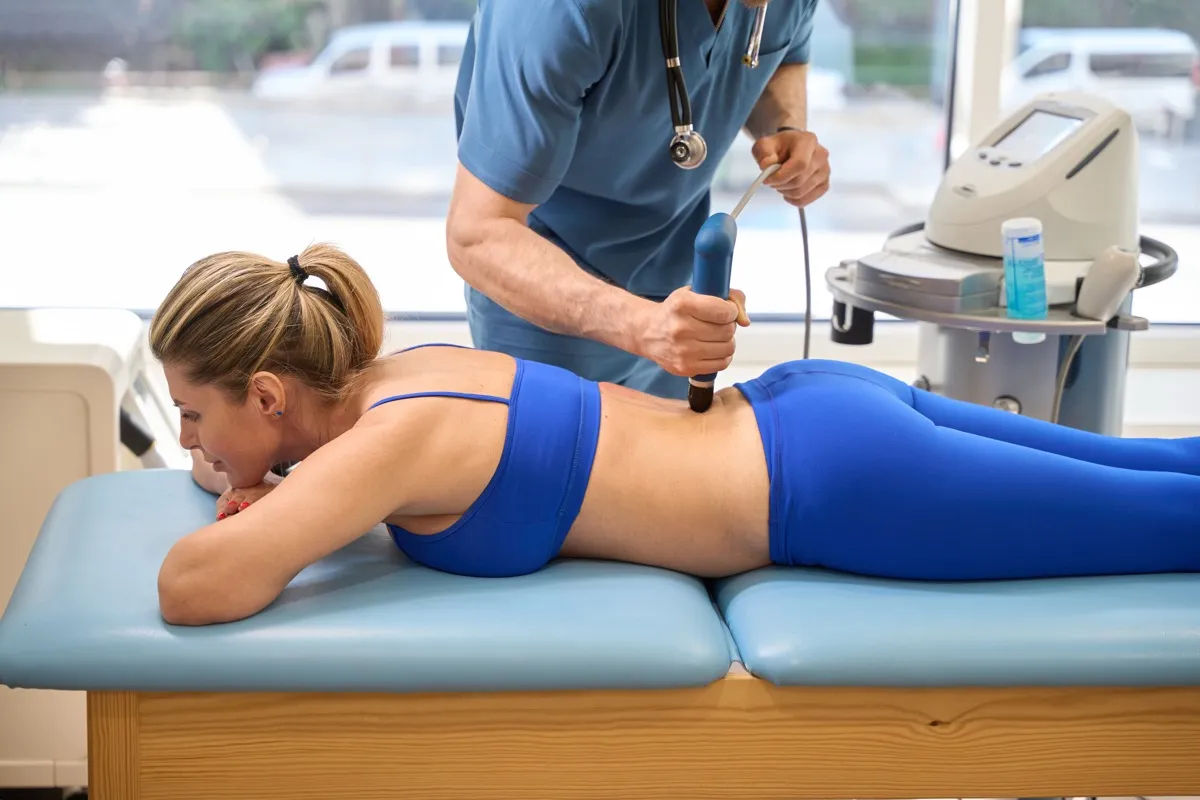
Extracorporeal shockwave therapy (ESWT) delivers acoustic pressure waves through the skin into damaged tissue--restarting your body's healing response where it stalled.
Originally for Kidney Stones
Shockwave technology was developed in the 1980s to break up kidney stones without surgery. Physicians noticed patients also showed accelerated tissue healing near the treatment site. Decades of research followed, and ESWT is now one of the most evidence-backed non-invasive treatments for chronic musculoskeletal injuries.
Why Chronic Injuries Get Stuck
Chronic tendon injuries don't heal on their own because the initial inflammatory phase--the one that kicks off repair--either never fully activates or stalls out. Blood supply to tendons is already limited. Rest alone rarely fixes the problem. You're not dealing with acute inflammation anymore. You're dealing with failed healing.
How ESWT Fixes That
Shockwave deliberately restarts the stalled healing process. The acoustic waves create controlled mechanical stress at the cellular level, stimulating neovascularization (new blood vessels), releasing growth factors like eNOS, VEGF, and BMP, breaking down calcifications, and disrupting pain signaling via substance P depletion. Read the full science.
CONDITIONS WE TREAT WITH SHOCKWAVE
ESWT is most effective for chronic tendon injuries that haven't responded to rest, physical therapy, or injections. These are the conditions we treat most frequently in Park Ridge.
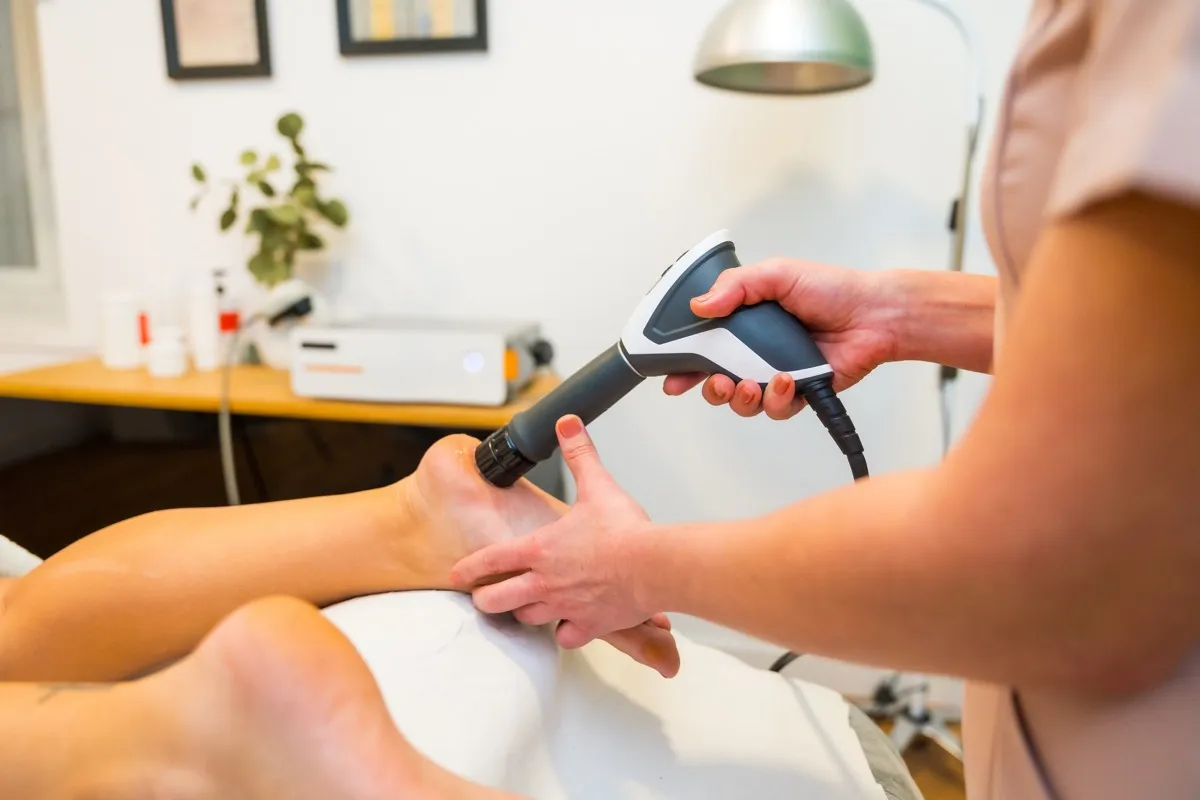
Plantar Fasciitis
The single most common and most studied indication for shockwave therapy. Systematic reviews show 65-80% of patients achieve significant pain reduction. If you've had heel pain for months and rest hasn't fixed it, ESWT is a first-line option before considering surgery.
Achilles Tendinopathy
Both insertional and mid-portion Achilles tendinopathy respond well to shockwave. Particularly valuable for insertional cases where eccentric loading exercises--the standard rehab approach--are often less effective on their own.
Tennis Elbow (Lateral Epicondylitis)
Chronic tennis elbow that hasn't responded to bracing or therapy is a strong candidate. Studies show 60-75% improvement rates. Unlike repeated cortisone injections, shockwave promotes actual tissue healing rather than just masking pain.
Golfer's Elbow (Medial Epicondylitis)
Same mechanism as tennis elbow but on the inner aspect. Chronic tendinopathy of the common flexor origin responds to the same shockwave protocols with comparable success rates.
Patellar Tendinopathy (Jumper's Knee)
A notoriously difficult condition to resolve, especially in athletes who can't fully rest. Shockwave remains one of the better non-surgical options for this stubborn injury, particularly when eccentric loading alone has plateaued.
Calcific Tendinitis (Shoulder)
Calcium deposits in the rotator cuff cause significant pain and restricted motion. Shockwave mechanically fragments these deposits while triggering macrophage activity to reabsorb the calcium. Studies show over 80% calcium resorption rates.
Hip Bursitis (Greater Trochanteric Pain)
Tendinopathy of the gluteal tendons at the hip, common in runners and active adults. RCTs demonstrate shockwave superiority over corticosteroid injection at 12-month follow-up. A durable solution, not a temporary fix.
Best Candidates
Shockwave works best for chronic tendon conditions that haven't responded to rest, physical therapy, or conservative treatment. If you've been dealing with the same injury for months and nothing has resolved it, you're likely a good candidate. Success rates: 70-90% for appropriate cases.
WHAT TO EXPECT
Assessment
Dr. Gontarek locates the exact area of pathology through palpation and your pain response. The affected tendon is positioned under slight tension when possible to improve wave transmission. No special preparation required on your end.
Treatment
A coupling gel is applied, and the handheld applicator delivers 2,000-3,000 acoustic pulses to the treatment area over 10-15 minutes. You'll feel a rapid tapping or deep pressure sensation. The intensity starts lower and is adjusted based on your feedback--uncomfortable but tolerable, usually a 4-6 out of 10.
Protocol
Most conditions require 3-6 sessions spaced one week apart. The one-week interval is important--it gives the tissue time to initiate the healing response before the next round of stimulation. Your provider assesses your response after each session and adjusts accordingly.
After Treatment
No downtime. Walk out and return to your day. Mild soreness for 1-2 days is normal and expected--that's the therapeutic inflammatory response at work. Avoid anti-inflammatory medications (ibuprofen, naproxen) for 2-3 days after treatment--they blunt the healing response shockwave is designed to trigger. Acetaminophen is fine if needed.
Timeline for Results
Don't expect instant results. Shockwave initiates a healing process that takes time. Most patients notice improvement after the second or third session. Full effects develop over 6-12 weeks as tissue remodels. The results are durable because you're healing the tissue, not just masking the pain.
INSURANCE & ACCESS
BCBS PPO Accepted
We accept Blue Cross Blue Shield PPO insurance. Coverage varies by plan--our team will verify your benefits before treatment so there are no surprises.
Transparent Cash Pricing
For patients without BCBS PPO or those who prefer to pay directly, we offer straightforward cash pricing. You know the cost before your first session. HSA/FSA funds accepted.
Out-of-Network Superbills
If you have insurance other than BCBS PPO, we provide superbills you can submit to your insurer for out-of-network reimbursement. Many patients recover a significant portion of the cost.
No referral needed. Book directly online. Treatment provided by Dr. Michael Gontarek, DC, MSc, DACBN.
LOCATION & HOURS
Moonshot Medical and Performance
542 Busse Hwy
Park Ridge, IL 60068
- Mon: 7am-4pm
- Tue: 11am-6pm
- Wed: 9am-7pm
- Thu: 11am-6pm
- Fri: 7am-3pm
- Sat: 8am-2pm
5-star Google rating, 70+ reviews. No referral needed--book directly online.
Serving the Northwest Suburbs
Patients come to Moonshot for shockwave therapy from across the northwest Chicago suburbs:
- Park Ridge, Des Plaines, Niles
- Edison Park, Norwood Park, Rosemont
- Morton Grove, Glenview, Skokie
- Mount Prospect, Arlington Heights
COMMON QUESTIONS
Is shockwave therapy the same as ultrasound?
No. Therapeutic ultrasound delivers low-intensity continuous sound waves primarily for warming tissue. Shockwave therapy delivers high-energy acoustic pressure waves that create controlled mechanical stress at the cellular level--triggering neovascularization, growth factor release, and a genuine biological healing response. They are fundamentally different treatments with different mechanisms and different evidence bases.
How do I know if I'm a good candidate?
The ideal candidate has a chronic tendon injury (typically 3+ months) that hasn't resolved with rest, physical therapy, or other conservative treatment. Plantar fasciitis, Achilles tendinopathy, tennis/golfer's elbow, patellar tendinopathy, calcific tendinitis, and hip bursitis are the most responsive conditions. If you've been dealing with the same pain for months and nothing has worked, you're likely a good candidate.
Why can't I take ibuprofen after treatment?
Shockwave therapy works by deliberately triggering an inflammatory healing response in tissue that stopped healing on its own. Anti-inflammatory medications (NSAIDs like ibuprofen and naproxen) suppress that exact response. Taking them after treatment undermines the mechanism that makes shockwave effective. Acetaminophen (Tylenol) is fine because it reduces pain without suppressing inflammation.
Can shockwave therapy replace surgery?
In many cases, yes. For conditions like chronic plantar fasciitis, shockwave success rates are comparable to surgical outcomes but without the incision, anesthesia, recovery time, or surgical risks. Most orthopedic guidelines now recommend trying ESWT before considering surgery for chronic tendinopathies. If shockwave doesn't provide adequate relief after a full course, surgery remains an option.
Do I need a referral for shockwave therapy at Moonshot?
No referral is needed. You can book directly online. Dr. Michael Gontarek, DC, MSc, DACBN will assess your condition and determine if shockwave therapy is appropriate for your specific injury before beginning treatment.
How is Moonshot different from other clinics offering shockwave?
Dr. Gontarek combines shockwave therapy with a full rehab and chiropractic approach. Shockwave accelerates healing, but the best outcomes come from pairing it with targeted rehabilitation--addressing the root cause, not just the symptom. We also integrate dry needling and manual therapy when appropriate to maximize your results.
References
- 1. Gerdesmeyer L, et al. "Extracorporeal shock wave therapy for the treatment of chronic calcifying tendonitis of the rotator cuff: a randomized controlled trial." JAMA. 2003;290(19):2573-2580.
- 2. Yin MC, et al. "Is extracorporeal shock wave therapy clinical efficacy for relief of chronic, recalcitrant plantar fasciitis? A systematic review and meta-analysis of randomized placebo or active-treatment controlled trials." Arch Phys Med Rehabil. 2014;95(8):1585-1593.
- 3. Mani-Babu S, et al. "The effectiveness of extracorporeal shock wave therapy in lower limb tendinopathy: a systematic review." Am J Sports Med. 2015;43(3):752-761.
- 4. Wang CJ. "Extracorporeal shockwave therapy in musculoskeletal disorders." J Orthop Surg Res. 2012;7:11.
DONE WAITING FOR IT TO HEAL ON ITS OWN?
Non-invasive shockwave therapy. 10-15 minutes per session. No referral needed. BCBS PPO accepted. Park Ridge location.
Book Shockwave Consultation