Diagnostics
WHAT LABS SHOULD YOU ACTUALLY BE TESTING?
Your annual physical checks a handful of markers and calls it a day. That panel was designed to screen for disease, not to show how your body is actually running. Here is how to think about which tests you need.
Medically reviewed by Missy Zammichieli, DNP, APRN, FNP-BC · Updated March 3, 2026
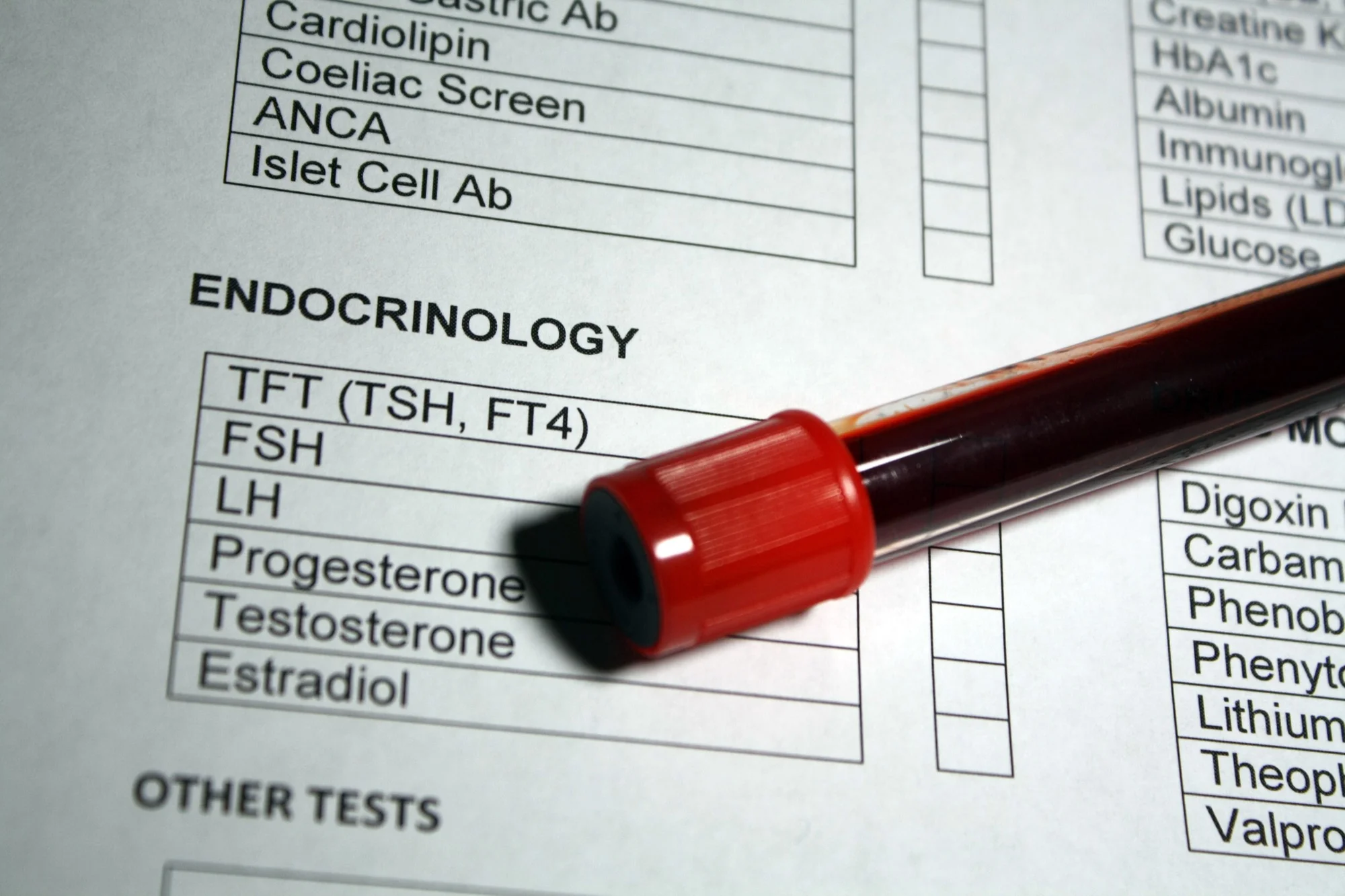
THE STANDARD PANEL: WHAT YOUR PCP ORDERS AND WHAT IT MISSES
A typical annual physical includes a CBC, a basic metabolic panel, a standard lipid panel, and maybe TSH. That is 12-15 markers. It was designed to answer one question: is anything acutely wrong right now?
That is a useful question. It is also a limited one. A standard panel will not tell you whether you are becoming insulin resistant, whether your testosterone is declining, whether your thyroid is converting hormones properly, or whether you carry a genetic cardiovascular risk factor that a basic lipid panel cannot detect. Those processes develop gradually over years, and by the time they show up on a standard panel, you have already lost your best window to intervene.
The issue is not that standard panels are bad. It is that they were built for disease screening, not health assessment. If you want to know how your body is actually performing, you need a broader lens.
What a Standard Panel Checks
- • Complete Blood Count (CBC)
- • Basic Metabolic Panel (glucose, electrolytes)
- • Standard Lipid Panel (Total Cholesterol, LDL, HDL, Triglycerides)
- • TSH only (thyroid screening)
- • Maybe HbA1c if you are high risk
12-15 markers. Designed to screen for disease.
What It Misses
- • Fasting insulin (the earliest metabolic warning sign)
- • ApoB and Lp(a) (the markers most predictive of heart disease)
- • Free and bioavailable testosterone
- • Free T3, Free T4, and thyroid antibodies
- • hs-CRP (systemic inflammation)
- • Vitamin D and B12
These are not exotic add-ons. They are standard in any comprehensive panel.
THE COMPREHENSIVE PANEL: 62 BIOMARKERS ACROSS 10 SYSTEMS
A comprehensive panel asks a different question: instead of “is anything broken?”, it asks “how is everything running?” At Moonshot Medical, that means 62 biomarkers across 10 body systems: cardiovascular, metabolic, hormones, thyroid, liver, kidneys, blood cells, vitamins, inflammation, and cross-system patterns.
The value is not in collecting more numbers. It is in seeing how systems connect. A “normal” fasting glucose means less if your fasting insulin and triglycerides tell a different story. A normal TSH means less if Free T3 is low and TPO antibodies are elevated. These patterns are invisible on a standard panel because the relevant markers are not being tested.
For a full breakdown of what each domain covers and how markers interact, see Your Blood Work Explained. The rest of this article focuses on a different question: given your situation, which tests matter most to you?
WHICH TESTS DO YOU ACTUALLY NEED?
Start with a comprehensive baseline. Then use your symptoms, medications, and goals to decide where to dig deeper.
If You Are Experiencing Fatigue
Fatigue is one of the most common complaints and one of the least specific. Dozens of causes look identical from the outside. The right labs narrow the list fast.
Priority tests:
- • Full thyroid panel (TSH, Free T3, Free T4, TPO antibodies) — subclinical hypothyroidism is a leading cause of fatigue and is missed when only TSH is tested
- • Testosterone (total, free, bioavailable) — low testosterone causes fatigue, brain fog, and low motivation in both men and women
- • Fasting insulin and HbA1c — insulin resistance causes energy crashes even when glucose looks normal
- • Vitamin D and B12 — deficiencies in either cause fatigue and are common in the general population
- • CBC with iron studies — anemia is one of the most straightforward causes of fatigue
A comprehensive panel covers all of these. If your standard panel came back “normal” and you are still exhausted, the problem is likely in the markers that were not tested.
If You Are on TRT or Considering It
Testosterone replacement therapy requires specific monitoring before, during, and after treatment. The Endocrine Society recommends confirming low testosterone with at least two morning draws before starting therapy.
Priority tests:
- • Full hormone panel: Total Testosterone, Free Testosterone, Bioavailable Testosterone, SHBG, Estradiol, LH, FSH, DHEA-S, PSA
- • CBC — testosterone increases red blood cell production; hematocrit must be monitored to manage polycythemia risk
- • Lipid panel — testosterone therapy can shift lipid profiles
- • Liver enzymes — baseline and periodic monitoring
- • Metabolic panel — testosterone affects insulin sensitivity and metabolic markers
Once on TRT, most of these should be rechecked every 3-6 months. Hormone optimization members at Moonshot get comprehensive labs every 6 months included.
If You Are on GLP-1 Medication or Losing Weight
GLP-1 medications like semaglutide and tirzepatide cause significant metabolic changes. Rapid weight loss — whether from medication, surgery, or aggressive dieting — shifts hormones, nutrient status, and body composition in ways that need monitoring.
Priority tests:
- • Fasting insulin, fasting glucose, HbA1c — track how metabolic markers improve as weight drops; insulin sensitivity often improves before weight noticeably changes
- • Full lipid panel with ApoB and triglycerides — lipid profiles shift significantly with weight loss
- • Liver enzymes — fatty liver often improves with weight loss, and liver function should be tracked
- • Kidney function panel — rapid weight changes can affect kidney markers and electrolyte balance
- • Vitamin D, B12 — reduced food intake can accelerate nutrient depletion
- • Hormones — weight loss affects SHBG and sex hormones; testosterone often rises as body fat decreases
Retest at 3 months after starting GLP-1 medication, then every 6 months while on treatment.
If You Have Thyroid Concerns
The standard approach to thyroid screening is TSH only. That catches overt thyroid failure. It does not catch subclinical hypothyroidism, conversion problems, or autoimmune thyroid disease in its early stages.
Priority tests:
- • Full thyroid panel: TSH, Free T4, Free T3, and TPO antibodies
- • Free T3 is the active hormone — your body converts T4 into T3. If TSH and T4 look fine but T3 is low, you have a conversion problem that TSH alone will never reveal
- • TPO antibodies detect Hashimoto's thyroiditis years before TSH goes out of range — early detection changes the management approach
If you have symptoms of thyroid dysfunction (fatigue, cold intolerance, weight gain, hair thinning, constipation) and your TSH came back “normal,” the next step is a full panel — not dismissal.
If You Are Over 40
After 40, the rate of change in hormones, metabolic function, and cardiovascular risk accelerates. This is the decade when trends that started in your 30s become measurable — and when early intervention has the highest return.
The baseline panel everyone over 40 needs:
- • Full hormone panel — testosterone declines roughly 1-2% per year after 30; by 45, many men are symptomatic
- • Advanced cardiovascular markers — ApoB and Lp(a) especially; Lp(a) is genetic and only needs to be tested once, but most people have never had it checked
- • Fasting insulin, glucose, and HbA1c — insulin resistance is the precursor to most metabolic disease and often develops silently through your 40s
- • Full thyroid panel — thyroid dysfunction becomes more common with age, particularly in women
- • hs-CRP — a baseline for systemic inflammation, which correlates with cardiovascular and metabolic risk
- • Vitamin D — deficiency becomes more common as you age; affects bone health, immune function, and hormone production
Think of a comprehensive panel at 40 as establishing your reference point. You cannot track decline without a starting measurement.
HOW OFTEN TO RETEST
One blood draw is one data point. Two or three over a year show you the trend — and trends are where the real value is. Here is a general framework.
Baseline
Everyone needs a comprehensive baseline. This is your starting point. You cannot track progress or identify decline without knowing where you started. Ideally done before beginning any interventions, supplements, or significant lifestyle changes.
6-8 Weeks After Starting a New Intervention
Started TRT? GLP-1 medication? New supplement protocol? Changed your diet significantly? Retest at 6-8 weeks. This shows whether the intervention is working, whether doses need adjustment, and whether there are unintended effects. Skipping this step means flying blind.
Every 3-6 Months During Active Treatment
During the first year of hormone therapy, GLP-1 treatment, or active optimization, testing every 3-6 months helps dial in protocols. Hormones, insulin sensitivity, inflammatory markers, and nutrient levels can shift meaningfully over these windows. This is where precision matters most.
Semi-Annual or Annual (Maintenance)
Once your numbers are stable and you are feeling good, testing every 6-12 months is sufficient. This catches gradual shifts before they become problems and confirms your protocols are still effective. Adjust the schedule if new symptoms arise, major life changes occur (stress, illness, medication changes), or you start a new intervention.
HOW TO PREPARE FOR ACCURATE RESULTS
Bad preparation means unreliable data. A poorly timed blood draw can make your results look dramatically different from reality. These details matter.
Fasting
Fast for 10-12 hours before your draw. Water is fine and encouraged — dehydration can distort results. No food, no supplements, no caloric beverages. Do not fast longer than 16 hours, as prolonged fasting can also skew metabolic markers.
Time of Day
Test in the morning, ideally between 7-10 AM. Testosterone peaks in the early morning and drops throughout the day. The Endocrine Society recommends morning draws for hormone testing. Cortisol follows a similar diurnal pattern. Testing at 3 PM gives you a fundamentally different picture than 8 AM.
Exercise
Avoid intense exercise for 24-48 hours before your draw. Hard training can spike liver enzymes (AST, ALT), inflammatory markers (hs-CRP), and cortisol, creating results that look like a problem but are just recovery. It also temporarily lowers testosterone.
Hydration
Drink plenty of water the evening before and morning of your draw. Dehydration concentrates your blood and can artificially raise hemoglobin, creatinine, BUN, and electrolyte levels. It also makes the draw physically easier.
Supplements and Medications
Ask your provider whether to take medications before or after the draw. Biotin (common in hair, skin, and nail supplements) can cause falsely abnormal thyroid results — the FDA recommends stopping biotin at least 72 hours before blood work. If you are on TRT, timing relative to your injection matters.
Consistency
For follow-up labs, replicate conditions. Same time of day, same fasting window, same timing relative to medications. This makes your results comparable across draws so you can identify real trends rather than noise from different preparation.
THE GAP BETWEEN “NORMAL” AND OPTIMAL
When your doctor says your labs are “normal,” that means you fall within the middle 95% of the general population. That population includes people who are overweight, sedentary, chronically stressed, and on multiple medications. Falling within that range is a low bar.
Optimal ranges come from research on healthy, active populations and from clinical experience with patients who feel and perform their best. They are narrower, and they are more useful. A fasting insulin of 22 mIU/L is technically normal. Clinically, it signals insulin resistance. A TSH of 4.0 is normal. But if you are fatigued, gaining weight, and losing hair, that number might be your answer — and the reference range just told you to ignore it.
A comprehensive panel gives your provider the data to look beyond reference ranges and assess how each system is actually functioning. For a deep dive into how each biomarker domain works and what to look for, explore the Blood Work Explained guide.
COMMON QUESTIONS
Which blood panel is right for me?
It depends on your age, symptoms, and goals. Everyone over 30 benefits from a comprehensive baseline panel (60+ markers). If you are experiencing specific symptoms like fatigue, weight gain, or low energy, you may need targeted add-ons for thyroid, hormones, or metabolic health. If you are on TRT or GLP-1 medication, your provider should be monitoring specific markers every 3-6 months. A good starting point: get a comprehensive panel once, then retest based on what the results show.
Why does my doctor say my labs are “normal” when I still feel terrible?
Standard reference ranges are built from the general population — including people who are overweight, sedentary, stressed, and on medications. “Normal” means you fall within the range of average Americans, not that you are optimized. There is a significant difference between “not diagnosably sick” and “actually healthy.” A comprehensive panel with tighter optimal ranges often reveals what a standard panel misses.
How often should I get comprehensive blood work done?
Start with a comprehensive baseline. If you begin any intervention (hormone therapy, GLP-1 medication, supplementation, dietary changes), retest at 6-8 weeks. During the first year of active treatment, testing every 3-6 months helps dial in your protocol. After that, semi-annual or annual testing is sufficient for most people, unless something changes or new symptoms arise.
Do I need to fast before blood work?
Yes, for the most accurate results. Fast for 10-12 hours before your draw (water is fine and encouraged). Test in the morning, ideally between 7-10 AM, especially if hormones are being measured since testosterone and cortisol peak in the morning. Avoid intense exercise for 24-48 hours before. If you take supplements or medications, ask your provider whether to take them before or after the draw.
What is the difference between a standard blood panel and a comprehensive one?
A standard annual physical panel checks 12-15 markers and is designed to screen for disease. A comprehensive panel tests 60+ markers across 10 body systems — hormones, metabolism, cardiovascular, thyroid, liver, kidneys, blood cells, vitamins, inflammation, and cross-system patterns. The difference is asking “Am I sick?” versus “How is everything actually running?” A comprehensive panel catches problems years earlier, when you have the most options.
Which tests should I get if I am considering TRT?
Before starting testosterone therapy, you need a full hormone panel: Total Testosterone, Free Testosterone, Bioavailable Testosterone, SHBG, Estradiol, LH, FSH, DHEA-S, and PSA. You also need a CBC (to check hematocrit), a metabolic panel, and a lipid panel as baselines. Once on TRT, these markers should be monitored every 3-6 months to ensure safe and effective dosing.
References
- 1. MedlinePlus. Basic Metabolic Panel (BMP). U.S. National Library of Medicine. Available at: https://medlineplus.gov/lab-tests/basic-metabolic-panel-bmp/
- 2. Tabak AG, Herder C, Rathmann W, Brunner EJ, Kivimaki M. Prediabetes: a high-risk state for diabetes development. Lancet. 2012;379(9833):2279-2290.
- 3. Sniderman AD, Thanassoulis G, Glavinovic T, et al. Apolipoprotein B particles and cardiovascular disease: a narrative review. JAMA Cardiol. 2019;4(12):1287-1295.
- 4. Wilson DP, Jacobson TA, Jones PH, et al. Use of lipoprotein(a) in clinical practice: a biomarker whose time has come. A scientific statement from the National Lipid Association. J Clin Lipidol. 2022;16(5):e71-e95.
- 5. American Diabetes Association Professional Practice Committee. 2. Diagnosis and Classification of Diabetes: Standards of Care in Diabetes — 2025. Diabetes Care. 2025;48(Suppl 1):S27-S49.
- 6. Bhasin S, Brito JP, Cunningham GR, et al. Testosterone therapy in men with hypogonadism: an Endocrine Society clinical practice guideline. J Clin Endocrinol Metab. 2018;103(5):1715-1744.
- 7. Garber JR, Cobin RH, Gharib H, et al. Clinical practice guidelines for hypothyroidism in adults: cosponsored by the American Association of Clinical Endocrinologists and the American Thyroid Association. Endocr Pract. 2012;18(6):988-1028.
- 8. Grundy SM, Stone NJ, Bailey AL, et al. 2018 AHA/ACC Guideline on the Management of Blood Cholesterol. Circulation. 2019;139(25):e1082-e1143.
- 9. U.S. Food and Drug Administration. The FDA Warns that Biotin May Interfere with Lab Tests: FDA Safety Communication. Updated 2019.
- 10. Demay MB, Pittas AG, Bikle DD, et al. Vitamin D for the Prevention of Disease: An Endocrine Society Clinical Practice Guideline. J Clin Endocrinol Metab. 2024;109(8):1907-1947.
FIND OUT WHAT YOUR LABS ARE ACTUALLY TELLING YOU
62 biomarkers. 10 body systems. In-person review with your provider. No referral needed.
Book Your Lab Panel