Body Composition Guide
DEXA vs InBody vs CALIPERS
Not all body composition tests are created equal. Here's how the most common methods compare—and why we use medical-grade DEXA.
COMPARISON AT A GLANCE
| Method | Accuracy | Measures Visceral Fat | Regional Breakdown | Bone Density | Cost |
|---|---|---|---|---|---|
| DEXA Scan | Excellent <2% error |
Yes | Yes | Yes | $100-200 |
| InBody / BIA | Moderate 5-8% error |
Estimated | Yes | No | $25-75 |
| Calipers | Variable 3-5% error |
No | No | No | $0-50 |
| Smart Scale | Poor 5-10%+ error |
No | No | No | $30-150 (device) |
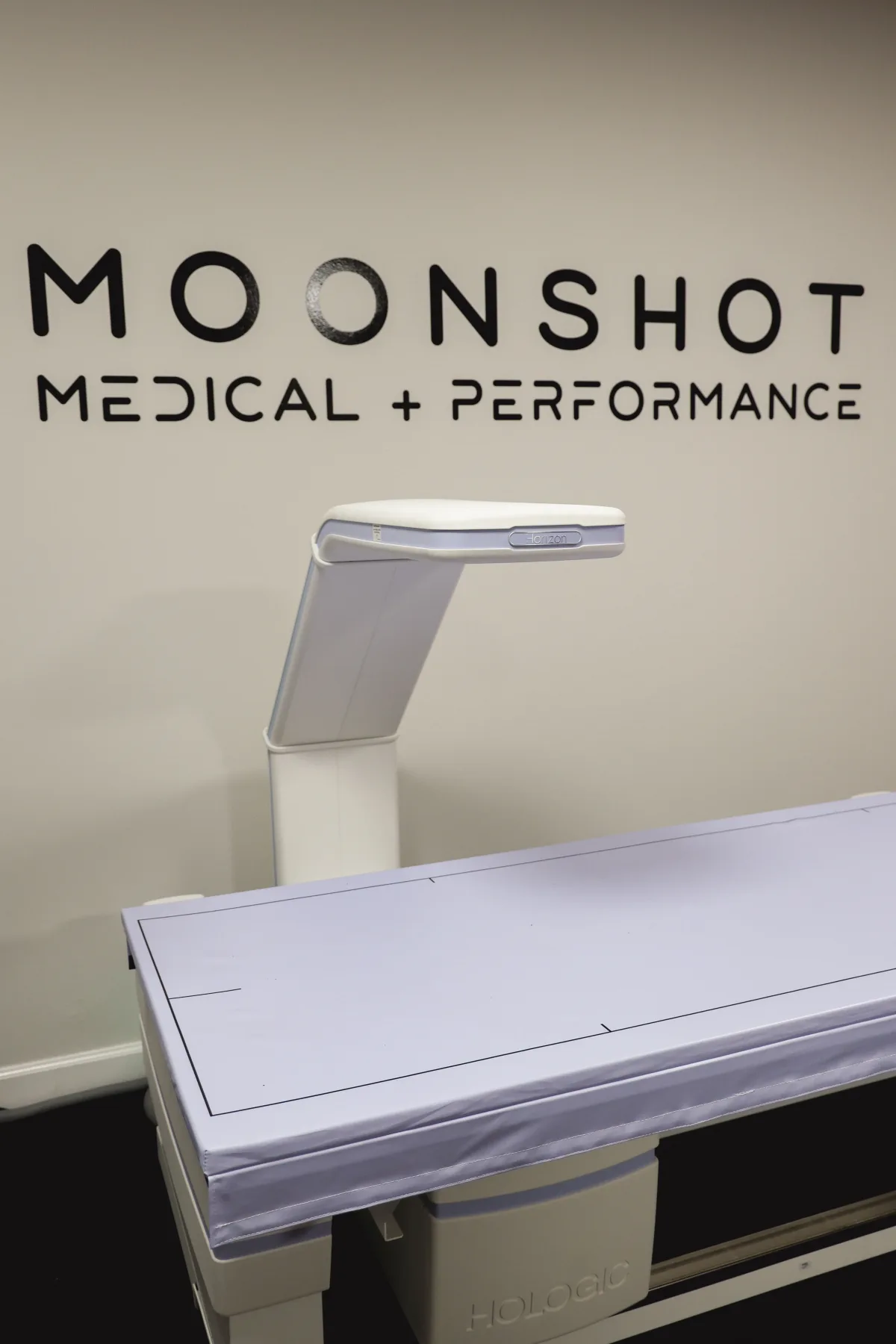
DEXA: THE GOLD STANDARD
DEXA (Dual-Energy X-Ray Absorptiometry) uses two low-dose X-ray beams to differentiate between bone, fat, and lean tissue. It's the same technology used in medical research and clinical trials.
Unlike other methods that estimate body fat, DEXA directly measures it. The result is precision that other methods simply can't match.
What DEXA Measures:
- • Total body fat percentage
- • Lean muscle mass (total and regional)
- • Bone mineral density
- • Visceral adipose tissue (VAT)
- • Fat distribution by body region
- • Left/right muscle symmetry
OUR EQUIPMENT
Hologic Horizon
The industry gold standard for bone density and body composition analysis.
DEXA vs INBODY
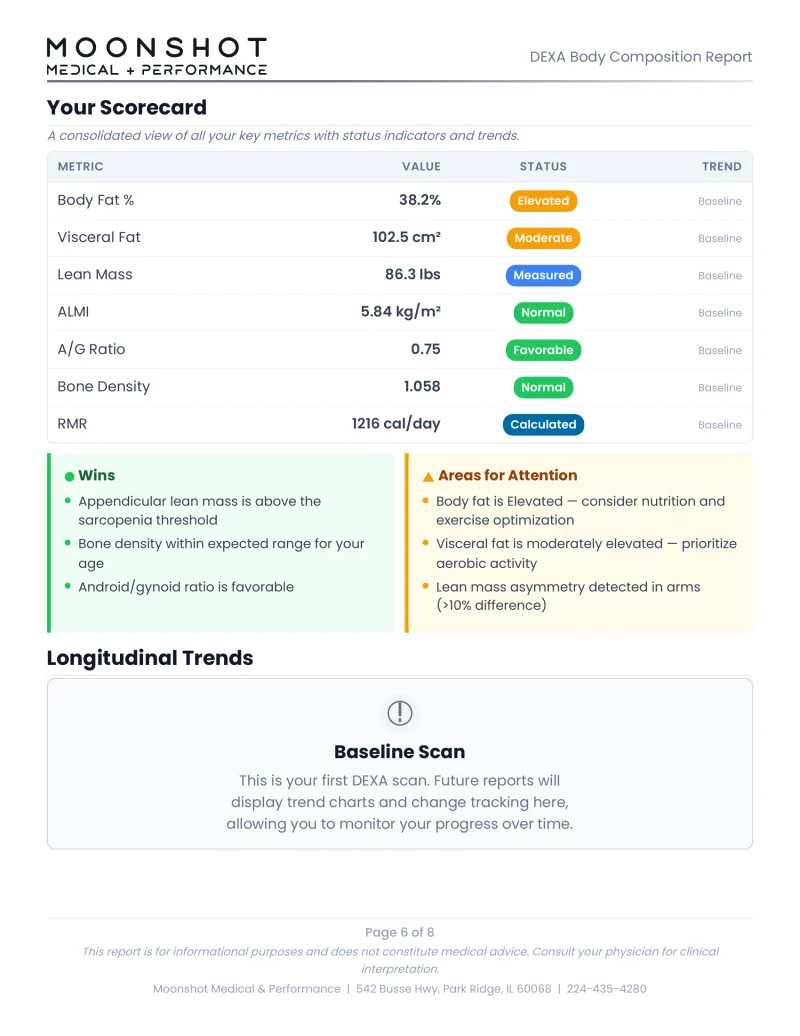
DEXA Report: Detailed regional breakdown
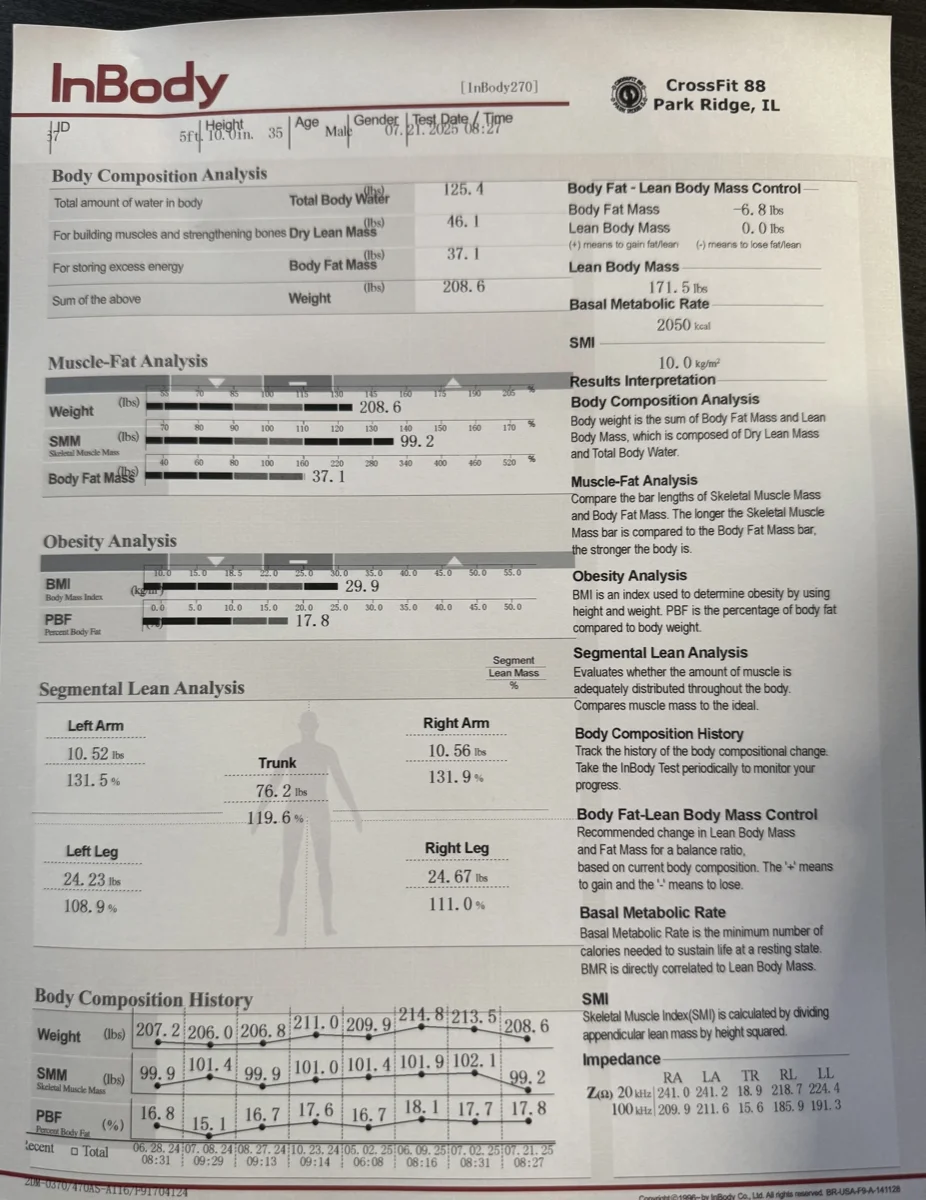
InBody: Estimation-based results
How InBody Works
InBody and similar devices use Bioelectrical Impedance Analysis (BIA). They send a small electrical current through your body and measure resistance.
Fat conducts electricity poorly, so higher resistance = more fat. The device then uses algorithms to estimate body composition.
The problem: results are heavily influenced by hydration, food intake, and even the time of day. The same person can get significantly different readings hours apart.
Why DEXA is Better
- + Direct measurement vs estimation
- + Not affected by hydration status
- + Measures visceral fat directly (InBody estimates)
- + Bone density included (InBody can't measure)
- + Consistent results for accurate tracking
Bottom line: InBody is convenient and affordable, but if you want to know your actual body fat percentage—not an estimate—DEXA is the answer.
OTHER METHODS
Skinfold Calipers
Calipers pinch skin at specific body sites to measure subcutaneous (under-skin) fat thickness. Results are plugged into equations to estimate total body fat.
Limitations:
- • Only measures fat you can pinch
- • Misses visceral fat entirely
- • Highly operator-dependent
- • Poor repeatability between testers
- • Equations may not fit your body type
Smart Scales
Consumer scales with body fat features use the same BIA technology as InBody—but with far fewer sensors (usually just foot electrodes).
Limitations:
- • Lowest accuracy of all methods
- • Current only travels through lower body
- • Wildly variable day-to-day
- • Useful for trends only, not absolute numbers
- • Can be off by 10% or more
WHEN TO USE EACH METHOD
Use DEXA when:
- • You want accurate, actionable data
- • You're tracking progress over months (cutting, bulking, recomp)
- • You need to know your visceral fat levels
- • You want bone density information
- • You're making decisions based on your body composition
InBody/BIA is fine when:
- • You just want a rough estimate
- • You're tracking trends (using same device, same conditions)
- • You don't need bone density
- • Cost is the primary concern
Smart scales are useful for:
- • Daily weight tracking (ignore the body fat %)
- • General awareness of trends
- • Motivation to stay consistent
COMMON QUESTIONS
Is DEXA more accurate than InBody?
Yes, DEXA is significantly more accurate than InBody. DEXA uses dual-energy X-ray technology to directly measure tissue composition, while InBody uses bioelectrical impedance which estimates body fat based on how quickly electrical signals pass through your body. InBody accuracy can vary by 5-8% depending on hydration, while DEXA precision is typically under 2%.
What is the most accurate body fat test?
DEXA (Dual-Energy X-Ray Absorptiometry) is considered the gold standard for body composition testing. It directly measures fat mass, lean mass, and bone density using X-ray technology. The Hologic Horizon DEXA system used at Moonshot Medical exceeds precision standards by a factor of four.
Why is DEXA better than calipers?
Calipers only measure subcutaneous fat at specific pinch sites and miss visceral fat entirely. Results depend heavily on the skill of the person doing the measurement. DEXA measures all fat (including dangerous visceral fat), provides regional breakdowns, and delivers consistent results regardless of operator.
How accurate are smart scales for body fat?
Smart scales using bioelectrical impedance are the least accurate method, with errors of 5-10% or more. Results vary significantly based on hydration, recent meals, and time of day. They're useful for tracking trends but should not be trusted for absolute body fat percentage.
What DEXA machine does Moonshot use?
Moonshot Medical uses the Hologic Horizon DXA system, which is the industry gold standard for bone density and body composition analysis. It features 128 ceramic detectors, OnePass fan beam technology, and delivers results in under 3 minutes with precision that exceeds standards by 4x.
GET YOUR BASELINE
Stop guessing. Get a medical-grade DEXA scan on our Hologic Horizon.
$150 | 15 minutes | Results same day
Book DEXA Scan