Longevity & Optimization
NAD+ for Anti-Aging: What the Science Actually Shows
NAD+ is one of the most researched molecules in aging science. It declines by roughly half by age 60, dragging down sirtuins, DNA repair, and mitochondrial function with it. Here is what the research actually says, what is hype, and what a rational anti-aging protocol looks like.
Medically reviewed by Missy Zammichieli, DNP, APRN, FNP-BC · April 1, 2026
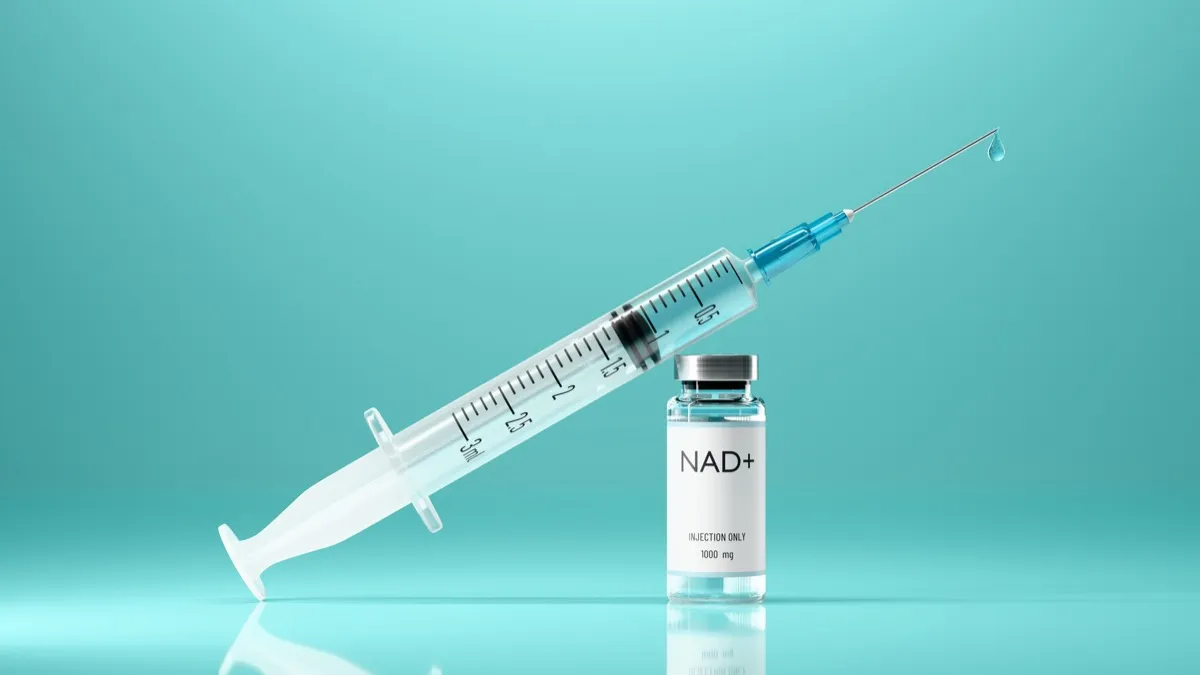
THE NAD+ DECLINE: YOUR CELLS ARE RUNNING OUT OF FUEL
Aging is not a single event. It is a cascade of interconnected cellular failures. And at the center of that cascade sits a molecule most people have never heard of: NAD+ (nicotinamide adenine dinucleotide).
NAD+ is a coenzyme present in every cell in your body. It is required for over 500 enzymatic reactions, including the ones that produce cellular energy, repair damaged DNA, regulate gene expression, and calibrate your circadian rhythm. When NAD+ is abundant, these systems function well. When it is depleted, they do not.
Here is the problem: NAD+ levels decline steadily with age. Massudi et al. (2012) published one of the first direct measurements of this decline in human tissue, demonstrating a progressive reduction in NAD+ in human skin samples across the lifespan. Zhu et al. (2015) confirmed the pattern in human brain tissue using in vivo magnetic resonance spectroscopy, finding significantly lower NAD+ concentrations in older adults compared to younger subjects. The consensus from multiple research groups is that by age 60, most people have roughly 50% of the NAD+ levels they had at age 20.
This is not a minor fluctuation. A 50% reduction in a molecule required for hundreds of critical enzymatic reactions means that the fundamental machinery of your cells is operating at half capacity. Mitochondria produce less ATP. DNA damage accumulates faster than it can be repaired. The genes that protect against inflammation and cellular stress become less active. The result is what we experience as aging: fatigue, cognitive decline, slower recovery, increased disease susceptibility.
SIRTUINS: THE LONGEVITY GENES THAT DEPEND ON NAD+
Sirtuins are a family of seven enzymes (SIRT1 through SIRT7) that regulate some of the most important protective processes in your cells. They are sometimes called "longevity genes" because their activation is consistently associated with lifespan extension and disease resistance in animal models. But here is the critical detail most longevity content leaves out: sirtuins are NAD+-dependent enzymes. They cannot function without NAD+ as a co-substrate. Every single reaction a sirtuin catalyzes consumes one molecule of NAD+.
This means that when NAD+ levels decline with age, sirtuin activity declines with it. Not because the sirtuin genes are damaged, but because they are starved of their essential fuel. Understanding what each sirtuin does makes the consequences of this fuel shortage concrete:
SIRT1: The Master Metabolic Regulator
SIRT1 is the most studied sirtuin and arguably the most important for aging. It regulates insulin sensitivity, fat metabolism, inflammation (via NF-kB deacetylation), mitochondrial biogenesis (via PGC-1a activation), and stress resistance. SIRT1 also directly interacts with the circadian clock proteins CLOCK and BMAL1, linking NAD+ levels to sleep quality and metabolic rhythm. When SIRT1 activity drops, you get insulin resistance, increased inflammatory signaling, fewer mitochondria, and disrupted sleep. Sound familiar? These are the hallmarks of aging.
SIRT3: The Mitochondrial Guardian
SIRT3 resides inside the mitochondria and is the primary regulator of mitochondrial protein function. It deacetylates key enzymes in the electron transport chain, the citric acid cycle, and fatty acid oxidation. Camacho-Pereira et al. (2016) demonstrated that age-related NAD+ decline causes mitochondrial dysfunction specifically through reduced SIRT3 activity. Without adequate SIRT3 function, mitochondria become inefficient, produce more reactive oxygen species (oxidative stress), and generate less ATP. This is the cellular energy crisis that underlies age-related fatigue.
SIRT6: The DNA Protector
SIRT6 plays a specialized role in maintaining genomic stability. It localizes to sites of DNA damage and facilitates repair of double-strand breaks, the most dangerous type of DNA lesion. SIRT6 also regulates telomere maintenance, deacetylating histone H3K9 at telomeric chromatin to prevent telomere dysfunction. When SIRT6 activity declines due to NAD+ depletion, both DNA repair and telomere integrity suffer. The downstream consequence is genomic instability, a hallmark of aging and a driver of cancer risk.
SIRT2, SIRT4, SIRT5, SIRT7
The remaining sirtuins each contribute to the anti-aging picture. SIRT2 regulates cell cycle progression and myelination in the nervous system. SIRT4 controls amino acid and fatty acid metabolism in mitochondria. SIRT5 regulates ammonia detoxification and the urea cycle. SIRT7 is involved in ribosomal DNA transcription and stress response. All are NAD+-dependent. All are impaired by age-related NAD+ decline.
The takeaway: Sirtuins are not theoretical. They are the functional link between NAD+ levels and the aging process. Restoring NAD+ does not just refuel one pathway. It reactivates an entire family of protective enzymes that regulate DNA repair, mitochondrial function, inflammation, metabolism, and circadian rhythm simultaneously. This is why NAD+ depletion has such broad consequences and why restoration has such broad potential.
DNA REPAIR: THE PARP PROBLEM
Your DNA sustains tens of thousands of lesions every single day. Ultraviolet radiation, oxidative stress from normal metabolism, environmental toxins, and even the act of DNA replication itself all cause damage. Your cells are not defenseless against this. PARP enzymes (poly ADP-ribose polymerases), particularly PARP1 and PARP2, are the frontline repair system for single-strand DNA breaks, the most common type of DNA damage.
Like sirtuins, PARPs are NAD+-dependent. When PARP1 detects a DNA break, it uses NAD+ to synthesize poly ADP-ribose chains that recruit repair proteins to the damage site. This process is critical and it is expensive. PARP-mediated DNA repair is one of the largest consumers of cellular NAD+. Under conditions of heavy DNA damage (chronic inflammation, oxidative stress, environmental toxin exposure), PARPs can consume NAD+ faster than the cell can regenerate it.
This creates a destructive competition. PARPs and sirtuins are both drawing from the same finite NAD+ pool. When DNA damage increases with age and PARPs consume more NAD+ to handle the repair load, less NAD+ is available for sirtuin-mediated protective functions. The result is a vicious cycle: DNA damage increases NAD+ consumption, which reduces sirtuin activity, which impairs the protective processes (like mitochondrial maintenance and inflammation control) that would have prevented some of that DNA damage in the first place.
Accumulated unrepaired DNA damage is one of the nine recognized hallmarks of aging. It is also a primary driver of cancer risk. Maintaining adequate NAD+ levels ensures that PARPs can do their job without bankrupting the sirtuin budget. This is not theoretical. It is measurable biochemistry.
MITOCHONDRIAL DECLINE AND THE CD38 PROBLEM
Mitochondria are the power plants of your cells. They convert the food you eat into ATP, the universal energy currency. NAD+ is a required substrate at multiple steps in this process: glycolysis, the citric acid cycle, and the electron transport chain all depend on the NAD+/NADH redox pair to shuttle electrons and generate ATP.
When NAD+ levels decline, mitochondrial energy output declines proportionally. But the damage goes deeper than simple energy reduction. NAD+-starved mitochondria also produce more reactive oxygen species (free radicals), which damage mitochondrial DNA, membrane lipids, and the electron transport chain proteins themselves. This oxidative damage further impairs mitochondrial function, creating a downward spiral: less NAD+ means less efficient mitochondria, which means more oxidative damage, which means even less efficient mitochondria.
Compounding this problem is CD38, an enzyme that has emerged as one of the most important discoveries in NAD+ biology. CD38 is expressed on immune cells and its primary function is to hydrolyze NAD+ into nicotinamide and ADP-ribose. In young, healthy tissue, CD38 activity is relatively low. But CD38 expression increases dramatically with age and chronic inflammation.
Camacho-Pereira et al. (2016) published a landmark paper demonstrating that CD38 is the primary driver of age-related NAD+ decline, not reduced biosynthesis as previously assumed. In their experiments, mice lacking CD38 maintained youthful NAD+ levels and mitochondrial function even at advanced ages. Mice with normal CD38 showed the expected age-related NAD+ decline and mitochondrial dysfunction.
This finding reframes the NAD+ decline story. It is not simply that your body makes less NAD+ as you age. It is that an enzyme actively destroys NAD+ at an accelerating rate, driven by the low-grade chronic inflammation (inflammaging) that characterizes the aging process. Restoring NAD+ levels through supplementation addresses the symptom (depleted NAD+), while reducing chronic inflammation addresses one of the root causes (excessive CD38 activity).
NAD+, SIRTUINS, AND TELOMERE INTEGRITY
Telomeres are the protective caps on the ends of your chromosomes. They shorten with each cell division, and critically short telomeres trigger cellular senescence (permanent growth arrest) or apoptosis (programmed cell death). Telomere length is one of the most widely studied biomarkers of biological aging.
The connection between NAD+ and telomeres runs through the sirtuins. SIRT1 regulates the expression of telomerase reverse transcriptase (TERT), the enzyme responsible for rebuilding telomere length. When NAD+ is depleted and SIRT1 activity drops, TERT expression decreases and telomere maintenance suffers.
SIRT6 has an even more direct role. It physically associates with telomeric chromatin and deacetylates histone H3 at lysine 9 (H3K9), a modification essential for maintaining telomere structure and preventing dysfunction. Cells deficient in SIRT6 show accelerated telomere shortening, chromosomal fusions, and premature senescence. In mouse models, SIRT6 overexpression extends lifespan, partially through improved telomere maintenance.
This does not mean that NAD+ supplementation will regrow your telomeres. The relationship is about maintenance and protection, not reversal. Adequate NAD+ supports the sirtuin activity required to slow the rate of telomere attrition and reduce the dysfunctional signaling that comes from damaged telomeres. Combined with other longevity interventions like exercise (which independently activates telomerase) and reducing chronic inflammation, NAD+ optimization is one component of a telomere-protective strategy.
Want to see where your cellular health stands? Start with comprehensive blood work and a consultation.
Book ConsultationDAVID SINCLAIR AND THE NAD+ RESEARCH FRONTIER
No discussion of NAD+ and aging is complete without addressing the work of David Sinclair, professor of genetics at Harvard Medical School and one of the most prominent voices in longevity science. Sinclair's lab has been at the center of NAD+ research for over a decade, and his work has done more than any other to bring NAD+ into the public conversation about aging.
The key findings from Sinclair's group and close collaborators are significant. Rajman, Chwalek, and Sinclair (2018) published a comprehensive review in Cell Metabolism documenting the therapeutic potential of NAD+-boosting molecules, aggregating evidence from multiple labs showing that raising NAD+ in aged mice reverses mitochondrial dysfunction, improves metabolic function, restores muscle mass, and extends lifespan. Mills et al. (2016) demonstrated that long-term NMN administration in mice mitigated age-associated physiological decline across multiple organ systems without toxicity.
In 2020, Sinclair's lab published work showing that NAD+ replenishment in aged mice restored the function of endothelial cells (the cells lining blood vessels), improving blood flow and exercise capacity to levels comparable to young mice. The proposed mechanism was SIRT1-mediated activation of angiogenesis pathways. This has implications not just for aging but for cardiovascular health, exercise performance, and tissue oxygenation.
More recently, Sinclair's group has been exploring the information theory of aging, proposing that aging is driven by the loss of epigenetic information (the instructions that tell cells which genes to turn on and off) rather than genetic mutations per se. In this framework, NAD+-dependent sirtuins are the "readers" of epigenetic information, and their depletion leads to epigenetic noise, which leads to cellular identity loss, which leads to aging.
The important caveat: Most of this research is in mice. Mice are not humans. Effects observed in mouse models do not automatically translate to human clinical outcomes. Human clinical trials for NAD+ precursors (NMN and NR) are ongoing and accumulating positive data on safety and NAD+ elevation, but the large-scale, long-term randomized controlled trials needed to definitively prove anti-aging effects in humans have not been completed. Yoshino et al. (2021) showed NMN improved muscle insulin sensitivity in prediabetic postmenopausal women. Liao et al. (2021) demonstrated that NMN supplementation enhanced aerobic capacity in amateur runners. These are encouraging signals, not definitive proof of lifespan extension.
REALISTIC EXPECTATIONS VS. HYPE
The internet is full of claims that NAD+ will reverse your biological age, cure neurodegeneration, and add decades to your lifespan. That is not what the evidence supports. Being honest about what NAD+ can and cannot do is important for patients making real decisions about real money.
What the Evidence Strongly Supports
NAD+ declines with age. This is well-documented across multiple tissues and species. Restoring NAD+ levels through supplementation is safe and effective at raising circulating NAD+ metabolites. The cellular biology connecting NAD+ to mitochondrial function, DNA repair, sirtuin activity, and inflammation regulation is mechanistically sound and reproducible.
What the Evidence Strongly Supports in Animals (Promising in Humans)
NAD+ repletion reverses mitochondrial dysfunction, restores muscle function, improves vascular health, and extends lifespan in mouse models. Early human trials show improvements in insulin sensitivity, aerobic capacity, and NAD+ biomarker levels. Patient-reported improvements in energy, cognition, and recovery are consistent but not yet confirmed by large-scale placebo-controlled trials.
What Remains Unproven in Humans
Lifespan extension. Reversal of biological aging by any validated epigenetic clock. Prevention or treatment of neurodegenerative disease. These are active areas of investigation with animal data supporting the hypothesis, but human proof is not yet available. Anyone claiming otherwise is selling you something.
Our honest position: NAD+ is not a magic bullet. It is one important pillar of healthy aging, alongside exercise, nutrition, sleep, stress management, and hormone optimization. The evidence is strongest for energy restoration, improved recovery, and supporting the cellular processes that decline with age. The evidence for lifespan extension in humans is preliminary. We offer NAD+ because the biological rationale is strong, the safety profile is favorable, and the patient-reported outcomes in our practice are consistently positive. We do not offer it as a cure for aging.
MOONSHOT'S ANTI-AGING PROTOCOL: NAD+ IN CONTEXT
At Moonshot Medical, we do not treat NAD+ as an isolated product. It is one component of a structured optimization approach that addresses aging from multiple angles simultaneously. Stacking NAD+ on top of an unoptimized foundation is like putting premium fuel in an engine that needs a tune-up. The order matters.
Step 1: Comprehensive Blood Work
We start with a detailed blood panel that goes beyond standard annual labs. Hormones, metabolic markers, inflammatory markers, nutrient levels. You cannot optimize what you have not measured. This establishes your baseline and identifies the highest-leverage targets. Learn about the full cost structure.
Step 2: Hormone Optimization
For patients with suboptimal hormone levels, we address testosterone, thyroid, and other hormones first. Hormones activate the metabolic pathways that NAD+ fuels. If the engine is not tuned (hormones), premium fuel (NAD+) delivers diminished returns. NAD+ therapy details.
Step 3: NAD+ Restoration
With the hormonal foundation optimized, NAD+ injections ($60 per SubQ shot) restore the cellular fuel supply that powers sirtuin activity, DNA repair, and mitochondrial function. Loading phase followed by maintenance. Members receive 1 injection per month included. See how SubQ compares to IV drips.
Step 4: Targeted Peptides
For patients pursuing advanced optimization, peptide therapy adds another layer. BPC-157 for tissue repair, Sermorelin for growth hormone release, GHK-Cu for skin and tissue regeneration. Each targets specific aging mechanisms that NAD+ alone does not address.
Step 5: Ongoing Monitoring
Regular blood work and biomarker tracking to verify that interventions are working. Adjustments based on data, not guesswork. This is medicine, not a supplement stack from a podcast sponsor.
COMMON QUESTIONS
At what age does NAD+ start declining?
NAD+ levels begin declining in your 30s and accelerate from there. By age 60, most people have roughly 50% less NAD+ than they had at age 20. The decline is driven by increased CD38 enzyme activity, chronic low-grade inflammation, and reduced biosynthesis capacity. This is why most anti-aging NAD+ protocols target patients over 35-40.
Can NAD+ actually reverse aging?
NAD+ supplementation has reversed specific markers of aging in animal models, including mitochondrial dysfunction, muscle wasting, and cognitive decline. Human data is still accumulating. The honest answer: NAD+ can restore cellular functions that decline with age, which may slow biological aging. Calling it a reversal of aging overstates the current evidence. Think of it as removing a bottleneck, not turning back the clock.
How long does it take to notice anti-aging benefits from NAD+?
Most patients report improved energy and mental clarity within 1-2 weeks of starting regular NAD+ injections. Deeper cellular benefits like improved DNA repair capacity and mitochondrial function are happening at the molecular level from the first dose but take longer to manifest as noticeable changes. A 4-8 week protocol is typically needed to assess full response.
Is NAD+ better than NMN or NR supplements for anti-aging?
NMN and NR are oral precursors that the body must convert into NAD+ after absorption. Injectable NAD+ bypasses the gut and conversion steps entirely. Oral NMN/NR has roughly 2-10% bioavailability due to first-pass metabolism. Injectable NAD+ delivers the full dose directly. For anti-aging purposes where you want to meaningfully raise tissue NAD+ levels, injectable delivery is more efficient. That said, oral NMN between injections can help maintain levels. Read our full NAD+ vs NMN comparison.
What does NAD+ anti-aging therapy cost at Moonshot?
NAD+ subcutaneous injections are $60 per shot at Moonshot Medical. Hormone optimization members receive 1 vitamin injection per month included in their membership. Most anti-aging protocols involve weekly injections during a loading phase (2-4 weeks), then weekly or biweekly maintenance. This is a fraction of what IV NAD+ drip bars charge for similar therapy. See full cost breakdown.
References
- 1. Massudi H, Grant R, Braidy N, et al. "Age-associated changes in oxidative stress and NAD+ metabolism in human tissue." PLoS One. 2012;7(7):e42357.
- 2. Zhu XH, Lu M, Lee BY, Ugurbil K, Chen W. "In vivo NAD assay reveals the intracellular NAD contents and redox state in healthy human brain and their age dependences." Proc Natl Acad Sci USA. 2015;112(9):2876-2881.
- 3. Camacho-Pereira J, Tarragó MG, Chini CCS, et al. "CD38 Dictates Age-Related NAD Decline and Mitochondrial Dysfunction through an SIRT3-Dependent Mechanism." Cell Metab. 2016;23(6):1127-1139.
- 4. Rajman L, Chwalek K, Sinclair DA. "Therapeutic Potential of NAD-Boosting Molecules: The In Vivo Evidence." Cell Metab. 2018;27(3):529-547.
- 5. Mills KF, Yoshida S, Stein LR, et al. "Long-Term Administration of Nicotinamide Mononucleotide Mitigates Age-Associated Physiological Decline in Mice." Cell Metab. 2016;24(6):795-806.
- 6. Yoshino M, Yoshino J, Kayser BD, et al. "Nicotinamide mononucleotide increases muscle insulin sensitivity in prediabetic women." Science. 2021;372(6547):1224-1229.
- 7. Liao B, Zhao Y, Wang D, Zhang X, Hao X, Hu M. "Nicotinamide mononucleotide supplementation enhances aerobic capacity in amateur runners: a randomized, double-blind study." J Int Soc Sports Nutr. 2021;18(1):54.
- 8. Imai S, Guarente L. "NAD+ and sirtuins in aging and disease." Trends Cell Biol. 2014;24(8):464-471.
- 9. Yoshino J, Baur JA, Imai S. "NAD+ Intermediates: The Biology and Therapeutic Potential of NMN and NR." Cell Metab. 2018;27(3):513-528.
- 10. Verdin E. "NAD+ in aging, metabolism, and neurodegeneration." Science. 2015;350(6265):1208-1213.
NAD+ ANTI-AGING THERAPY IN PARK RIDGE & CHICAGO'S NORTHWEST SUBURBS
Moonshot Medical and Performance
542 Busse Hwy
Park Ridge, IL 60068
- No referral needed — book directly online
- In-person care — not a telehealth vitamin mill
- Minutes from O'Hare — right off the Kennedy Expressway
- Co-located with Moonshot CrossFit — integrated recovery
Serving the Northwest Suburbs
Patients come to Moonshot for NAD+ anti-aging therapy from across the northwest Chicago suburbs:
- Des Plaines, Niles, Edison Park
- Morton Grove, Glenview, Skokie
- Chicago and surrounding communities
Easily accessible from all NW suburbs. Free parking on-site.
AGING IS NOT OPTIONAL. HOW YOU AGE IS.
NAD+ is one piece of a comprehensive anti-aging strategy. The first step is understanding where you stand. Comprehensive blood work, hormone assessment, and a provider who looks at the whole picture, not just one molecule.
Book Consultation