Regenerative Aesthetics
PRP MICRONEEDLING: THE COMPLETE GUIDE
Your own blood's growth factors, delivered directly into the skin through thousands of microchannels. Here's how PRP microneedling works, what it treats, and what to realistically expect.
Medically reviewed by Missy Zammichieli, DNP, APRN, FNP-BC · Published April 12, 2026
Book Consultation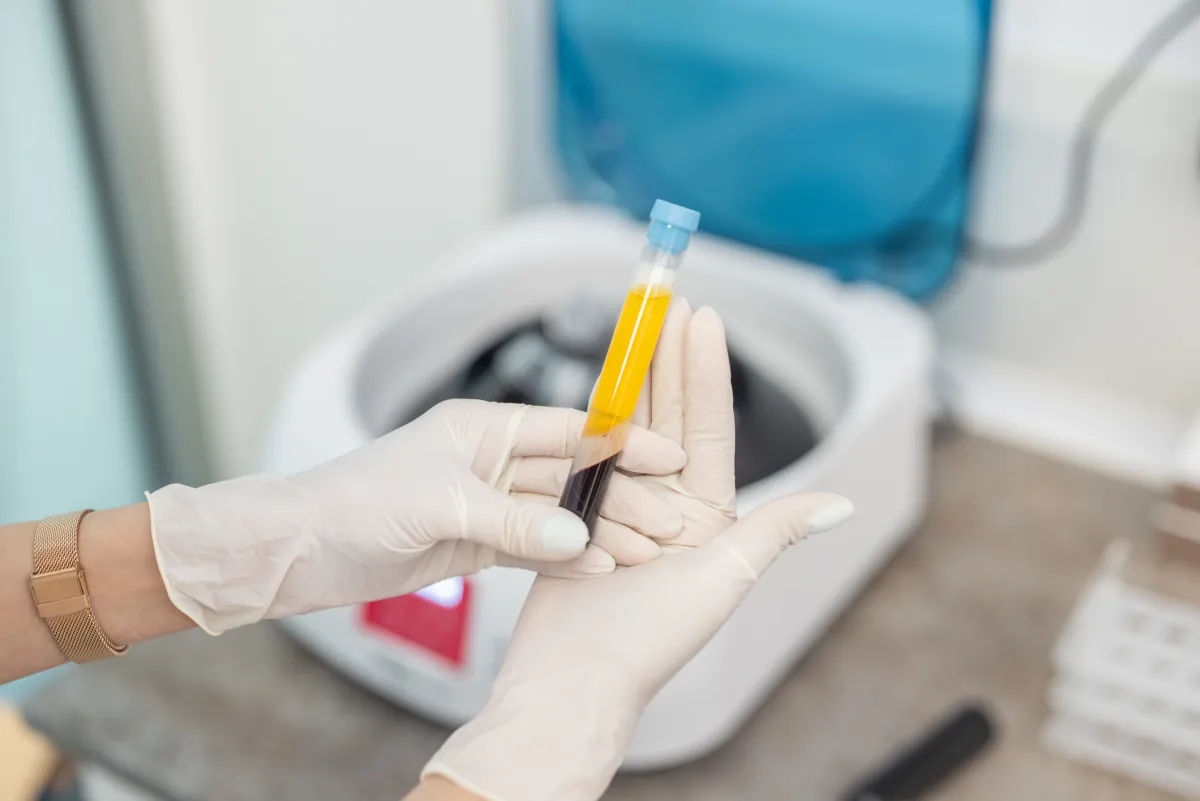
WHAT IS PRP MICRONEEDLING?
PRP microneedling combines two treatments into one procedure. Microneedling creates thousands of controlled micro-injuries in the skin using a device with fine needles. PRP (platelet-rich plasma) — concentrated from your own blood — is applied to the skin during and after needling, allowing growth factors to penetrate deep into the tissue through those microchannels.
The combination triggers a wound-healing cascade that stimulates collagen and elastin production. Your platelets contain growth factors — PDGF, TGF-B, VEGF, IGF-1 — that signal fibroblasts to produce new collagen. By delivering those growth factors directly into the dermis through microneedling channels, PRP amplifies the regenerative response beyond what microneedling achieves alone.
The result is tighter, smoother, more even-toned skin — but it happens gradually over weeks and months as new collagen matures. This is tissue remodeling, not a surface-level treatment. The improvements are structural.
Why "PRP" matters: PRP uses your own blood — it's autologous. No synthetic fillers, no foreign substances, no risk of allergic reaction. A small blood draw, a centrifuge spin to concentrate platelets, and the resulting plasma goes directly onto your skin. Your body's own repair biology, concentrated and targeted.
HOW PRP MICRONEEDLING WORKS
Two mechanisms work together. Understanding both explains why the combination outperforms either treatment alone.
Microneedling: Controlled Injury
A motorized pen with fine needles (0.5-2.0mm depth) creates thousands of microscopic punctures in the skin. Each puncture triggers your body's wound-healing response:
- Inflammation (days 1-3): Blood platelets and white blood cells flood the micro-wound sites, releasing growth factors.
- Proliferation (days 3-14): Fibroblasts produce new collagen III (immature collagen) and new blood vessels form.
- Remodeling (weeks 4-12+): Collagen III converts to collagen I (mature, strong collagen). Skin becomes firmer and more structured.
PRP: Growth Factor Delivery
Your blood is drawn and spun in a centrifuge to isolate the platelet-rich layer — typically 3-5x the normal platelet concentration. These concentrated platelets contain:
- PDGF: Stimulates cell growth and new blood vessel formation.
- TGF-B: Promotes collagen synthesis and tissue repair.
- VEGF: Drives angiogenesis — new blood supply to treated tissue.
- IGF-1: Regulates cell growth and differentiation in skin tissue.
The synergy: Microneedling creates the channels. PRP fills them with concentrated growth factors. Without microneedling, PRP sits on the skin surface and can't penetrate the dermis. Without PRP, microneedling relies only on the body's baseline healing response. Together, you get deeper penetration of more growth factors into the tissue layer where collagen is actually produced.
WHAT PRP MICRONEEDLING TREATS
Not all indications have equal evidence. Here's what the clinical data actually supports, ranked by strength of evidence:
Strong Evidence
Acne Scarring
Multiple randomized controlled trials show PRP + microneedling produces 60-80% improvement in atrophic acne scars (rolling and boxcar types) — significantly better than microneedling alone. This is the most well-studied indication with the strongest data.
Moderate Evidence
Skin Texture & Fine Lines
Studies show improved skin texture, reduced pore size, and softening of fine lines. Results are driven by increased collagen I and III deposition in the dermis. Evidence is moderate — most studies use patient satisfaction and physician assessment rather than objective biophysical measurements.
Moderate Evidence
Skin Laxity After Weight Loss
Collagen stimulation from PRP microneedling helps improve skin firmness in patients who've experienced rapid weight loss — particularly from GLP-1 medications. Read our complete guide to PRP after weight loss.
Moderate Evidence
Uneven Skin Tone
PRP microneedling can improve hyperpigmentation and sun damage by stimulating cellular turnover in the treated areas. Results are gradual and work best in combination with a consistent skincare regimen.
Emerging Evidence
Stretch Marks
Small studies show some improvement in striae (stretch marks) with PRP microneedling, but results are variable. This is still considered an investigational indication — results are less predictable than facial treatments.
Additional Benefits
Overall Skin Quality
Patients consistently report improved skin "glow," reduced pore appearance, and smoother texture after a full treatment series. These broader quality improvements, while harder to measure objectively, are among the most commonly cited patient satisfaction drivers.
WHAT TO EXPECT DURING TREATMENT
The full procedure takes about 60-90 minutes. Here's the step-by-step:
Numbing (30-45 min)
A topical anesthetic (lidocaine/prilocaine cream) is applied to the treatment area and left for 30-45 minutes. This significantly reduces discomfort during the procedure. Most patients use this time to relax.
Blood Draw (5 min)
A standard venipuncture — the same blood draw you'd get for routine lab work. We draw a small volume (typically 10-20mL) from your arm. If you've done bloodwork at Moonshot before, this is identical.
PRP Preparation (10-15 min)
Your blood goes into an FDA-cleared centrifuge system that separates the platelet-rich plasma from red blood cells. The result: a concentrated plasma with 3-5x your normal platelet count, packed with growth factors. We use a single-vendor, FDA 510(k)-cleared system for consistent, validated results.
Microneedling + PRP Application (20-30 min)
After removing the numbing cream and cleansing the skin, PRP is applied to the treatment area. The microneedling device is then passed over the skin at calibrated depths (typically 0.5-1.5mm depending on the area — forehead thinner, cheeks deeper). PRP is reapplied throughout the procedure, ensuring continuous growth factor delivery into the microchannels.
Post-Treatment (5 min)
Remaining PRP is left on the skin to continue absorbing. We'll review aftercare instructions: no makeup for 24 hours, avoid sun exposure for 48-72 hours, skip active ingredients (retinoids, AHAs, vitamin C serums) for 48 hours, and use a gentle moisturizer and SPF once redness resolves.
RESULTS & TIMELINE
PRP microneedling is not an instant-result procedure. The primary mechanism — collagen remodeling — takes weeks to months. Understanding this timeline is critical for realistic expectations.
Week 1-2
Initial redness resolves. Skin may feel slightly tighter as the inflammatory phase subsides. Some patients notice an immediate "glow" from increased blood flow to the treated area.
Week 4-6
Early collagen production begins. Skin texture starts to smooth. This is typically when patients notice the first real changes — pores look smaller, skin feels firmer to the touch.
Month 3
Collagen remodeling is well underway. After 2-3 sessions, cumulative improvements become clearly visible. Fine lines soften, acne scars flatten, skin tone evens out. Before/after photos show measurable differences.
Month 6+
Peak results. Collagen I (mature, structural collagen) has replaced collagen III. Results continue to improve for up to 6 months after the final session. Annual maintenance sessions sustain the improvements.
Setting expectations: The #1 driver of patient dissatisfaction with PRP microneedling is not poor results — it's unrealistic expectations. Patients who expect dramatic changes after one session will be disappointed. Patients who commit to a 3-4 session series and understand the 3-6 month timeline consistently report high satisfaction. This is a process, not a quick fix.
PRP VS. REGULAR MICRONEEDLING
Standard microneedling creates the micro-injuries and relies on your body's natural growth factor release. PRP microneedling supercharges that response with 3-5x the concentration of platelets delivered directly into the wound channels.
Regular Microneedling
- Creates micro-injuries to stimulate collagen
- Relies on body's baseline healing response
- Typically uses hyaluronic acid serum
- $300-500 per session
- Good for general skin texture
- Lower total cost per session
PRP Microneedling
- Same micro-injuries plus concentrated growth factors
- 3-5x platelet concentration amplifies healing
- Uses your own blood — autologous, no allergy risk
- $600-1,000 per session
- Better evidence for scarring and advanced rejuvenation
- Higher per-session cost, potentially fewer sessions needed
Read the full breakdown: Our PRP vs. microneedling comparison covers the evidence for each approach, who benefits most from adding PRP, and when standard microneedling is sufficient.
WHO IS A GOOD CANDIDATE?
Good Candidates
Adults with acne scarring (rolling, boxcar types) looking for non-laser treatment
Patients experiencing skin laxity after significant weight loss (especially GLP-1 patients)
Anyone noticing fine lines, enlarged pores, or uneven texture who wants a regenerative approach
Darker skin types (Fitzpatrick IV-VI) — PRP microneedling carries lower risk of hyperpigmentation than laser treatments
Patients who prefer a natural, autologous approach — no synthetic fillers or foreign substances
Not Candidates
Active skin infections or acne breakouts in the treatment area
Blood clotting disorders or current use of blood thinners (anticoagulants)
Isotretinoin (Accutane) use within the past 6 months
History of keloid or hypertrophic scarring
Pregnant or breastfeeding
SIDE EFFECTS & RECOVERY
PRP microneedling has an excellent safety profile. Because PRP is autologous (your own blood), the primary risks associated with injectable treatments — allergic reaction, immune rejection, disease transmission — don't apply here.
Expected (Normal)
- Redness (like a sunburn) — 24-72 hours
- Mild swelling — 24-48 hours
- Pinpoint bleeding during procedure
- Skin tightness/dryness — 2-3 days
- Minor bruising at blood draw site
Uncommon
- Post-inflammatory hyperpigmentation (2-5%, more common in darker skin types)
- Prolonged redness beyond 5 days
- Mild peeling or flaking
- Herpes simplex reactivation (if history of cold sores)
Rare (<1%)
- Infection (with proper sterile technique, extremely rare)
- Granuloma formation (case reports only)
- Scarring (almost always from excessive needle depth, not PRP)
Recovery protocol: Most patients return to normal activities the next day. Avoid direct sunlight, strenuous exercise, pools, saunas, and active skincare products for 48-72 hours. Use a gentle cleanser, moisturizer, and SPF 30+ once redness resolves. No makeup for 24 hours post-treatment.
PRP MICRONEEDLING COST
PRP microneedling is a cash-pay procedure — it's not covered by insurance. Here's what pricing typically looks like in the Chicago suburbs:
$600-1,000
Per session (Chicago suburbs)
$1,800-2,700
3-session series (10-15% package discount)
3-4 sessions
Recommended initial treatment series
Pricing varies based on treatment area, PRP preparation system used, and the provider's clinical setting. Medical practices with physician oversight and FDA-cleared PRP systems typically charge more than discount med spas — but you're paying for clinical rigor, validated PRP quality, and proper sterile technique.
Most practices offer package pricing for a 3-session series at a 10-15% discount over single-session pricing. This makes clinical sense: PRP microneedling is a cumulative treatment. One session produces modest results. The real improvements come from the compounding collagen remodeling across multiple sessions.
Read the full cost breakdown: Our PRP microneedling cost guide covers what drives pricing differences, how to evaluate providers, and what to watch out for with discount pricing.
PRP MICRONEEDLING FAQ
How many PRP microneedling sessions do I need?
Most patients need 3-4 sessions spaced 4-6 weeks apart for optimal results. Collagen remodeling takes time — each session builds on the previous one. After the initial series, 1-2 maintenance sessions per year help sustain results.
Does PRP microneedling hurt?
A topical numbing cream is applied 30-45 minutes before the procedure. Most patients describe the sensation as mild pressure or a light scratching feeling. The blood draw is a standard venipuncture — no different from routine blood work. Discomfort is generally rated 3-4 out of 10 with numbing.
How long is the downtime after PRP microneedling?
Expect redness and mild swelling for 24-72 hours — similar to a moderate sunburn. Most patients return to normal activities the next day and can wear makeup after 24 hours. Avoid direct sun exposure, strenuous exercise, and active skincare ingredients (retinoids, AHAs) for 48-72 hours post-treatment.
When will I see results from PRP microneedling?
Initial improvements in skin texture and tone appear within 2-4 weeks. The primary mechanism — collagen remodeling — takes 8-12 weeks per cycle. Optimal results are typically visible 3-6 months after your last session. Results continue to improve for up to 6 months post-treatment as new collagen matures.
Is PRP microneedling better than regular microneedling?
Multiple studies show PRP microneedling produces greater improvement than microneedling alone, particularly for acne scarring and skin texture. PRP adds concentrated growth factors (PDGF, TGF-B, VEGF, IGF-1) that amplify the collagen remodeling response. The PRP premium — typically $200-400 more per session — is supported by the clinical evidence for enhanced outcomes. Read our full comparison.
Who should not get PRP microneedling?
PRP microneedling is not appropriate for patients with active skin infections, active acne breakouts in the treatment area, blood clotting disorders, those on blood thinners (anticoagulants), patients who have used isotretinoin (Accutane) within the past 6 months, or those with a history of keloid scarring. Pregnant and breastfeeding patients should also wait.
How much does PRP microneedling cost?
PRP microneedling typically costs $600-1,000 per session in the Chicago suburbs. Most practices offer package pricing — a 3-session series at a 10-15% discount. PRP microneedling is a cash-pay procedure not covered by insurance. Read our full cost guide.
Is PRP microneedling safe?
PRP microneedling has an excellent safety profile. Because PRP uses your own blood, there is no risk of allergic reaction or disease transmission. Common side effects — redness, swelling, and pinpoint bleeding — resolve within 24-72 hours. Serious complications (infection, scarring) are rare and almost always associated with improper technique or inadequate sterile protocols. Choose a medical practice with physician oversight and FDA-cleared equipment.
INTERESTED IN PRP MICRONEEDLING?
Book a consultation to discuss whether PRP microneedling is the right approach for your skin goals. We'll evaluate your concerns, review your options, and build a plan.
Book Consultation