Local Guide — Chicago, IL
DEXA BODY COMPOSITION SCANS FOR CHICAGO RESIDENTS
On-site Hologic DEXA scanner, ~25 minutes from downtown Chicago. 7 minutes, no referral, no insurance hassle. $150 standalone or $405 bundled with a 60+ biomarker blood panel. Read by your provider, not a generic radiology report.
Book DEXA Scan — $150Written and medically reviewed by Missy Zammichieli, DNP, APRN, FNP-BC · Updated April 30, 2026

From the Provider
Missy Zammichieli, DNP, APRN, FNP-BC
Doctor of Nursing Practice
Board-Certified Family Nurse Practitioner
About a third of the patients I scan in Park Ridge live inside the city — Lakeview, Lincoln Park, the West Loop, Logan Square, Wicker Park. They're not driving 25 minutes for the parking. They're driving out because the experience of trying to get a body composition scan in Chicago itself is broken.
Here's the pattern I hear, every week. Patient calls a Chicago hospital system asking for a DEXA. They're told they need a referral. They get the referral, then wait three weeks for the scan. The scan happens, and what they get back is a one-page radiology report with bone density T-scores — no body fat percentage, no visceral fat number, no regional muscle data, no context for what any of it means. They paid a hospital-billed rate, often $300+ after insurance, for a report built for osteoporosis screening, not body composition.
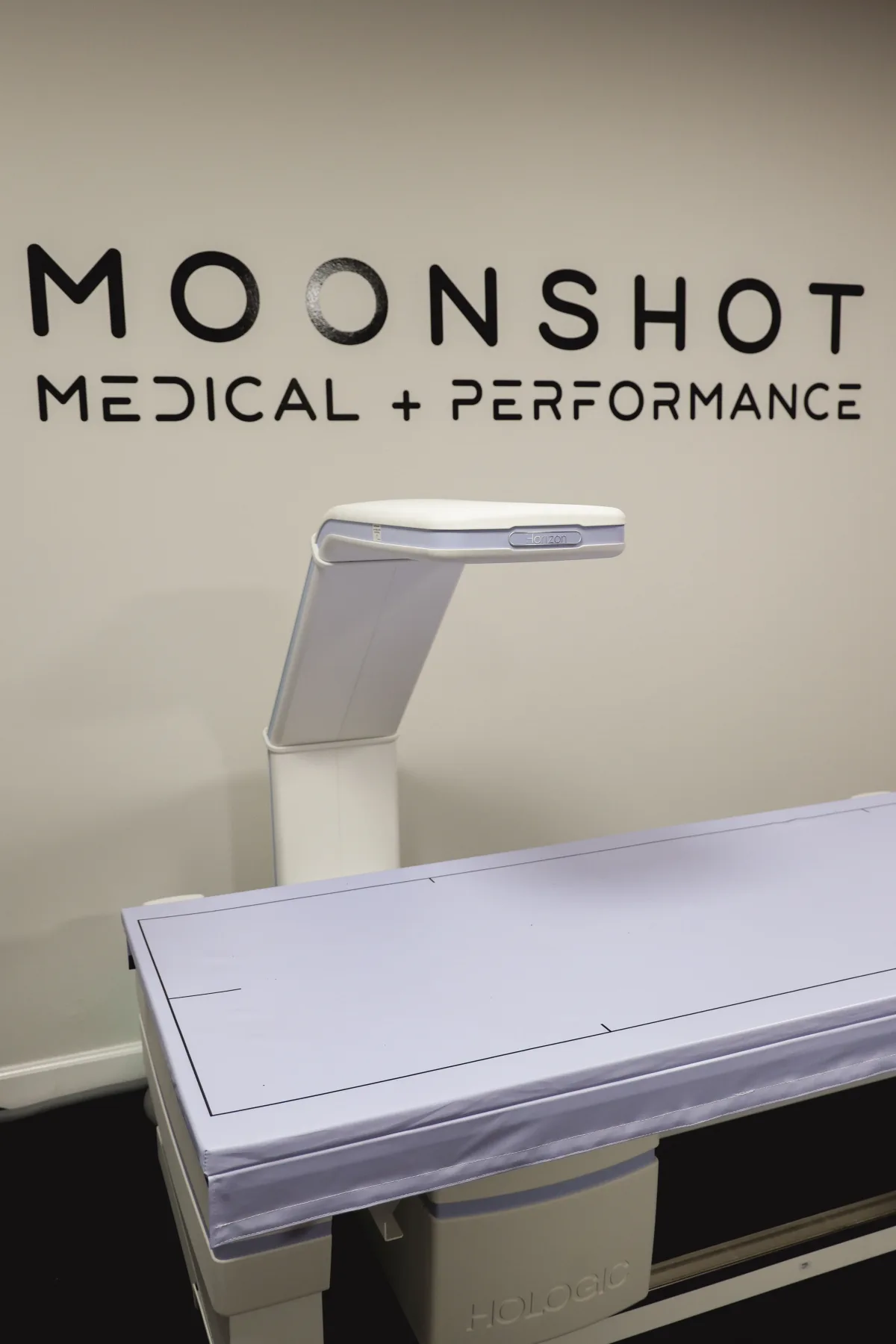
What we do here is different on purpose. Same Hologic Horizon scanner the hospitals use — that part is identical. What changes is everything around it. No referral. Booked online in two minutes. Scan happens in 7 minutes. Results read in front of you by your provider that same visit, in the context of your labs, your goals, and whatever protocol you're on — TRT, GLP-1, training block, perimenopausal hormone planning. You leave with numbers that map to a decision, not a PDF you have to translate.
If you live in the city and you've been putting off a scan because the hospital pathway feels like a hassle, the honest answer is: it is. Drive out once, get a real baseline, and decide from there how often you actually want to repeat it. For most patients on an active protocol, every 3 months is the cadence that pays off.
WHY CHICAGO PATIENTS DRIVE OUT TO PARK RIDGE
Chicago has plenty of DEXA machines. The friction isn't the equipment — it's everything around the scan. Here's what people are choosing when they drive out.
No Referral, No Insurance Maze
Hospital DEXA in Chicago almost always requires a physician order. That means a separate visit (or telehealth), a coded diagnosis, and insurance pre-auth. At Moonshot you book yourself online, $150, done. No coded diagnosis, no surprise EOB three months later.
Body-Comp Read, Not a Bone Read
Most Chicago hospital DEXA programs are configured for bone density (DXA-BMD), not body composition. The output is a T-score for your spine and hip and not much else. Our scans are configured and read for full body composition — fat percentage, regional lean mass, VAT, android/gynoid, and bone density together. See what a real Moonshot report looks like.
Provider Reads It With You
A radiology report tells you the numbers. Your provider tells you what they mean for the protocol you're on. If you're on TRT, a GLP-1, or considering one — that context turns data into a decision. Same-day, same room, same visit.
DRIVE TIMES FROM CHICAGO NEIGHBORHOODS
Park Ridge sits just west of O'Hare, two blocks east of Lutheran General Hospital. Most Chicago neighborhoods are a 20–30 minute drive — and unlike a hospital visit downtown, you park free in our lot.
The Loop / West Loop
~25 min via Kennedy/I-90 outbound
River North / Streeterville
~25 min via Kennedy
Lincoln Park
~20 min via Foster or Kennedy
Lakeview / Wrigleyville
~20 min via Bryn Mawr or Foster
Logan Square / Bucktown
~20 min via Kennedy
Wicker Park
~25 min via Kennedy
Edison Park / Norwood Park
~10 min, surface streets
Rogers Park / Andersonville
~20 min via Touhy or Pratt
Cumberland CTA Blue Line
~10 min, then short rideshare
Free dedicated parking lot on-site. Wheelchair accessible ground-floor entry.
WHAT A DEXA SCAN ACTUALLY MEASURES
DEXA (dual-energy X-ray absorptiometry) passes two low-dose X-ray beams through your body at different energy levels. Because fat, lean tissue, and bone each absorb X-ray energy differently, the scanner can distinguish and quantify all three with precision no consumer device matches.
Total Body Fat Percentage
Your overall body fat measured directly by X-ray attenuation — not estimated by an algorithm. DEXA captures all fat tissue, including intramuscular and visceral fat that bioimpedance devices miss entirely. The most accurate body fat reading available outside a research-grade four-compartment model.
Regional Lean Muscle Mass
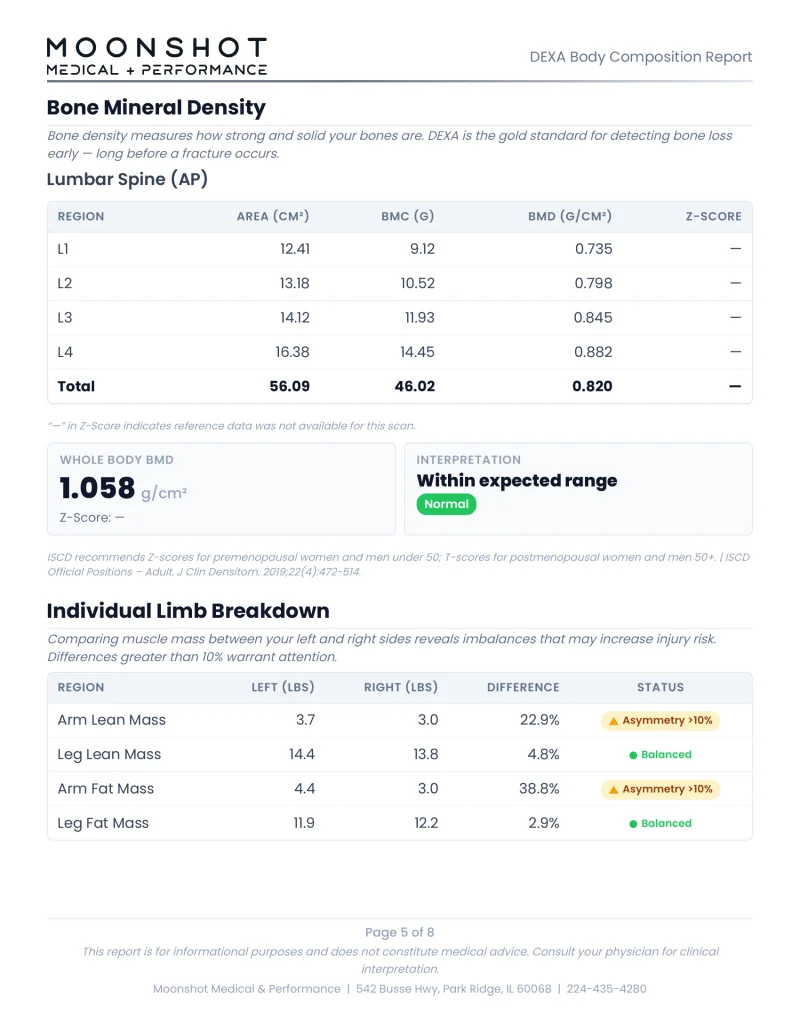
Lean tissue mass broken down by region: each arm, each leg, and your trunk. Reveals left/right imbalances, tracks whether your training program is actually building muscle, and identifies early signs of sarcopenia. No other accessible test gives you regional muscle data this precise.
Bone Mineral Density
DEXA is the clinical standard for bone density. Your results include T-scores comparing your bone density to a healthy 30-year-old, enabling early detection of osteopenia or osteoporosis. Particularly important for women in perimenopause and men over 50.
Visceral Adipose Tissue (VAT)
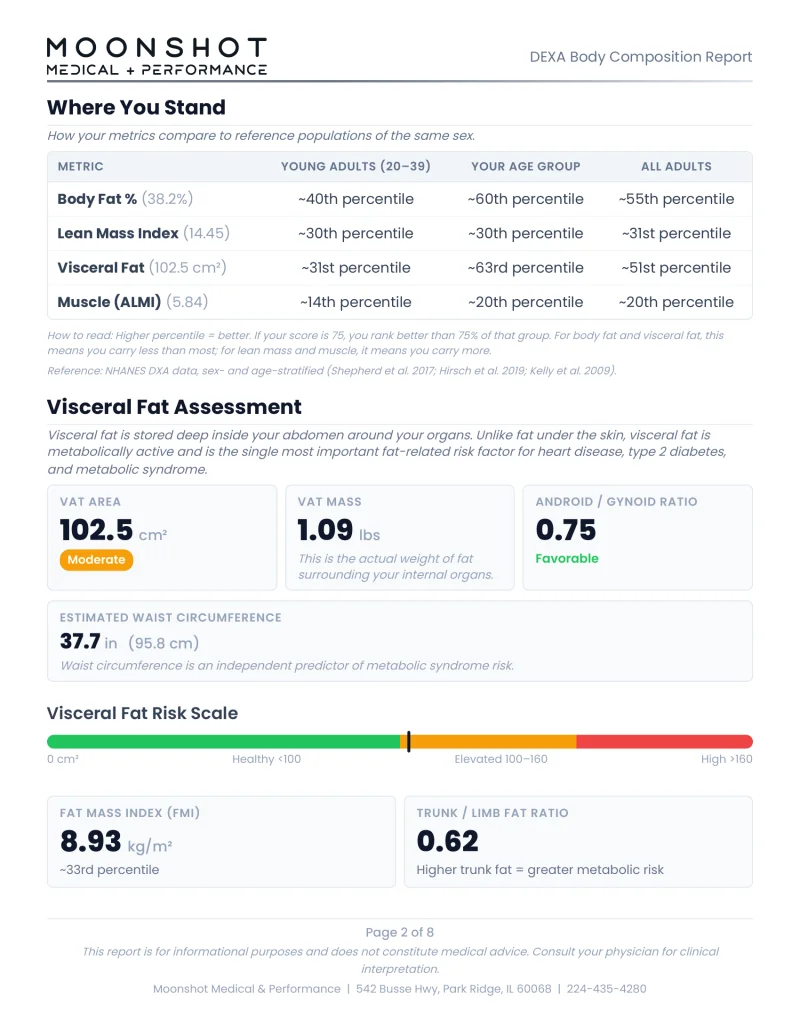
The fat stored around your organs in the abdominal cavity. You can't see it or pinch it. Visceral fat is metabolically active — it produces inflammatory compounds tied to type 2 diabetes, cardiovascular disease, and metabolic syndrome. DEXA is one of the only methods outside a CT or MRI that quantifies visceral fat accurately. Two people with identical body fat percentages can have very different metabolic risk profiles based on this number alone.
Fat Distribution & Android/Gynoid Ratio
DEXA maps where your body stores fat. The android (belly/trunk) vs. gynoid (hip/thigh) ratio carries real clinical implications. An A/G ratio above 1.0 means you carry more fat centrally — a higher-risk distribution pattern strongly correlated with metabolic disease, regardless of total body fat percentage. How to read your DEXA results.
WHAT YOUR REPORT LOOKS LIKE
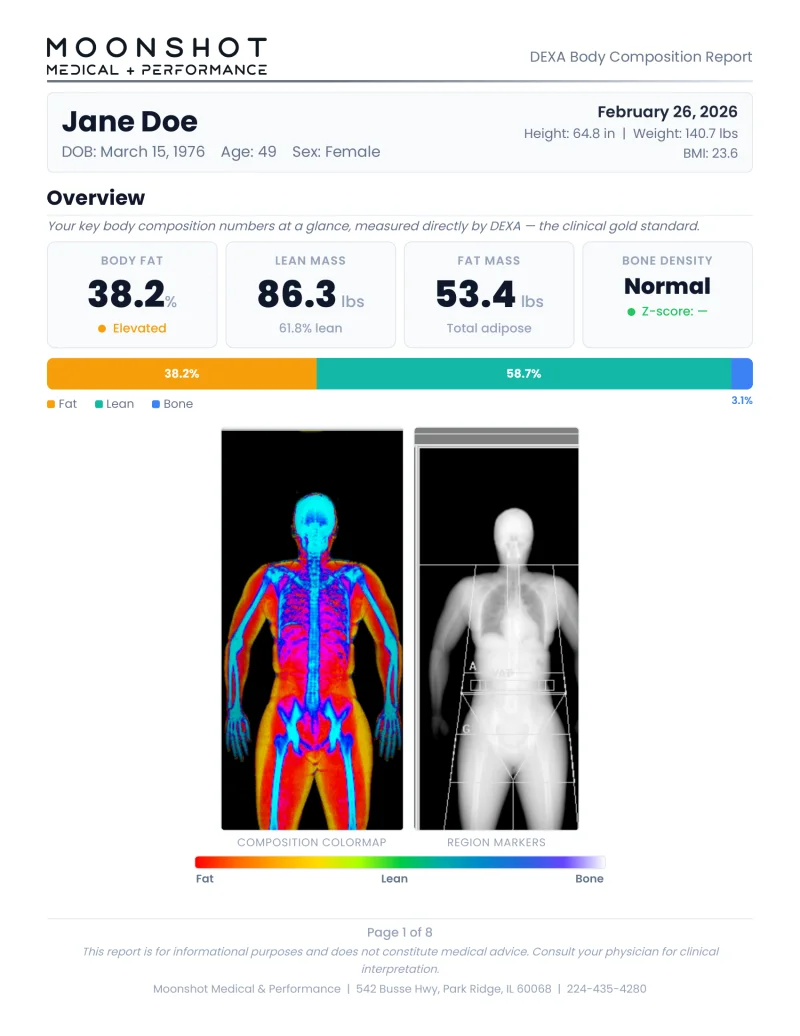
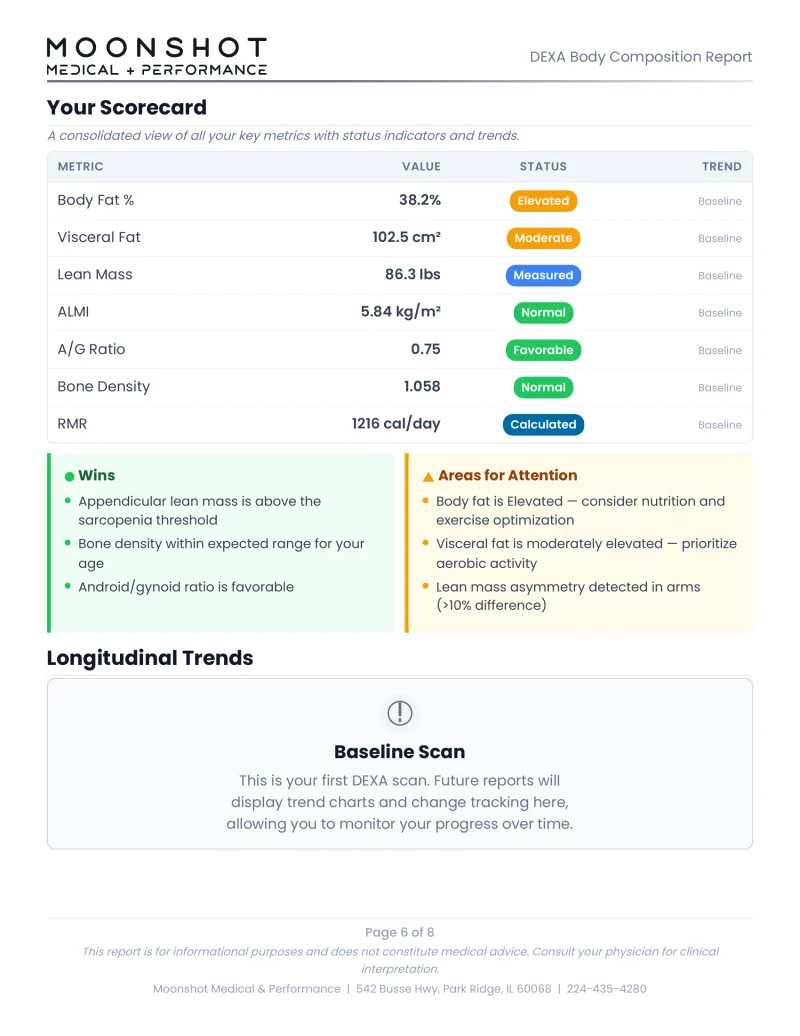
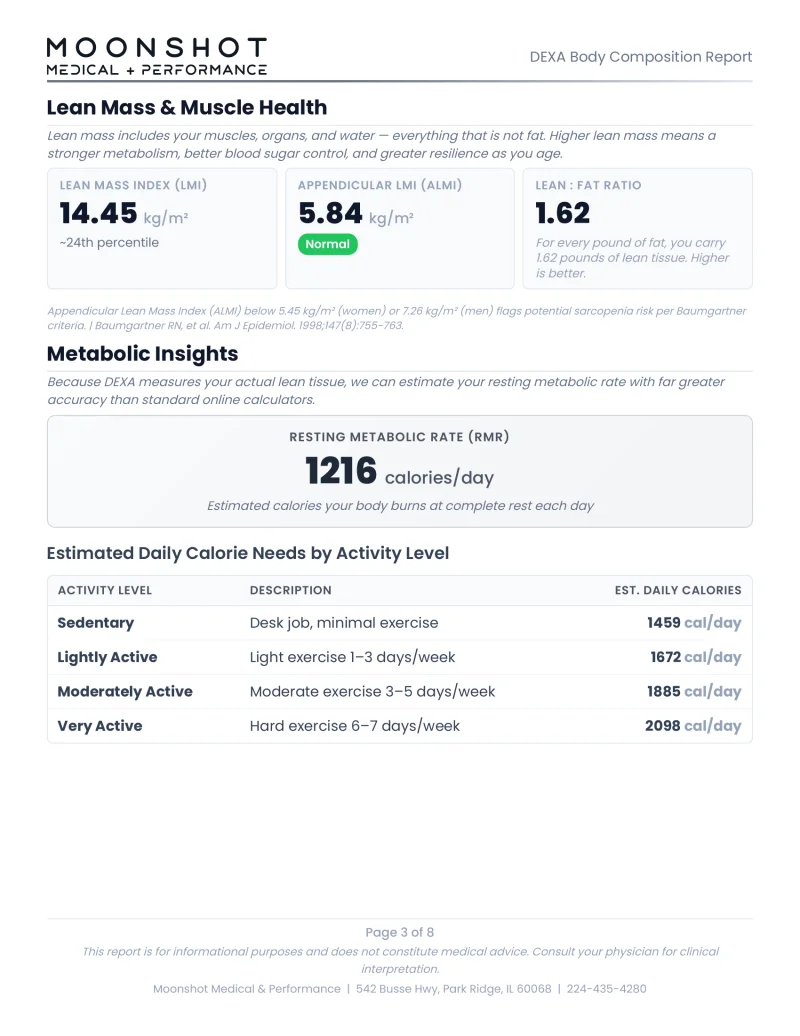
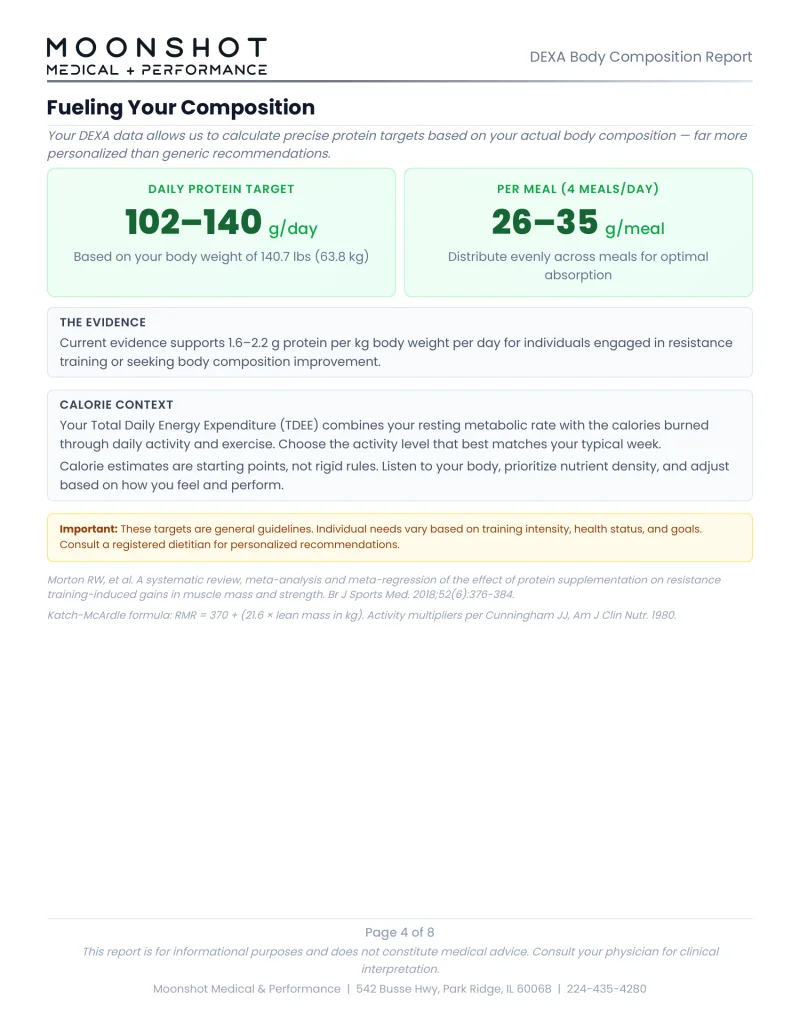
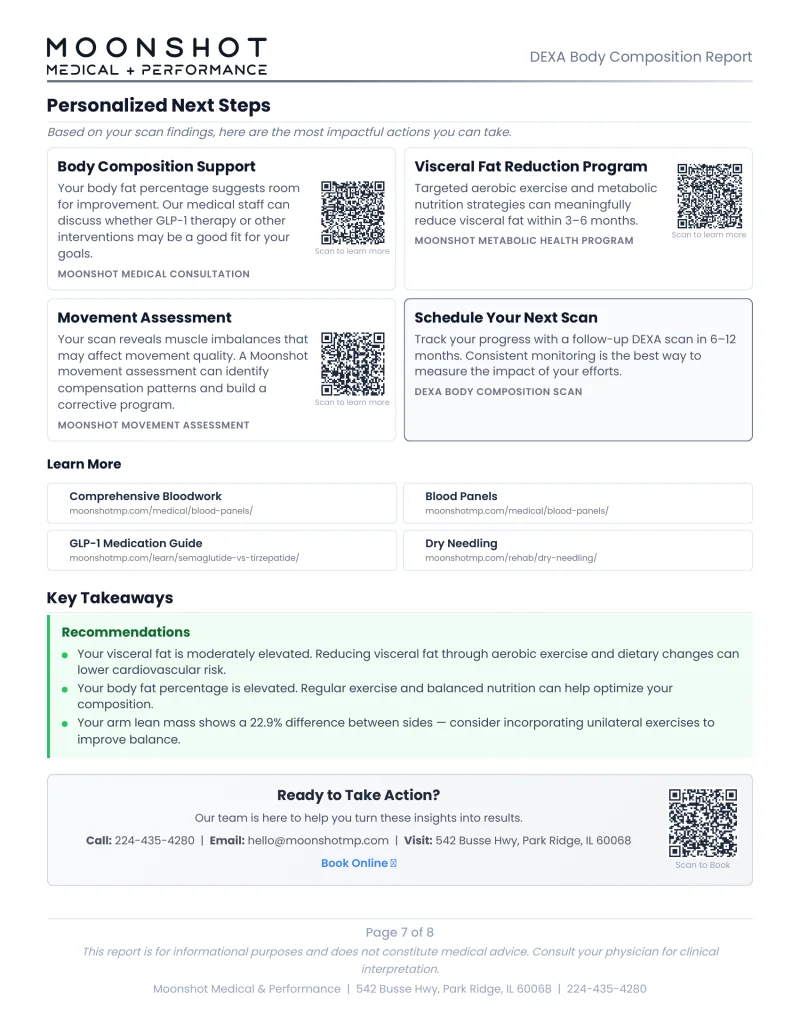
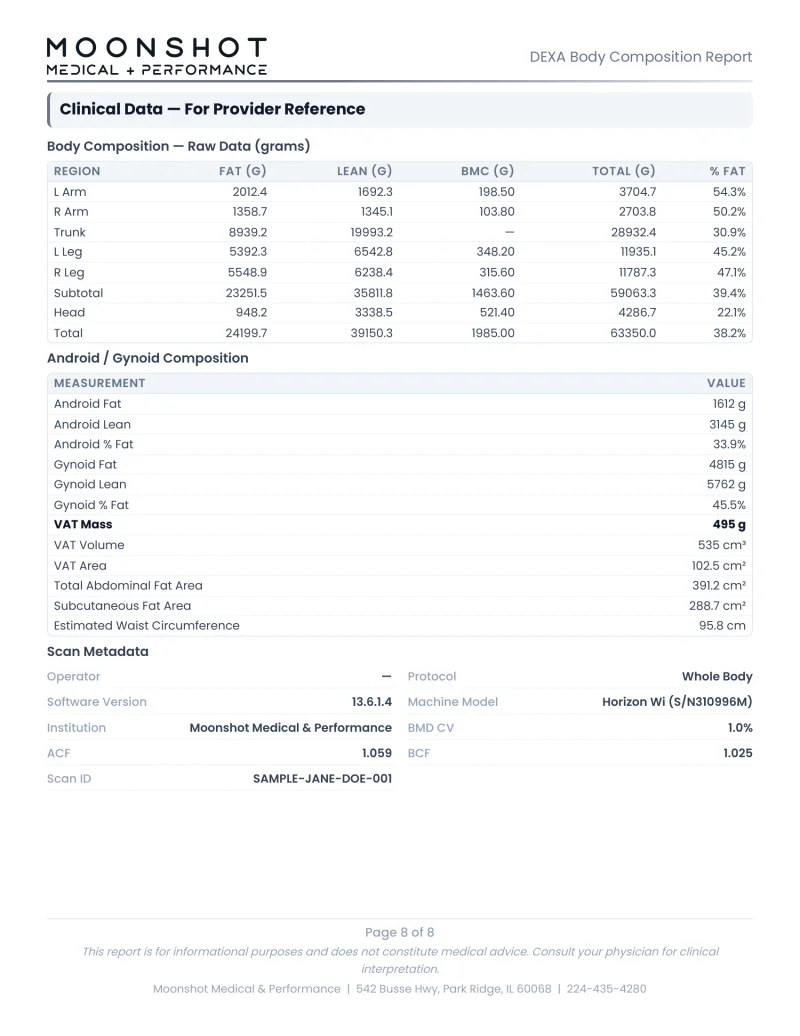
Every scan generates a 12-page Moonshot report — body fat, lean mass by region, visceral fat, bone density, fat distribution map, and an action plan tied to your goals. Not a one-page bone scan summary.
HOW MOONSHOT COMPARES TO CHICAGO ALTERNATIVES
Honest breakdown. There are valid reasons to choose any of these — but they're different products.
Hospital systems (Northwestern, Rush, UChicago, Lutheran General, NorthShore)
Most Chicago academic medical centers have DEXA — but configured for bone density screening, not body composition. You'll typically need a physician referral, the scan is billed through insurance, and the report is a standard radiology read with T-scores. Wait times often run 2–4 weeks for the scan and another 1–2 weeks for results. Out-of-pocket cost varies widely — frequently $200–$600 after insurance applies, sometimes much higher if your plan denies it.
Commercial body-comp chains (BodySpec, DexaFit, etc.)
These pop-up locations in places like River North or Lincoln Park provide proper body-composition DEXA reports at competitive prices ($45–$80). The trade-off: scans are read by a technician, there's no provider context, and you walk out with a PDF you're left to interpret. As of April 2026 there's no permanent Park Ridge or O'Hare-area location. Fine if you just want a number; insufficient if you want the number to drive a decision.
Boutique fitness studios with InBody
InBody machines (bioimpedance) are common at Chicago gyms — Equinox, East Bank Club, neighborhood studios. They're free or cheap, but the underlying technology has 3–5% error driven by hydration alone. Useful for spot checks. Not useful for tracking actual body composition change over months. Full DEXA vs InBody breakdown.
Moonshot Medical (Park Ridge, ~25 min from downtown)
On-site Hologic scanner — same machine class the hospitals use. $150 with full body-composition report, NP review, and clinical context against your labs and goals. No referral. No insurance billing. HSA/FSA accepted. The right fit if you're on (or considering) TRT, a GLP-1, hormone therapy, or a serious training block where the data needs to drive a protocol decision. Patients also use our Park Ridge–local guide for non-Chicago drive routes.
TRANSPARENT PRICING
No insurance, no membership, no referral. Pay only for what you use.
DEXA Scan
$150
Standalone body composition scan, results read by your provider
HSA/FSA accepted. Most insurance does not cover body-composition DEXA. We are direct-pay specifically so we can run the right tests without insurance dictating what's "approved."
Hormone optimization members get 2 DEXA scans per year included in their program.
WHAT CHICAGO-AREA PATIENTS SAY
Real reviews from our Google Business Profile.
"Drove out from Lincoln Park because my doctor's office quoted me $400 for a DEXA after a referral that took two weeks. Booked Moonshot online the same day, scan was 7 minutes, results read with me before I left. Worth the drive twice over."
— Patient, Lincoln Park
"Started on tirzepatide six months ago and wanted to confirm I wasn't losing muscle along with the weight. Scan showed I was, and Missy adjusted my protein and training plan based on the regional muscle data. Came back at 3 months — the trend reversed. This is the missing piece for anyone on a GLP-1."
— Patient, West Loop
"Lived in Lakeview for years and never bothered with a DEXA because every quote from a Chicago hospital was $300+ with referral hassle. $150 here, no referral, full report, 25 minutes door-to-door. Booked my partner for one the next week."
— Patient, Lakeview
VISIT THE PARK RIDGE CLINIC
Moonshot Medical and Performance
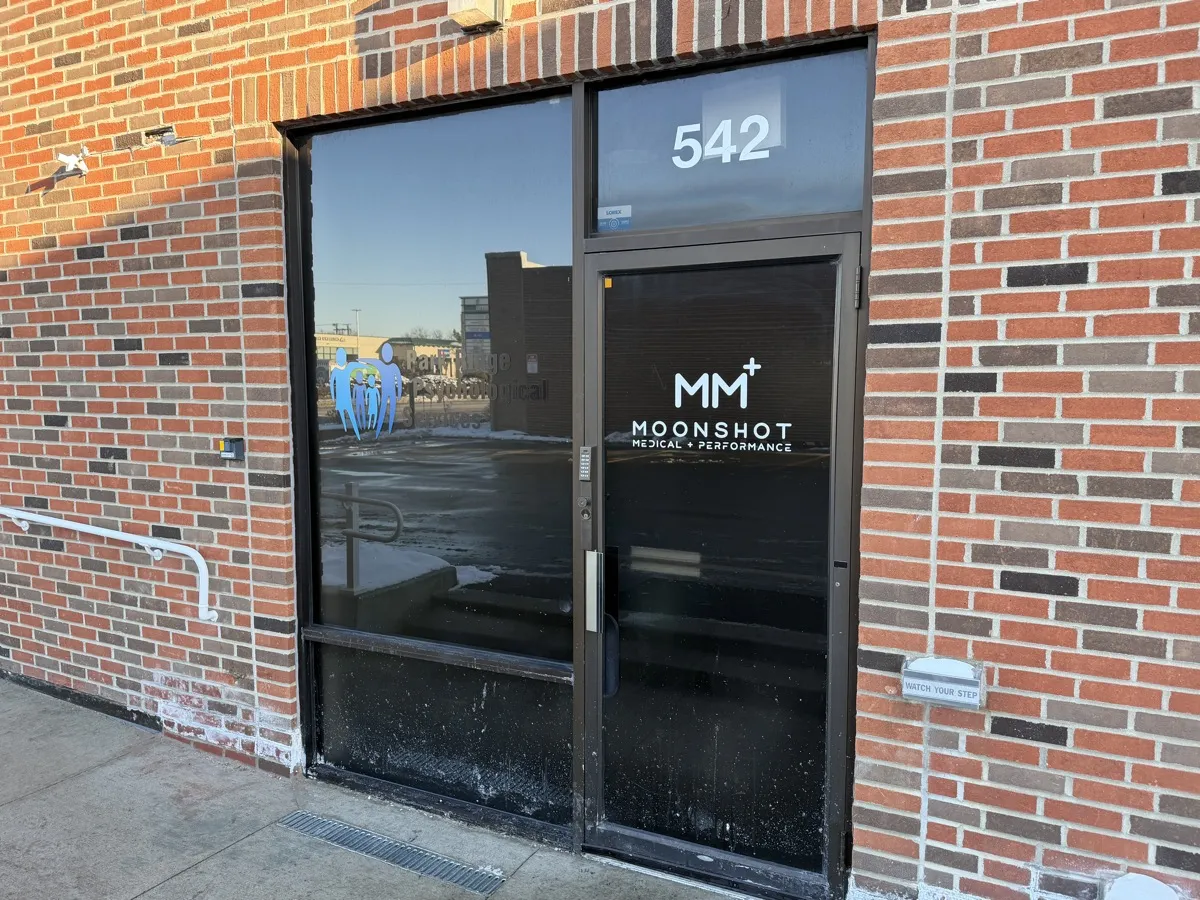
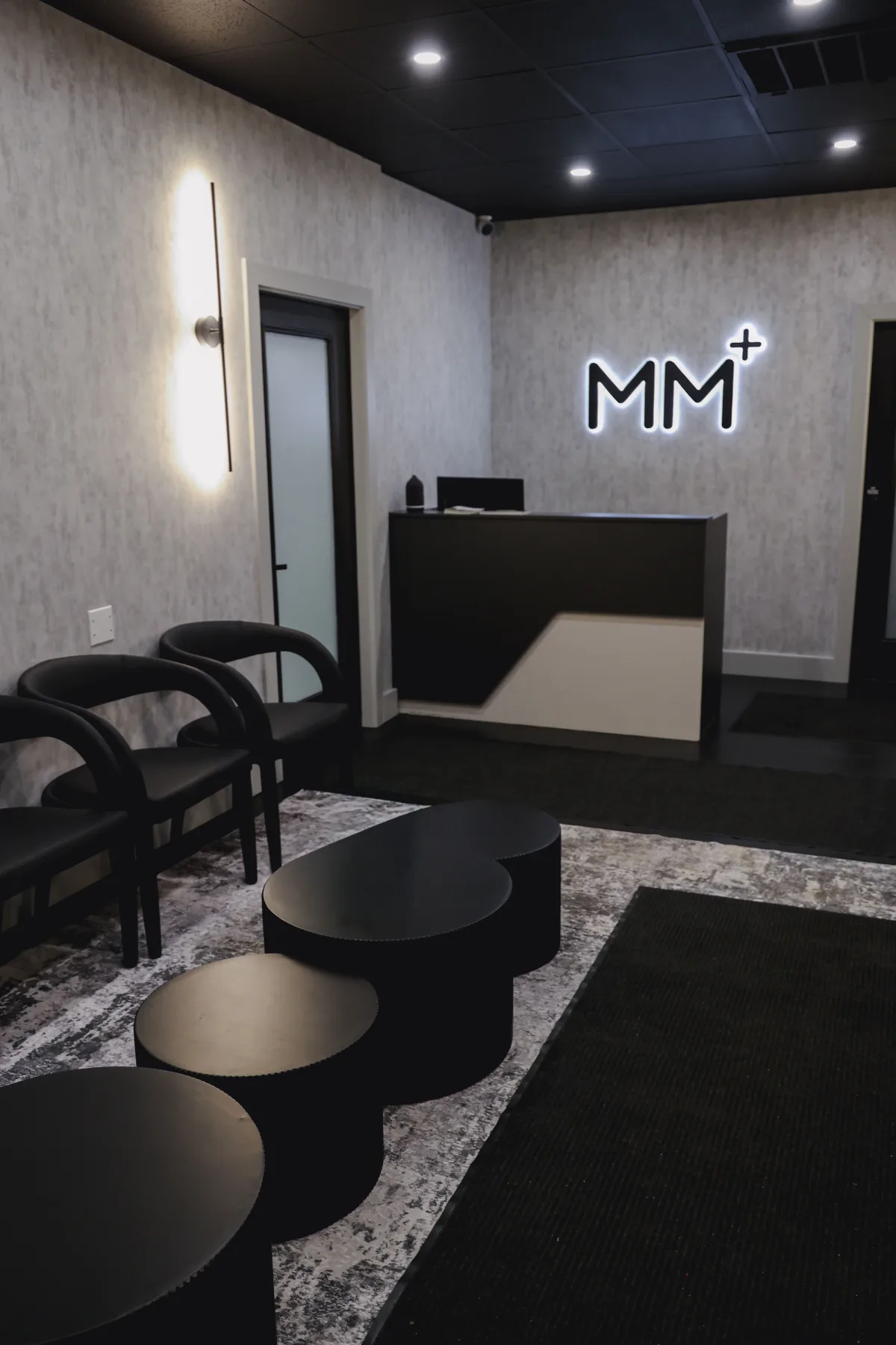
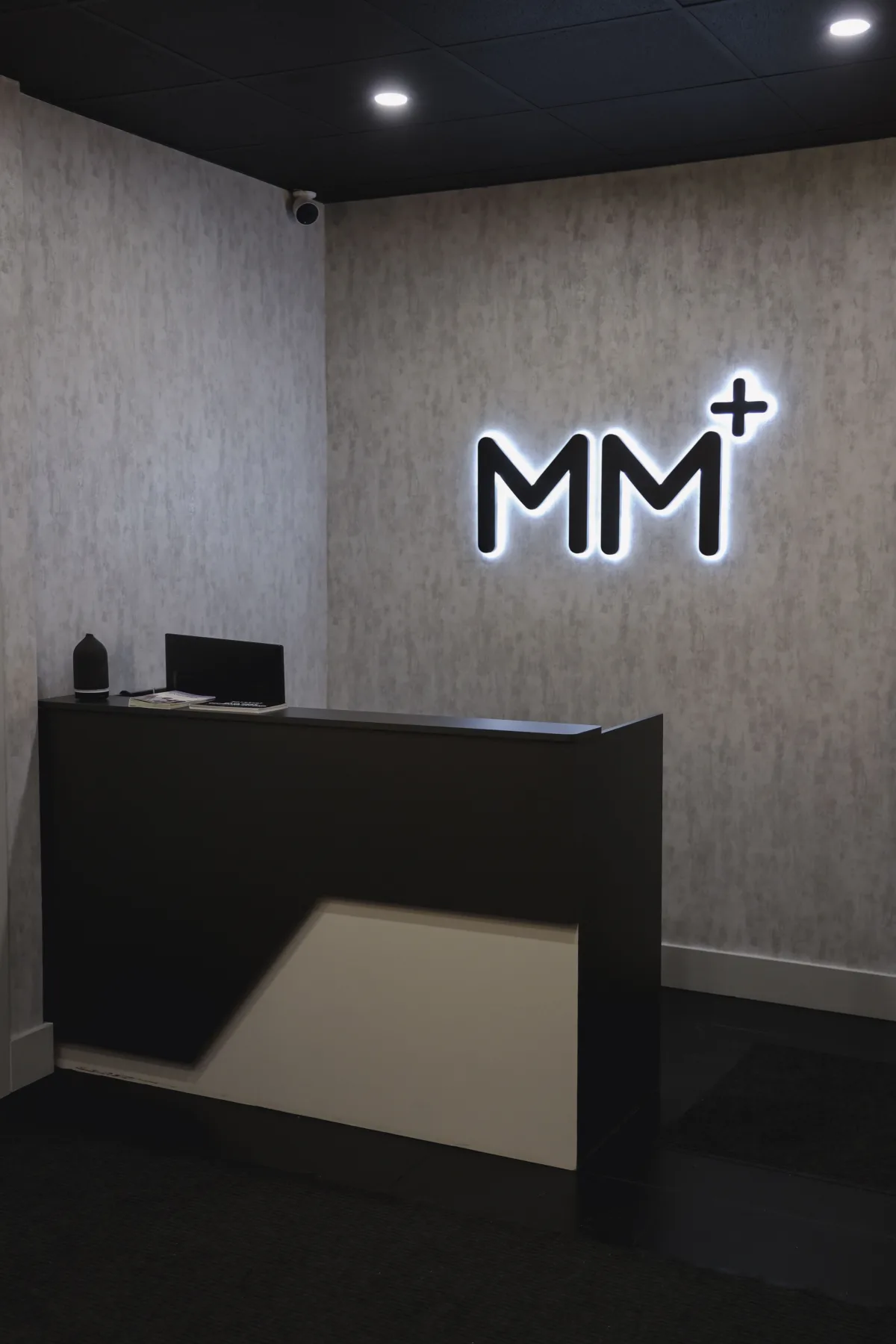
542 Busse Hwy
Park Ridge, IL 60068
- ~25 min from downtown Chicago via Kennedy/I-90
- Two blocks east of Lutheran General Hospital, near Busse Hwy & Cumberland Ave
- Free dedicated parking lot on-site, accessible from Busse Hwy
- ~10 min from Cumberland CTA Blue Line; ~5 min from Dee Road Metra
- ~12 min from O'Hare for out-of-town patients flying in
- Wheelchair accessible ground-floor entry; scanner accommodates up to 400 lb
We see patients across Chicago and the northwest suburbs. If you're coming from a Park Ridge–local address, see our DEXA in Park Ridge guide for routes and parking.
542 Busse Hwy, Park Ridge, IL 60068
Get Directions →WHAT WE ACTUALLY FIND ON A DEXA SCAN
Real patterns from the people we scan in Park Ridge — not textbook averages.
Of 69 patients, 47.8% had visceral fat above 100 cm² — the metabolically dangerous fat around your organs that you can’t see, pinch, or catch on a scale, and that a “normal” weight often hides.
Based on visceral adipose tissue area from DEXA scans of 69 Moonshot Medical patients; >100 cm² = elevated metabolic risk. Reflects patients who came to us for scans, not the general population. Aggregate, de-identified clinic data; individual results vary.
Median body fat is 24% for men and 34% for women — and about 1 in 11 had a “normal” BMI while carrying body fat in the high range. The scale and BMI miss this; a DEXA scan doesn’t.
Based on total body-fat % from DEXA scans of 69 Moonshot Medical patients (median). “Normal BMI, high body fat” = BMI under 25 with body fat above 25% (men) / 32% (women). Reflects patients who came to us for scans; individual results vary.
COMMON QUESTIONS
Where can I get a DEXA scan in Chicago?
Moonshot Medical at 542 Busse Hwy, Park Ridge, IL — ~25 minutes from downtown via I-90/Kennedy. On-site Hologic scanner. No referral. $150 standalone or $405 with a 60+ biomarker blood panel. Several Chicago hospital systems also offer DEXA, but typically with a referral requirement and longer wait.
Why drive out to Park Ridge instead of getting one downtown?
Most Chicago hospital DEXA programs are configured for bone density screening, not body composition — and they require a physician referral, insurance billing, and 2–4 week wait times. Moonshot uses the same scanner class with a body-composition-specific protocol, no referral, same-day NP read, and direct $150 pricing.
Is the radiation safe?
Yes. A whole-body DEXA delivers 1–4 microsieverts — about the same as a few hours of natural background radiation, or eating a few bananas. A small fraction of a standard chest X-ray. No clinical safety concern for routine repeat scanning, except in pregnancy.
How long is the scan?
The scan itself is about 7 minutes. Total appointment, including check-in and result review, is 15–20 minutes. Plan ~1.5 hours total if you're driving in from downtown — drive, scan, drive back.
What should I wear?
Comfortable athletic clothing, no metal (no zippers, buttons, or underwire bras). Remove jewelry. The more consistent your clothing between scans, the more accurate your scan-to-scan comparisons.
Do I need to fast?
Not strictly required, but for maximum scan-to-scan consistency we recommend scanning at a similar time of day and hydration state each visit. If you're bundling with bloodwork, you'll be fasting anyway.
Can I get a DEXA scan if I'm pregnant?
No. Even though the radiation dose is very low, we don't scan during pregnancy. Tell us before scheduling if there's any chance you may be pregnant.
What's the weight limit on the scanner?
Our Hologic scanner accommodates patients up to 400 lb and a 76" body length. If you're outside those bounds we'll let you know during booking and refer you to a system better suited to scan you.
References
- 1. Shepherd JA, et al. "Body composition by DXA." Bone. 2017;104:101–105.
- 2. Kaul S, et al. "Dual-energy X-ray absorptiometry for quantification of visceral fat." Obesity. 2012;20(6):1313–1318.
- 3. Rothney MP, et al. "Precision of GE Lunar iDXA for the Measurement of Total and Regional Body Composition." J Clin Densitom. 2012;15(4):399–404.
- 4. Heymsfield SB, et al. "Weight loss composition is one-fourth fat-free mass: a critical review and critique of this widely cited rule." Obes Rev. 2014;15(4):310–321.
- 5. Wilding JPH, et al. "Once-Weekly Semaglutide in Adults with Overweight or Obesity." N Engl J Med. 2021;384(11):989–1002.
SEE WHAT YOU'RE MADE OF
Medical-grade body composition scan. 7 minutes. No referral. ~25 minutes from downtown Chicago.
$150 | Same-day results | Clinical interpretation included
Book DEXA Scan — $150