Local Guide — Park Ridge, IL
PHYSICAL REHABILITATION IN PARK RIDGE
One-on-one rehab with a McKenzie Method-certified provider, integrated diagnostics when indicated, and the full musculoskeletal toolkit — manual therapy, corrective exercise, shockwave, dry needling, trigger-point work. BCBS PPO accepted. The goal is to return you better than before, not just pain-free.
Treatment by Dr. Michael Gontarek, DC, MSc, DACBN · Medically reviewed by Missy Zammichieli, DNP, APRN, FNP-BC · Updated April 30, 2026

From the Medical Director
Missy Zammichieli, DNP, APRN, FNP-BC
Doctor of Nursing Practice
Board-Certified Family Nurse Practitioner
We built rehab at Moonshot to look different from the typical PT clinic on purpose. Two structural decisions shape every patient who comes through. First, every visit is one-on-one with Dr. Gontarek — not a tech, not a rotating assistant. Second, when chronic pain isn't responding the way it should, we have the diagnostic tools on-site to ask why.
That second piece is where most rehab clinics hit a wall. Adult with chronic low back pain that won't resolve. Standard rehab plays out — manual work, exercise, ergonomic education — and the pain partially improves but plateaus. The next step at most clinics is to refer back to a primary care doctor for imaging or to extend the rehab plan another 6 weeks. At Moonshot, we can do something most clinics can't: in the same building, the same week, we can run a DEXA scan to screen for sarcopenia (low muscle mass is one of the most under-diagnosed drivers of chronic pain in adults over 40), or pull a focused inflammatory and metabolic panel to rule out drivers like uncontrolled insulin resistance or low vitamin D — both of which dramatically slow tendon and connective tissue healing.
That kind of integration matters most for three groups. Post-surgical patients who plateau in the typical 8-week rehab block. Athletes returning to sport whose musculoskeletal injuries are layered on top of a hormonal, sleep, or recovery deficit. And adults over 40 with chronic injuries that imaging can't fully explain — where the missing diagnosis is often a metabolic or hormonal one, not a structural one.
Dr. Gontarek runs the rehab side day-to-day. I oversee the medical workup when his assessment indicates we need labs or imaging beyond what rehab alone can answer. The patients who benefit most are the ones whose first three rehab clinics didn't ask the right questions.
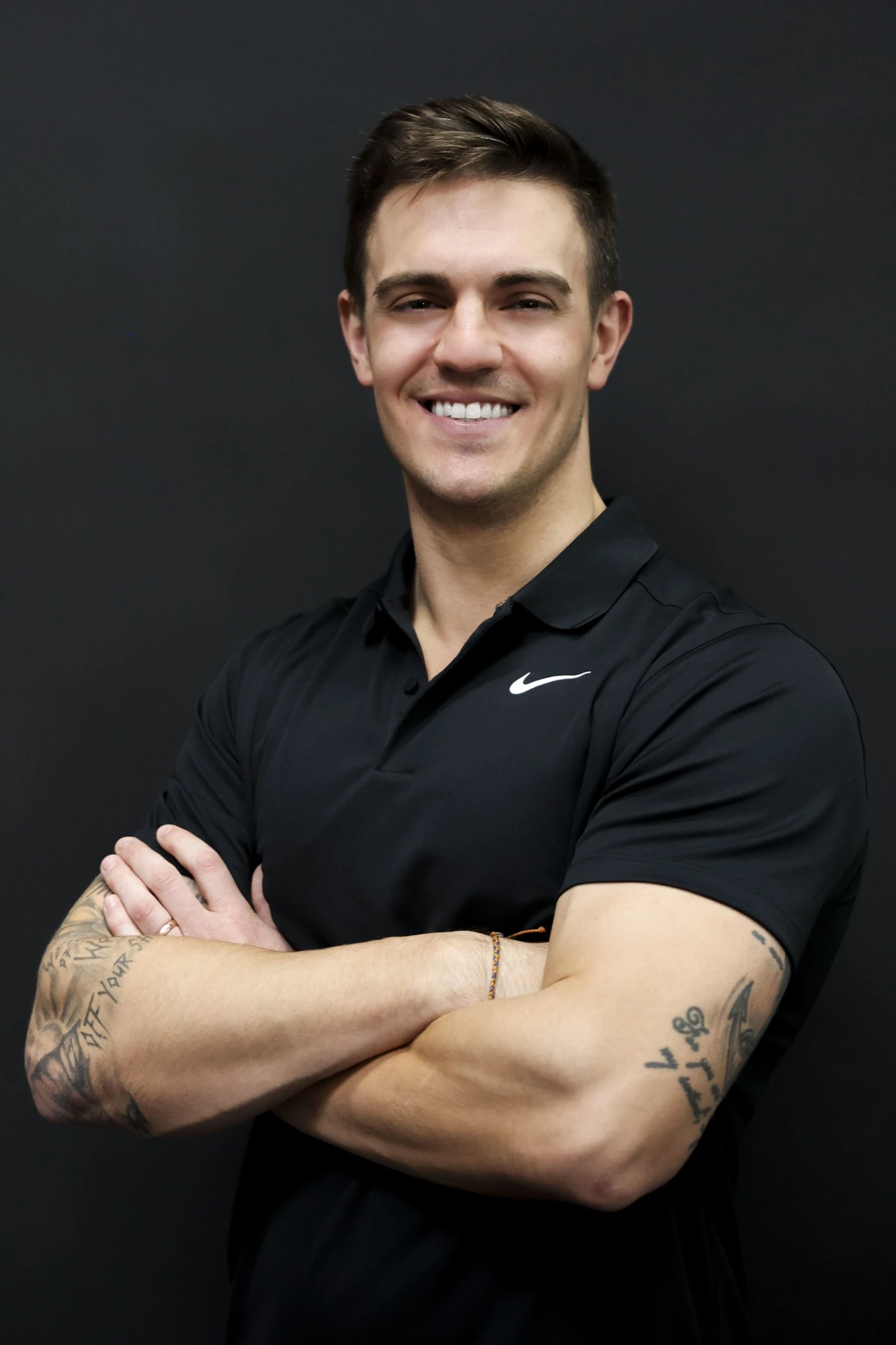
From the Treating Provider
Dr. Michael Gontarek, DC, MSc, DACBN
Doctor of Chiropractic
McKenzie Method (MDT) Certified
Most patients who land in my office in Park Ridge have already been somewhere else first — sometimes two or three places. Hospital outpatient PT, a neighborhood chiropractor, a massage therapist on a punch card. They're not here because the prior care was bad. They're here because nothing locked the change in.
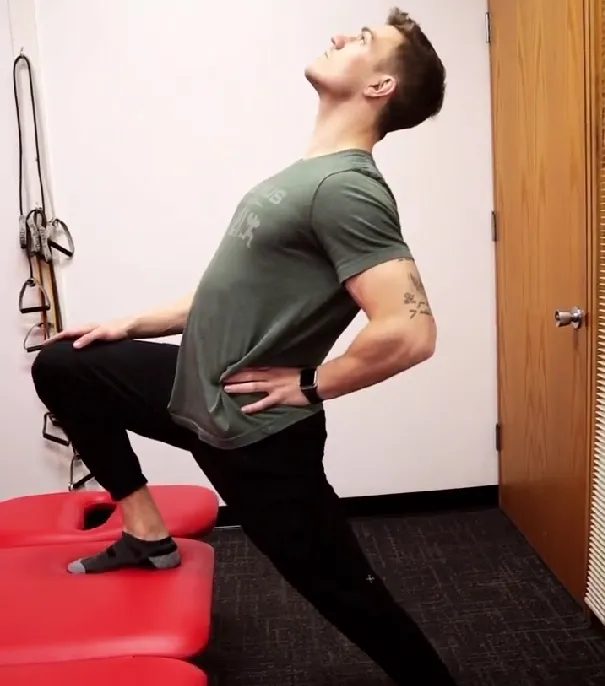
My first visit looks different than what they're used to. I take 60 minutes, I do a full McKenzie Method (MDT) classification — derangement, dysfunction, or postural — and I ask what made it better and what made it worse, in detail. The MDT classification matters because it dictates the direction of treatment from day one. Move the wrong direction with a derangement and you flare it; move the right direction and the centralization happens in the room. That's the diagnostic moment.
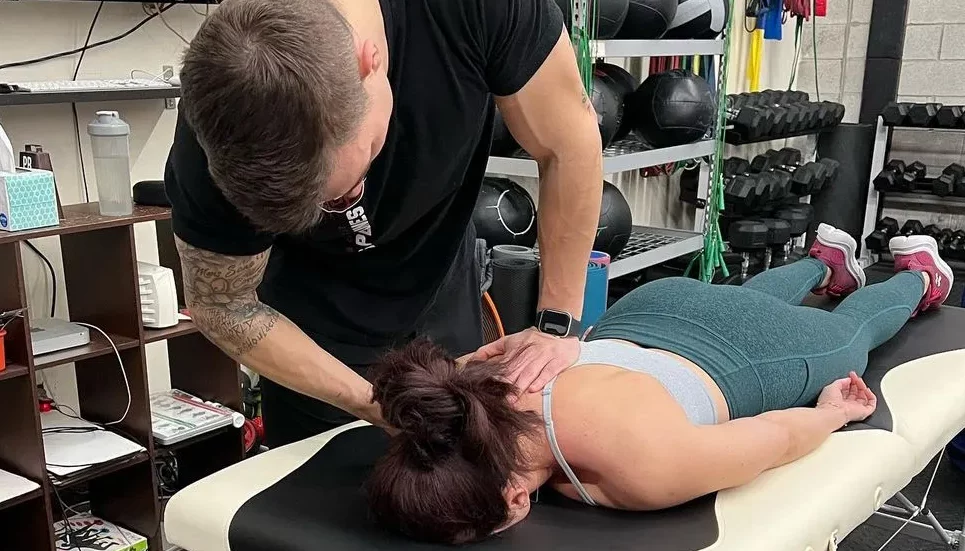
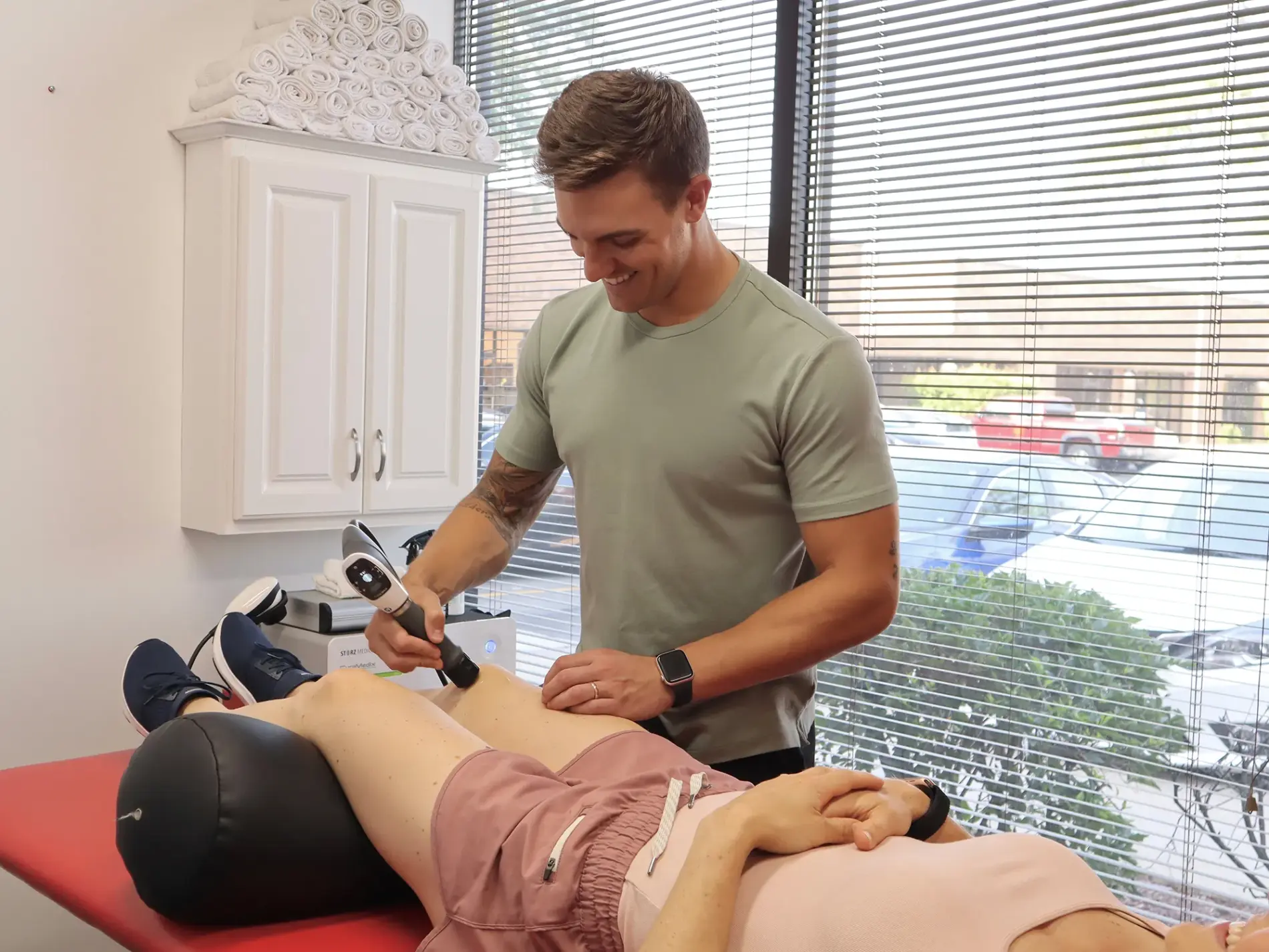
From there, the visit is hands-on — manual therapy, dry needling, IASTM, or shockwave applied to the specific tissue that needs it. Then I load it. Almost every chronic case I see has a strength deficit hiding underneath the pain pattern, and you can't release your way out of a strength problem. I write a home program that's short enough you'll actually do it, and I update it every visit.
The honest range I tell patients to expect: 6–8 visits for most conditions, sometimes 10–12 for post-surgical rebuilds or stubborn tendinopathies. The endpoint is a return to the activity that mattered to you — overhead pressing, running, lifting your kid — not "pain-free at rest." If we hit a wall, that's when Missy and the medical side step in. Most cases don't get there.
WHO PHYSICAL REHAB IS FOR
Whether you're recovering from injury, dealing with chronic pain, or trying to perform at a higher level — this is built for people who want to get back to full capacity, not just manage symptoms.
Post-Surgical & Post-Injury Recovery
You tweaked your back, strained a shoulder, rolled an ankle, or had surgery. The acute pain is settling but you're not back to normal. You need structured rehab that rebuilds strength and movement quality — not just rest and painkillers.
Common cases: Rotator cuff repairs, ACL reconstructions, lumbar discectomy, hip/knee replacements, sports injuries, sprains and strains that aren't resolving.
Chronic Musculoskeletal Pain
You've had neck pain, low back pain, or shoulder issues for months or years. You've tried chiropractors, massage, maybe even injections. Nothing has stuck because nobody addressed the underlying movement dysfunction — or the metabolic factors slowing your recovery.
Common cases: Persistent low back pain, recurring neck and shoulder tension, chronic headaches, sciatica, plantar fasciitis, tendinopathies that won't resolve.
Athletes Returning to Sport
You're not just trying to be pain-free — you're trying to compete again. CrossFit, lifting, running, cycling. You need someone who understands biomechanics, training load, and the difference between cleared-by-imaging and ready-to-perform.
Common cases: Return-to-sport from injury, training plateaus, weekend warriors, aging adults staying in the game, anyone trying to come back stronger than before.
THE 4-STEP PROCESS
Every patient follows the same framework. The specifics are individualized, but the structure ensures nothing gets skipped and progress is measurable.
Assess
Comprehensive movement assessment — not a 5-minute screen. A thorough evaluation of how you move, where you're restricted, what's weak, and what's compensating. Dr. Gontarek uses the McKenzie Method (MDT) classification system to identify the mechanical pattern driving your symptoms — derangement, dysfunction, or postural — and that determines the treatment direction from day one. When indicated, we add a DEXA scan or a focused blood panel to look beyond what manual assessment alone can see.
Treat
Manual therapy, dry needling, shockwave therapy, IASTM, and trigger-point work — applied based on what your assessment indicates. The goal is to reduce pain, restore range of motion, and reset dysfunctional tissue so you can actually do the rehab exercises properly. Treatment without exercise is a band-aid. Exercise without treatment is often limited by pain.
Rebuild
Progressive exercise prescription. Once pain is controlled and range of motion is restored, we load the tissue. Controlled, progressive strengthening that rebuilds capacity in the areas that broke down. This is where most rehab programs fall short — they stop at "pain-free" instead of building you back to full strength. You get a personalized home exercise program that evolves as you progress.
Return
Sport-specific and activity-specific training. Whether you need to get back to deadlifting, running, playing with your kids, or just living without pain — the final phase bridges the gap between "rehabbed" and "ready." You return to your life better than before the injury, with the strength, mobility, and movement quality to stay that way.
WHAT'S INCLUDED
Every Visit
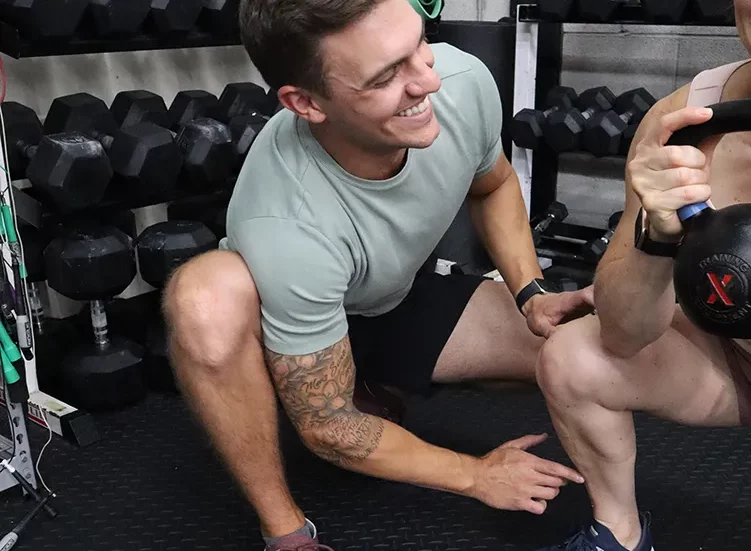
- One-on-one care — every session is with Dr. Gontarek, not a tech
- Movement assessment — re-evaluated each visit to track progress
- Manual therapy — hands-on joint mobilization and soft tissue work
- Exercise prescription — personalized, progressive, updated as you improve
- Progress tracking — objective measurements so you can see the change
Tools Available
- Dry needling — resets dysfunctional trigger points and myofascial restriction
- Shockwave therapy — accelerates healing in tendons, fascia, and chronic tissue
- IASTM — instrument-assisted soft tissue mobilization for scar tissue and adhesions
- Trigger-point work — manual, needling, and injection options for referred pain
- McKenzie Method (MDT) — classification-based approach for spine and extremities
- DEXA + bloodwork integration — when the assessment points beyond mechanical issues
The difference: Most rehab clinics see 3–4 patients at a time and rely on assistants and machines. At Moonshot, every minute of your session is one-on-one with Dr. Gontarek. The tools above aren't a menu you pick from — they're applied based on what your assessment indicates. Most patients improve within 6–8 visits because the care is focused, not diluted.
PHYSICAL REHAB OPTIONS NEAR PARK RIDGE
Honest comparison. There are good reasons to choose any of these — they're different products.
Hospital outpatient PT (Lutheran General, NorthShore, Northwestern outpatient sites)
Most northwest-suburban hospitals operate outpatient PT clinics. The strength is insurance coverage and post-surgical pathways tied to your operating surgeon. The trade-off is a 1:3 or 1:4 patient-to-therapist ratio at peak times, heavy reliance on aides for the exercise portion of the visit, referral requirements (in practice if not in Illinois law), and difficulty getting beyond the protocol your insurer authorized. Wait times for an initial eval typically run 1–3 weeks.
Cash-pay performance PT clinics
Several Park Ridge–area cash-pay performance clinics offer one-on-one PT at $150–$250/visit. Strength: undivided provider attention, hour-long sessions, sport-specific. Trade-off: no insurance, and most are pure manual/exercise — they don't have on-site diagnostics (DEXA, bloodwork) or NP medical oversight, so when chronic pain doesn't fit a pure mechanical pattern, you get referred back out.
Chiropractic-only clinics
Plenty of solid chiropractors in Park Ridge and Des Plaines. Strength: hands-on manual care at accessible price points. Trade-off: care is typically narrower (adjustment-focused, less corrective exercise), and longer-term care plans are common — which is right for some patients, but not all. Best fit if you want maintenance adjustments and aren't looking for full progressive rehab to a performance benchmark.
Moonshot Medical (Park Ridge)
One-on-one care every visit, BCBS PPO accepted, no referral required, full musculoskeletal toolkit (manual + corrective exercise + shockwave + dry needling + trigger-point + IASTM), and on-site diagnostics — DEXA for sarcopenia screening, bloodwork for inflammatory markers — when the case requires it. Best fit if you've cycled through traditional PT or chiropractic and the answer didn't stick. Pair with our chiropractic, shockwave therapy, or trigger-point services as needed.
INSURANCE & ACCESS
In-Network
BCBS PPO
Accepted for rehab services
Cash Pay
Transparent
Clear pricing, no surprises
Out-of-Network
Superbills
Provided for reimbursement
No referral needed in Illinois. No contracts. HSA/FSA eligible. Book directly online.
WHAT PARK RIDGE PATIENTS SAY
Real reviews from our Google Business Profile.
"Six weeks post-rotator-cuff repair and stuck. Two visits with Dr. Gontarek and I had a homework plan that actually progressed instead of repeating the same band exercises my hospital PT was running. Back to overhead pressing four months in."
— Patient, Park Ridge
"Chronic low back pain for three years. Saw three different PTs and a chiropractor — got partial relief, never resolved. Dr. Gontarek's assessment plus a DEXA caught a sarcopenia issue nobody had checked. Six visits in, this is the most pain-free I've been in years."
— Patient, Des Plaines
"CrossFit athlete, chronic Achilles tendinopathy. Dr. G combined shockwave with corrective work and a return-to-sport plan that respected my training. Cleared in under 8 weeks and stronger than before."
— Patient, Niles
VISIT THE PARK RIDGE CLINIC
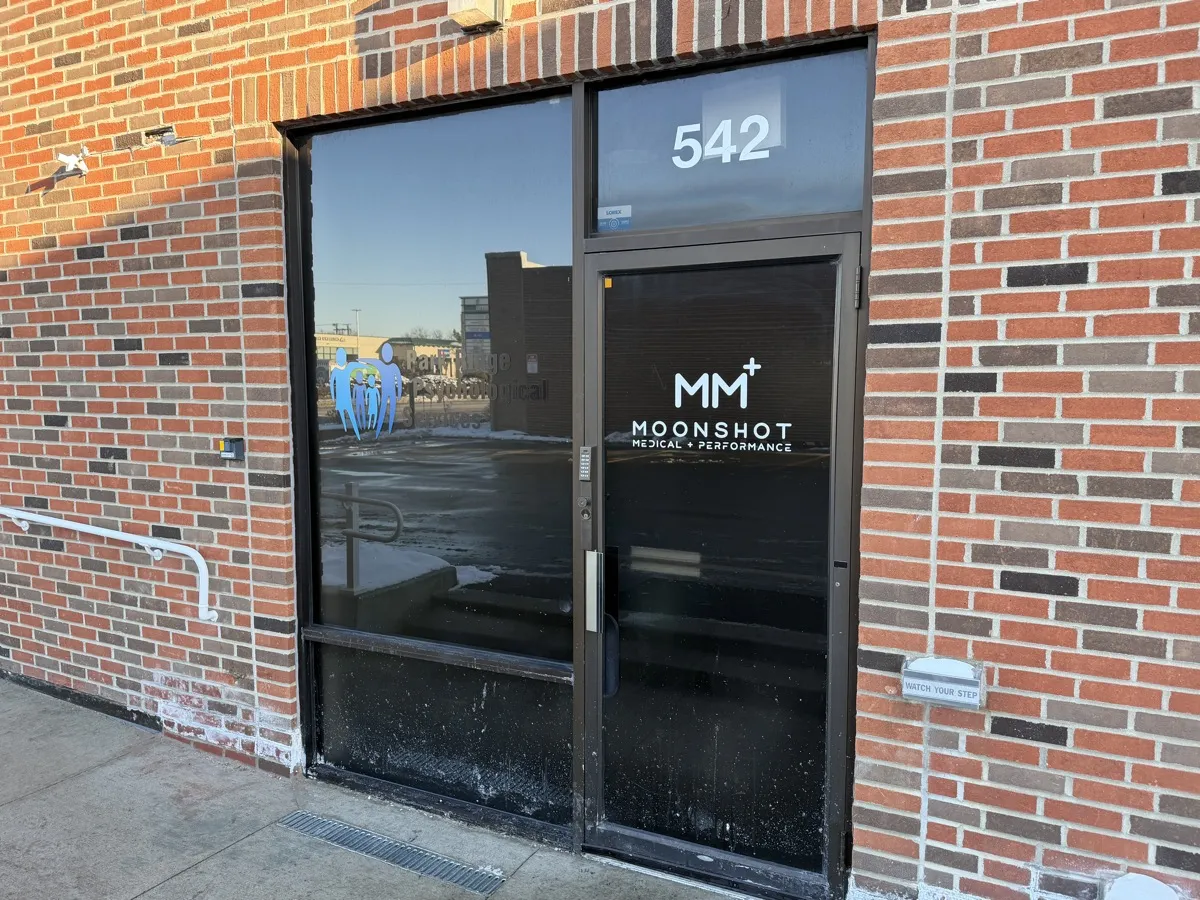
Moonshot Medical and Performance
542 Busse Hwy
Park Ridge, IL 60068
- Two blocks east of Lutheran General Hospital, near Busse Hwy & Cumberland Ave
- Free dedicated parking lot on-site, accessible from Busse Hwy
- ~5 min from Dee Road Metra; ~10 min from Cumberland CTA Blue Line
- ~12 min from O'Hare
- Wheelchair accessible ground-floor entry
We see patients across the northwest Chicago suburbs — Park Ridge, Des Plaines, Niles, Edison Park, Norwood Park, Rosemont, Morton Grove, Glenview, Skokie, Mount Prospect, and Arlington Heights.
542 Busse Hwy, Park Ridge, IL 60068
Get Directions →COMMON QUESTIONS
Do I need a referral for physical rehab at Moonshot?
No. Illinois allows direct access to rehabilitation services without a physician referral. You can book your first appointment directly through our website. We'll perform a comprehensive movement assessment at your first visit and build a plan from there.
Does Moonshot accept insurance for physical rehab?
Yes. We accept BCBS PPO insurance for rehabilitation services. For other plans, we offer transparent cash pricing and provide superbills for out-of-network reimbursement. HSA/FSA funds also accepted.
How many visits will I need?
Most patients see meaningful improvement within 6–8 visits. The exact timeline depends on the nature and severity of your condition, how long it has been present, and how consistently you follow your home exercise program. Our goal is to build your independence — not create long-term dependency on treatment.
How is this different from a typical physical therapy clinic?
Most PT clinics see 3–4 patients simultaneously, use techs and assistants for the majority of your visit, and rely on passive modalities and generic exercise sheets. At Moonshot, every minute is one-on-one with Dr. Gontarek. Treatment is hands-on, exercise is individualized and progressive, and outcomes are tracked objectively. When the case warrants it, we have on-site DEXA and bloodwork to look beyond what manual assessment alone can see.
What should I expect at my first visit?
Your first visit includes a comprehensive movement assessment using the McKenzie Method classification system, a review of your history and goals, and hands-on treatment. You'll leave with a clear understanding of what's driving your symptoms, a treatment plan with a realistic timeline, and initial exercises to begin at home.
What conditions do you treat?
Low back pain, neck pain, shoulder injuries, knee pain, post-surgical rehab, sciatica, headaches, plantar fasciitis, tendinopathies, sports injuries, and chronic musculoskeletal conditions. If it involves pain, movement, or performance — we likely treat it. See our full rehab services.
References
- 1. Clare HA, Adams R, Maher CG. "A systematic review of efficacy of McKenzie therapy for spinal pain." Aust J Physiother. 2004;50(4):209–216.
- 2. Chou R, et al. "Nonpharmacologic Therapies for Low Back Pain: A Systematic Review for an American College of Physicians Clinical Practice Guideline." Ann Intern Med. 2017;166(7):493–505.
- 3. Blanpied PR, et al. "Neck Pain: Revision 2017. Clinical Practice Guidelines Linked to the International Classification of Functioning, Disability and Health." J Orthop Sports Phys Ther. 2017;47(7):A1–A83.
- 4. Cruz-Jentoft AJ, et al. "Sarcopenia: revised European consensus on definition and diagnosis." Age Ageing. 2019;48(1):16–31.
READY TO GET BACK TO FULL CAPACITY?
One-on-one physical rehab with a McKenzie Method-certified provider. Integrated diagnostics. BCBS PPO accepted. No referral needed. Park Ridge, IL.
Book Rehab Consultation